
Sorry to be the one to tell you this, but your pain-sensing neurons have been running a side business - and it's not great news. While you thought these cells were just busy alerting you to stubbed toes and hot stove encounters, researchers have discovered they've also been quietly helping cancer cells survive chemotherapy. Nerves: they contain multitudes.
When Pain Nerves Go Corporate
Here's the setup: cancer cells, like all cells, are constantly battling oxidative stress - basically molecular rust that damages cellular machinery. Chemotherapy drugs like cisplatin work partly by cranking up this oxidative damage to lethal levels. It's the cellular equivalent of setting a dumpster fire inside the tumor.
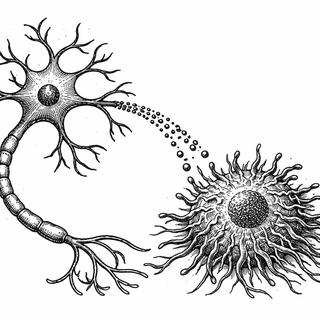
But cancer cells in head and neck squamous cell carcinoma (HNSCC) found a workaround, and they have unlikely accomplices: nociceptive neurons, the same specialized nerve cells responsible for making you yelp when you step on a LEGO. A recent study published in Cell Reports by Zhang et al. reveals this cellular betrayal in uncomfortable detail.
The Molecular Handshake of Doom
The mechanism is almost absurdly specific (as molecular biology tends to be). Nociceptive neurons secrete a protein called epiregulin, which cranks up the expression of something called Lnc-GCLC-1 in nearby cancer cells. This long non-coding RNA then does something genuinely clever: it marks KEAP1 for destruction.
Why does KEAP1 matter? Under normal circumstances, KEAP1 acts like a molecular hall monitor, keeping a transcription factor called NRF2 locked in the cytoplasm where it can't cause trouble. When KEAP1 gets degraded, NRF2 goes nuclear (literally - it translocates to the nucleus) and activates a whole battery of antioxidant genes. The result? Cancer cells get a souped-up cellular detox system that neutralizes the oxidative damage from cisplatin. It's like the tumor hired a cleanup crew right before the health inspector arrived.
This KEAP1-NRF2 pathway has been well-documented in cancer drug resistance, with mutations in this pathway appearing in roughly 25% of lung cancers and 17% of HNSCC cases. But nobody realized pain neurons were essentially providing the same protection via a different route.
Why This Actually Matters
HNSCC is not a fun diagnosis. Despite advances in treatment, median survival for recurrent or metastatic cases hovers around 6-15 months. Cisplatin-based chemotherapy is the standard of care, but resistance develops depressingly often. Understanding why some tumors shrug off treatment while others respond has been a persistent mystery.
The cancer neuroscience field is exploding right now, revealing that tumors and nerves have a much cozier relationship than anyone suspected. Nerves don't just passively exist near tumors - they actively promote growth, help cancers evade the immune system, and apparently, run interference against chemotherapy. A 2025 review in Nature described the nervous system as being essentially "hijacked" by tumors.
The Silver Lining (Sort Of)
The good news buried in all this grim molecular biology: if you know how the enemy operates, you can actually do something about it. The researchers showed that blocking nociceptive neurons or targeting the EREG-Lnc-GCLC-1-NRF2 axis significantly improved cisplatin's effectiveness in their models. High levels of Lnc-GCLC-1 correlated with worse outcomes in HNSCC patients, suggesting it might also work as a biomarker to identify who needs more aggressive treatment.
There's also growing interest in repurposing neuroactive drugs for cancer therapy - medications originally designed to affect nerve signaling that might also disrupt the nerve-tumor partnership. Some anti-nerve-growth-factor antibodies are already in clinical trials, potentially killing two birds with one stone by reducing both cancer progression and cancer-related pain.
What Your Nerves Are Really Doing
The bigger picture emerging from cancer neuroscience is that the tumor microenvironment is far more complicated than "cancer cells plus some blood vessels." Nerves infiltrate tumors, form functional circuits, and engage in constant chemical crosstalk with malignant cells. Research from Science Advances has even detected electrical activity inside tumors that correlates with metastasis.
So the next time you bang your shin and curse those pain neurons, remember: they're just doing their day job. It's their extracurricular activities that need monitoring.
References
-
Zhang Y, Chen M, Lin X, et al. Nociceptive neurons protect cancer cells against oxidative stress. Cell Reports. 2026;117086. DOI: 10.1016/j.celrep.2026.117086 | PubMed
-
Zhang J, et al. Keap1-Nrf2 pathway: a key mechanism in the occurrence and development of cancer. Frontiers in Oncology. 2024. PMC11021590
-
Jung E, et al. Tumor-infiltrating nerves: unraveling the role of cancer neuroscience in tumorigenesis, disease progression, and emerging therapies. Discover Oncology. 2025. DOI: 10.1007/s12672-025-02827-2
-
Magnon C, et al. Role of the nervous system in cancers: a review. Cell Death Discovery. 2021;7:450. DOI: 10.1038/s41420-021-00450-y
-
Venkatesh HS, et al. Functional neuronal circuits promote disease progression in cancer. Science Advances. 2023;9:eade4443. DOI: 10.1126/sciadv.ade4443
-
Kim S, et al. Treatment strategy and outcomes in locally advanced head and neck squamous cell carcinoma: a nationwide retrospective cohort study. BMC Cancer. 2020;20:813. DOI: 10.1186/s12885-020-07297-z
Disclaimer: The image accompanying this article is for illustrative purposes only and does not depict actual experimental results, data, or biological mechanisms.