
Try this: keep one thought in your head for the next five minutes without checking your phone, opening a new tab, or mentally wandering off to wonder whether pigeons judge us. If that sounds weirdly difficult, ADHD research would like a word. And not a quiet one. Simon Makin's 2026 Nature feature, Six highlights from ADHD research, is less a single discovery than a mixtape of where the field is heading: genes, brain dynamics, diagnosis, treatment, and the very real life consequences of getting ADHD missed or mishandled [1].
Not one disorder, not one story
A big theme in current ADHD science is that researchers are ditching the cartoon version of the condition. The modern view is broader and messier. A 2024 review in Nature Reviews Disease Primers describes ADHD as common, strongly genetic, and highly heterogeneous, with effects that can touch attention, impulse control, motivation, sleep, emotion, and daily functioning [2]. So no, it is not just "can't focus." It is more like the brain's project manager, drummer, and spam filter all showing up late to the same meeting.
Genes are talking, and they are not subtle
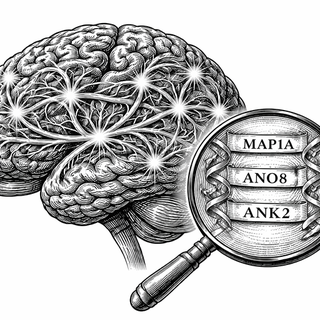
One headline-grabber from the past year came from a huge Nature genetics study. Researchers analyzing exome data identified rare variants in three genes - MAP1A, ANO8, and ANK2 - linked to sharply higher odds of ADHD and to pathways involved in neuronal wiring, synapse function, and brain development [3]. Not "the ADHD gene." More like a better map of the circuitry. The same study also linked rare damaging variants to lower educational attainment and lower socioeconomic status within ADHD samples [3]. Biology and life outcomes do not stay in separate folders. They remix each other.
The brain might be less broken than less steady
Another shift is just as useful: researchers are asking whether brain activity in ADHD is less stable from moment to moment, not just whether the "wrong region" lights up. A 2025 Nature Communications study used ultra-fast fMRI in children with ADHD and found reduced temporal and spatial stability in neural activity during cognitive control tasks [4]. Translation: it is not just that the orchestra misses a note. Sometimes the whole band keeps changing tempo.
That fits real life better than the old hunt for one faulty brain spot. Many people with ADHD can focus brilliantly in one setting and then lose the plot in another. Same person, same day, different neural weather.
The scariest finding is not about attention
The darkest highlight is also the one nobody should mumble past. A 2025 matched cohort study in the British Journal of Psychiatry estimated shorter life expectancy in adults with diagnosed ADHD in the UK, with years-of-life-lost estimates of 6.78 years for males and 8.64 years for females [5]. That does not mean ADHD itself is lurking in an alley with a scythe. It points to a pileup of modifiable risks: accidents, substance use, smoking, stress, sleep problems, mental health comorbidity, and poor support.
There is one sliver of encouragement. A 2024 JAMA study found that starting ADHD medication was associated with lower mortality, especially for unnatural-cause deaths, in a large cohort [6]. That does not mean pills solve life. But it does push back against the lazy take that treatment is cosmetic.
Treatment is getting less macho, more realistic
A 2025 Lancet Psychiatry network meta-analysis found that, in adults, stimulants and atomoxetine had the clearest short-term evidence for reducing core symptoms, while evidence for non-drug approaches was more mixed across raters and outcomes [7]. Not flashy, but useful. The bigger point is that treatment is becoming less ideological and more tailored. Medication can help. Sleep, structure, therapy, coaching, and school or work support can help. ADHD management is less like finding one magic bullet and more like building a decent band. The bass alone is not the song.
So why is this research fun to watch?
Because the field is finally acting like ADHD is a whole-life condition instead of a classroom inconvenience. Better genetics might sharpen subtypes. Better imaging might explain why performance swings so wildly. Better epidemiology is showing the cost of leaving people unsupported. Better treatment evidence is cutting through the noise made by both hype merchants and anti-medication scolds.
So the real highlight is not one paper. It is the vibe shift. ADHD research is moving from "who is disruptive?" to "what mechanisms, what risks, what supports, and for whom?" That is a much better question. Also, frankly, it took long enough.
References
- Makin S. Six highlights from ADHD research. Nature. Published January 21, 2026. DOI: https://doi.org/10.1038/d41586-026-00099-6
- Faraone SV, Bellgrove MA, Brikell I, et al. Attention-deficit/hyperactivity disorder. Nat Rev Dis Primers. 2024;10:11. DOI: https://doi.org/10.1038/s41572-024-00495-0
- Demontis D, Duan J, Hsu YH, et al. Rare genetic variants confer a high risk of ADHD and implicate neuronal biology. Nature. 2026;649:909-917. DOI: https://doi.org/10.1038/s41586-025-09702-8
- Gao Z, Duberg K, Warren SL, Zheng L, Hinshaw SP, Menon V, Cai W. Reduced temporal and spatial stability of neural activity patterns predict cognitive control deficits in children with ADHD. Nat Commun. 2025;16:2346. DOI: https://doi.org/10.1038/s41467-025-57685-x
- O'Nions E, El Baou C, John A, et al. Life expectancy and years of life lost for adults with diagnosed ADHD in the UK: matched cohort study. Br J Psychiatry. 2025;226(5):261-268. DOI: https://doi.org/10.1192/bjp.2024.199. PMCID: https://pmc.ncbi.nlm.nih.gov/articles/PMC7617439/
- Sun S, Kuja-Halkola R, Faraone SV, et al. ADHD pharmacotherapy and mortality in individuals with ADHD. JAMA. 2024;331(10):850-860. DOI: https://doi.org/10.1001/jama.2024.0851
- Ostinelli EG, Schulze M, Zangani C, et al. Comparative efficacy and acceptability of pharmacological, psychological, and neurostimulatory interventions for ADHD in adults: a systematic review and component network meta-analysis. Lancet Psychiatry. 2025;12(1):32-43. DOI: https://doi.org/10.1016/S2215-0366(24)00360-2
Disclaimer: The image accompanying this article is for illustrative purposes only and does not depict actual experimental results, data, or biological mechanisms.