
Here's a party trick: an octopus keeps about two-thirds of its neurons in its arms, which means every handshake would be less a greeting and more a committee meeting. That odd little fact hangs over Liam Drew's April 2026 Nature feature like sea fog over a harbor: if a creature can solve problems, learn, hunt, camouflage, and generally act like the clever escape artist in every aquarium staff nightmare, do we really need it to think like a human before we call it smart? [1]
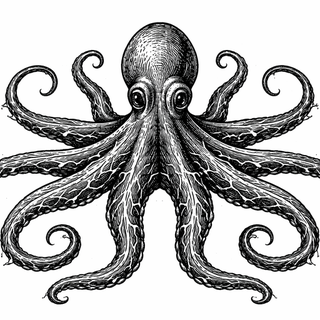
That is the fun trouble with octopuses. They tempt you into human comparisons and then immediately wriggle out of them.
The Alien at the Neuroscience Bar
For a long time, scientists treated intelligence a bit like a dress code. Big centralized brain? Good. Mammal-like layout? Even better. But octopuses arrived wearing eight arms, zero backbone, and the energy of a genius who refuses to use your software. Their nervous system is huge for an invertebrate, with roughly 500 million neurons, and a lot of the action is spread through the body instead of being bossed around by one command center [2,3].
That distributed setup matters. In humans, the brain usually acts like a control freak who copies everyone on the email. In octopuses, the arms can handle a surprising amount locally. They taste, touch, and manipulate the world with a degree of autonomy that makes the whole animal look less like a single pilot and more like a jazz ensemble that somehow still lands the song.
So when researchers ask whether octopus brains "work like humans'," the answer seems to be: a little, sometimes, in certain useful ways - but also not really, and that's the good part.
Same Tricks, Different Wiring
There are genuine parallels. Cephalopods evolved large brains and camera-like eyes independently of vertebrates, which is evolution showing off a bit. Some learning circuits in octopuses use synaptic strengthening that resembles mechanisms tied to memory in mammals, and recent work suggests their visual system organizes information in surprisingly structured ways [1,4]. If you only looked at behavior from across the room, you might think the octopus and the human brain shop at the same store.
Then you get closer and the floor plan is completely different.
A 2023 review in Current Biology argues that cephalopod vision is not just impressive, but central to how these animals build behavior, with much of the brain devoted to visual processing [2]. Another 2023 study mapped visual responses in the octopus optic lobe and found orderly organization there too, which sounds very familiar if you grew up on vertebrate neuroscience [4]. But "familiar" is not the same as "the same." Octopuses seem to reach similar behavioral outcomes using circuitry that evolved on a very separate branch of the tree of life. Evolution, apparently, is allowed to reuse the vibe without reusing the blueprint.
Why Neuroscientists Keep Chasing the Tentacles
This is where the story gets bigger than one especially charismatic sea noodle.
If intelligence can emerge in a brain that is distributed, body-heavy, and built under very different evolutionary pressures, then human cognition stops looking like the default template and starts looking like one successful draft. That is a much more interesting universe to live in. It means neuroscience is not just studying octopuses because they are cool, though to be fair they are outrageously cool. It is studying them because they stress-test our assumptions about what brains need in order to perceive, learn, remember, and act.
The tools are catching up. Researchers recently reviewed the molecular weirdness of cephalopod nervous systems, including extensive RNA editing that may help fine-tune neural function [5]. New untethered recording methods are also starting to capture brain activity in freely behaving octopuses instead of forcing them into the scientific equivalent of sitting for a school portrait [6]. Once you can watch the animal think while it actually moves through the world, the questions get sharper fast.
Why You Should Care Even If You Don't Plan to Become an Octopus
The obvious payoff is basic science. A less obvious one is engineering. In May 2025, researchers at the University of Bristol reported an octopus-inspired soft robot that can sense and adapt to its surroundings without relying on a single central computer, borrowing the logic of distributed control from octopus arms. That kind of design could matter for delicate surgery, search-and-rescue devices, and robots that need to handle messy real life rather than just look confident in a lab demo [7].
There is also an ethics angle, and it is not small. The more evidence we gather that cephalopods are flexible, perceptive, and capable of rich experience, the flimsier the old "just a weird mollusc" shrug starts to look. Europe already gives cephalopods special protection in research, and debates about welfare, farming, and humane care have only grown louder in the past few years [3].
So no, the most interesting question is probably not whether octopus brains work like ours. That question flatters us too much. The better question is whether nature found another route to intelligence entirely - one that runs through arms that think, skin that signals, and a brain that never bothered to read the mammal manual.
Honestly, rude of them to be this clever without even having a spinal cord.
References
- Drew L. Do octopus brains work like humans' - or is there another way to be smart? Nature. 2026. DOI: https://doi.org/10.1038/d41586-026-01302-4
- Pungor JR, Niell CM. The neural basis of visual processing and behavior in cephalopods. Current Biology. 2023;33(20):R1106-R1118. DOI: https://doi.org/10.1016/j.cub.2023.08.093. PMCID: https://pmc.ncbi.nlm.nih.gov/articles/PMC10664291/
- Schnell AK, Burn CC, Browning H, Crump A, Birch J. Cephalopod behavior: from neural plasticity to consciousness. Biological Reviews. 2021;97(1):182-203. DOI: https://doi.org/10.1111/brv.12752. PMCID: https://pmc.ncbi.nlm.nih.gov/articles/PMC9039538/
- Pungor JR, Shigeno S, Pifferi F, Panetsos F, Niell CM. Functional organization of visual responses in the octopus optic lobe. Current Biology. 2023;33(14):2943-2954.e4. DOI: https://doi.org/10.1016/j.cub.2023.05.069
- Rosenthal JJC, Eisenberg E. Extensive recoding of the neural proteome in cephalopods by RNA editing. Annual Review of Animal Biosciences. 2023;11:57-75. DOI: https://doi.org/10.1146/annurev-animal-060322-114534
- Gutnick T et al. Recording electrical activity from the brain of behaving octopus. Current Biology. 2023. DOI: https://doi.org/10.1016/j.cub.2023.02.006
- University of Bristol. Handy octopus robot can adapt to its surroundings. May 14, 2025. https://www.bristol.ac.uk/cabot/news/2025/octopus.html
Disclaimer: The image accompanying this article is for illustrative purposes only and does not depict actual experimental results, data, or biological mechanisms.