
This is going to sound strange, but one of the stars of this story is a very specific kind of MRI scan - the FLAIR sequence, which makes shabby-looking patches in the brain’s white matter light up like coffee stains on a shirt you swore was clean. That imaging trick, along with blood biomarkers, cerebrospinal fluid markers, EEG, MEG, and old-fashioned autopsy work, is how researchers have started to see something medicine has long suspected but not fully mapped: frailty is not just a body problem. It has fingerprints in the brain too. The new review by Sciancalepore and colleagues pulls that scattered evidence into one place. (Sciancalepore et al., 2026)
The Brain Is Not a Bystander
Frailty is the state where the body has less reserve and less bounce-back. Small stressors hit harder. A bad infection, a new medication, or a fall can suddenly do much more damage than they used to. The standard picture includes weakness, slowness, exhaustion, weight loss, and low activity. Not glamorous, but biologically revealing.
What this review argues is that the brain may be part of that whole setup, not just a spectator in the cheap seats. Across imaging studies, frailty tends to travel with more white matter hyperintensities - those bright MRI spots linked to small vessel disease - and with lower gray matter volume in regions involved in thinking and control. In plainer English: the brain’s cables look rougher, and some of the office space appears to shrink. (Sciancalepore et al., 2026)
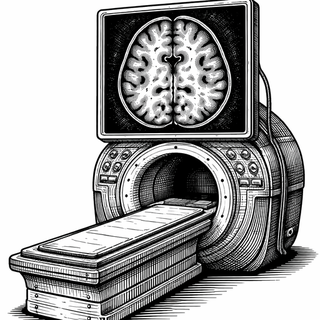
That fits with a 2025 meta-analysis linking frailty with higher white matter hyperintensity burden. (Li et al., 2025)
Why the White Matter Drama Matters
White matter is the brain’s communication infrastructure. Gray matter gets the celebrity treatment because it contains the neuron cell bodies, but white matter is what keeps the messages moving. When it gets damaged, processing speed, balance, gait, and executive function can all wobble.
One 2023 study found that frontal white matter hyperintensities partly mediated the link between frailty and executive dysfunction in older adults without dementia. That is a careful scientific way of saying the brain’s planning-and-self-control circuits may be one place where frailty cashes out into real-world trouble. The review also points to altered EEG and MEG patterns in frail adults, hinting that this is not just a structural issue. (Pozo et al., 2023; Sciancalepore et al., 2026)
Frailty and Dementia Keep Hanging Around Each Other
Here is where things get especially interesting. Frailty seems to show up years before dementia diagnosis and then speed up as diagnosis gets closer. A large JAMA Neurology study spanning nearly 30,000 people in the US and UK found higher frailty 8 to 20 years before dementia onset, with acceleration 4 to 9 years beforehand. That does not prove frailty causes dementia in a neat villain-monologue way, but it does suggest frailty is not some side quest. (Ward et al., 2025)
Newer biomarker work adds another layer. In a 2025 population-based study, physical frailty was associated with a more Alzheimer-like plasma profile - higher p-tau217, GFAP, and neurofilament light chain, plus a lower Aβ42/Aβ40 ratio. In other words, some people who look frail at the whole-person level also show blood signatures of neurodegeneration and neuroinflammation. (Tian et al., 2025)
The Real Hook Here
The appeal of this research is that frailty might become a measurable, modifiable warning sign. If brain changes, inflammation, mitochondrial dysfunction, and impaired protein housekeeping all feed into frailty, then treating frailty earlier could potentially lower later neurological damage - or at least help clinicians spot risk sooner.
That matters in ordinary life. Frailty is not an abstract graph on a geriatrician’s laptop. It is the difference between recovering from a hospitalization and not recovering, between staying independent and suddenly needing much more help.
The Catch, Because Of Course There Is a Catch
This paper is a narrative review, not a single decisive experiment. The field still has annoying problems - different frailty definitions, different imaging methods, lots of cross-sectional data, and the eternal chicken-and-egg issue. Does brain pathology help drive frailty? Does frailty make the brain less resilient to pathology? Aging research loves a bidirectional relationship the way movie studios love a multiverse.
Still, the broad picture looks increasingly hard to ignore. Frailty seems tied to vascular brain damage, altered neural function, and biomarker changes associated with neurodegeneration. That makes frailty feel less like a vague clinical vibe and more like a systems-level warning light. The aging brain is not a lonely organ deteriorating in a sealed jar. It is blended into the body’s larger wear-and-tear economy, with blood vessels, immune signals, energy supply, movement, and cognition all smudging into one another like wet ink.
References
- Sciancalepore F, Salemme S, Valletta M, et al. Frailty and the brain: A narrative review of functional and pathological correlates. Ageing Res Rev. 2026;113:102945. doi:10.1016/j.arr.2025.102945. PubMed: 41253248
- Li X, Luo A, Deng Y, et al. Relationship between frailty and white matter hyperintensities: A systematic review and meta-analysis. Arch Gerontol Geriatr. 2025. doi:10.1016/j.archger.2025.106089.
- Pozo N, Romero C, Andrade M, et al. Exploring the relationship between frailty and executive dysfunction: the role of frontal white matter hyperintensities. Front Aging Neurosci. 2023;15:1196641. doi:10.3389/fnagi.2023.1196641. PMCID: PMC10498544
- Ward DD, Cadar D, Gallacher J, et al. Frailty Trajectories Preceding Dementia in the US and UK. JAMA Neurol. 2025;82(1):61-71. doi:10.1001/jamaneurol.2024.3774. PubMed: 39527039
- Tian X, Zhu M, Ma Y, et al. Physical and biopsychosocial frailty, cognitive phenotypes, and plasma biomarkers for Alzheimer's disease in Chinese older adults: A population-based study. Alzheimers Dement. 2025;21(5):e70303. doi:10.1002/alz.70303. PubMed: 40399764
Disclaimer: The image accompanying this article is for illustrative purposes only and does not depict actual experimental results, data, or biological mechanisms.