If identity is partly the story your brain tells itself, then a weirdly large amount of that story depends on whether tiny embryonic cells stay where they are supposed to stay. Free will sounds grand and cinematic. Early brain development, meanwhile, often looks like a zoning dispute with better microscopy.
That is the pitch behind a new Cell Reports paper on ARHGAP11A, a gene that helps keep early human cortical progenitor cells in line during brain development [1]. Think of the developing cortex as a startup trying to scale without lighting the office kitchen on fire. You need the right people in the right rooms, the walls still standing, and somebody stopping the team from pivoting into chaos after two promising Slack messages. ARHGAP11A seems to be one of those somebodys.
The Cortex Needs Adults in the Room
Early in development, the cortex is built by apical progenitors, stem-like cells that line the ventricular zone, a kind of cellular launchpad for future neurons and glia. These progenitors need strong architecture and good timing. Divide too messily, detach too early, or convert into neurons too fast, and you can burn through your builder population before the project is finished.
That is exactly the problem this study tackled in human forebrain organoids - lab-grown mini-tissues that mimic key features of early brain development and let scientists study events you cannot exactly schedule in a living human fetus for 2 p.m. on Thursday [1-3].
The authors used CRISPR to knock out ARHGAP11A in these organoids. What happened? The ventricular zone lost its tidy organization. The angles of cell division went off-script. More progenitors peeled away from the ventricular surface too soon, a process called delamination. That pushed the tissue toward premature neurogenesis, meaning it started making neurons early while draining the pool of progenitors needed for later growth. Downstream, the organoids showed lower cell density and fewer glial cells later on [1].
A Cytoskeleton Meltdown, Brought to You by RHOA-ROCK
Mechanistically, the paper points to the RHOA-ROCK-actin pathway. Translation: this is part of the machinery that controls cell shape, tension, and structural behavior. If the cortex were a company, actin would be the scaffolding, RHOA would be the aggressively overcaffeinated operations lead, and ROCK would be the enforcer who starts moving furniture without asking.
ARHGAP11A normally helps keep that system balanced. Without it, the cytoskeletal program gets dysregulated, the tissue architecture warps, and progenitor identity starts to wobble [1]. The especially convincing bit is that pharmacologically inhibiting RHOA or ROCK rescued major defects in the knockout organoids. That does not mean a brain-development pill is around the corner. It does mean the authors pinned the phenotype to a specific, testable signaling axis instead of just shrugging at the cells and calling them mysterious little goblins.
Why This Matters Beyond Gene Alphabet Soup
This paper is not just about one obscure gene with the branding energy of a CAPTCHA. It sits inside a bigger question: how does the human cortex grow big, layered, and weirdly capable without its progenitor cells losing the plot?
Recent reviews emphasize that brain organoids are becoming one of the best tools for studying exactly this problem, especially for human-specific developmental features that animal models do not fully capture [2-4]. Newer organoid systems are also getting better at regional patterning, connectivity, and reproducibility, which matters if you want to tell a real biological mechanism from lab noise wearing a fake mustache [3,5,6].
And here is the key insight: cortical disorders often begin not when neurons are already wiring up thoughts, but much earlier, when progenitor cells mis-handle division, polarity, migration, or fate choice. Reviews of malformations of cortical development increasingly point to organoids as a practical way to model these early failures in human tissue context [4]. So while this ARHGAP11A study is basic science, it feeds a larger pipeline. Better maps of progenitor control can improve disease models, sharpen gene-to-mechanism links, and maybe one day help researchers classify which developmental pathways are going wrong in specific patients.
The Catch, Because There Is Always a Catch
Organoids are useful, not magical. They model early development well, but they are still simplified systems with batch variability, limited maturation, and missing pieces of real brain biology [2,6,7]. So the sober read is this: the paper makes a strong mechanistic case that ARHGAP11A helps maintain ventricular zone integrity and apical progenitor identity in a human organoid model. The less sober internet version would be "scientists found the gene for consciousness," which is how you know the internet should not run journal club.
Still, this is a sharp result. It shows that keeping progenitors physically organized is not some cosmetic detail. It is part of how the cortex preserves its future options. Before your brain can become a machine for memory, language, ambition, regret, and overthinking a text from 11:47 p.m., it first has to solve a brutally unglamorous product problem: keep the builders anchored long enough to finish the build.
References
- Hass Y, Kniep J, Hoffrichter A, et al. ARHGAP11A maintains cortical progenitor identity through RHOA-ROCK signaling during human brain development. Cell Reports. 2025;44(12):116599. DOI: 10.1016/j.celrep.2025.116599
- Choe MS, Lo C, Park IH. Modeling forebrain regional development and connectivity by human brain organoids. Current Opinion in Genetics & Development. 2025;91:102324. DOI: 10.1016/j.gde.2025.102324
- Velasco S, Kedaigle AJ, Simmons SK, et al. Modelling human brain development and disease with organoids. Nature Reviews Molecular Cell Biology. 2025. DOI: 10.1038/s41580-024-00804-1
- Skove SL, Park JY, Sturiale BK, et al. Using cortical organoids to understand the pathogenesis of malformations of cortical development. Frontiers in Neuroscience. 2025;18:1522652. DOI: 10.3389/fnins.2024.1522652
- Wen J, Che X, Guo J, et al. Specification of human brain regions with orthogonal gradients of WNT and SHH in organoids reveals patterning variations across cell lines. Cell Stem Cell. 2025. DOI: 10.1016/j.stem.2025.04.006
- Takahashi Y, Matsumoto N, Kadoshima T, et al. Thalamus-cortex interactions drive cell type-specific cortical development in human pluripotent stem cell-derived assembloids. Proceedings of the National Academy of Sciences USA. 2025;122(48):e2506573122. DOI: 10.1073/pnas.2506573122
- Verstegen MMA, Coppes RP, Beghin A, et al. Clinical applications of human organoids. Nature Medicine. 2025;31:409-421. DOI: 10.1038/s41591-024-03489-3
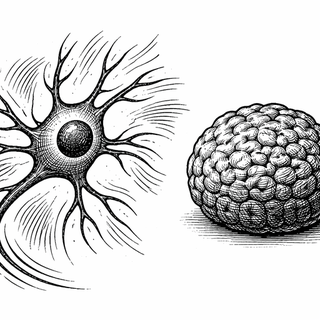
Disclaimer: The image accompanying this article is for illustrative purposes only and does not depict actual experimental results, data, or biological mechanisms.