
If you guessed "the kind that makes genetic counselors reach for extra coffee," congratulations, you are annoyingly close. A new study on GABRA3 suggests the real answer is not just where the mutation sits, but what it does. Same gene, same chromosome, wildly different consequences.
The Gene That Refused to Behave
GABRA3 encodes part of the GABA-A receptor, one of the brain's main braking systems. When GABA binds, these receptors usually make neurons less likely to fire. When that inhibition slips, seizures can move in like uninvited karaoke guests.
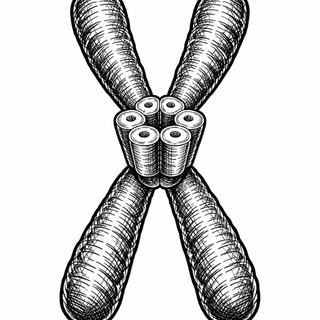
What makes GABRA3 especially odd is that it sits on the X chromosome. For years, clinicians knew variants in this gene could show up in epilepsy, developmental delay, and intellectual disability, but the inheritance pattern looked messy. Some families looked X-linked dominant. Others looked recessive. The old assumption was that these variants mainly caused loss of function - basically, a weaker brake pedal. Nice theory. Slight problem: the data kept refusing to sit still.
In this new paper, Johannesen and colleagues pulled together 43 people with 19 GABRA3 variants, then matched clinical details with electrophysiology and a mouse model. That matters because genetics alone can tell you a letter changed. Functional testing tells you whether that change turns the receptor down, turns it up, or makes it do something rude and unhelpful in between (Johannesen et al., 2026).
Not All Broken Brakes Are Broken the Same Way
Here is the plot twist: some GABRA3 variants caused gain of function, not loss. In other words, the receptor became more sensitive to GABA. Which sounds calming, right? More braking, less chaos. But brain circuits are not a tidy pub quiz where every clue points one way. In real neural networks, dialing inhibition up in the wrong cells, at the wrong time, can scramble the whole system.
That is exactly what the researchers saw. Gain-of-function variants tracked with the more severe picture: early and often treatment-resistant epilepsy, profound intellectual disability, major motor impairment, and cortical visual problems. Males were usually hit hardest. Loss-of-function variants were linked to milder neurodevelopmental issues, with epilepsy showing up much less often. Females carrying those variants were often unaffected carriers.
That difference helps explain the inheritance puzzle. If a variant causes gain of function, even one altered copy in a female can be enough to cause disease, so the pattern looks more X-linked dominant. If it causes loss of function, females can often compensate with the other healthy copy, while males - who only have one X chromosome - have less backup, so the pattern looks more X-linked recessive. Same gene. Different functional effect. Different family pattern.
The Mouse Also Voted "Yes, This Is Real"
The team did not stop at human data. They built a gain-of-function mouse model carrying the Q242L variant. The mice showed increased seizure susceptibility, cortical hyperexcitability, and worse outcomes in males, which lines up with the patient data (Johannesen et al., 2026). That pushes the story beyond a spreadsheet full of variants and into actual biology.
Other GABA-A receptor genes have shown the same lesson: gain-of-function and loss-of-function variants can produce very different syndromes. That showed up in GABRB3 and GABRD, where functional effects helped explain why some patients had far more severe epilepsy than others (Absalom et al., 2022; Ahring et al., 2022). Reviews over the past few years have hammered home the same point: epilepsy genetics is shifting from "which gene?" to "what exactly does this variant do?" (Bryson et al., 2023; Guerrini et al., 2023).
Why This Actually Changes Things
The immediate payoff is genetic counseling. If two families both hear "there is a GABRA3 variant," that no longer tells the whole story. The variant's functional consequence may say much more about seizure risk, likely severity, and whether female carriers are expected to be affected.
The longer-term payoff is precision medicine. If one mutation makes a receptor too weak and another makes it too eager, lumping them together would be like fixing a stuck accelerator and a dead battery with the same wrench. This study does not hand us a custom drug tomorrow morning, but it does give clinicians a much sharper map of the problem.
So the headline is not just that GABRA3 causes disease. It is that the brain cares deeply about direction. Up is not the same as down. More inhibition is not automatically better. And one tiny molecular tweak can change an inheritance pattern enough to make old categories look like they were written in pencil.
References
- Johannesen KM, Aung KP, Liao VWY, et al. Functional consequence of pathogenic GABRA3 variants determines whether X-linked inheritance is dominant or recessive. J Clin Invest. 2026;136(2):e189830. DOI: https://doi.org/10.1172/JCI189830
- Absalom NL, Liao VWY, Johannesen KMH, et al. Gain-of-function and loss-of-function GABRB3 variants lead to distinct clinical phenotypes in patients with developmental and epileptic encephalopathies. Nat Commun. 2022;13:1822. DOI: https://doi.org/10.1038/s41467-022-29280-x. PMCID: https://pmc.ncbi.nlm.nih.gov/articles/PMC8983652/
- Ahring PK, Liao VWY, Gardella E, et al. Gain-of-function variants in GABRD reveal a novel pathway for neurodevelopmental disorders and epilepsy. Brain. 2022;145(4):1299-1309. DOI: https://doi.org/10.1093/brain/awab391
- Bryson A, Reid C, Petrou S. Fundamental Neurochemistry Review: GABA-A receptor neurotransmission and epilepsy: Principles, disease mechanisms and pharmacotherapy. J Neurochem. 2023;165(1):6-28. DOI: https://doi.org/10.1111/jnc.15769
- Guerrini R, Conti V, Mantegazza M, Balestrini S, Galanopoulou AS, Benfenati F. Developmental and epileptic encephalopathies: from genetic heterogeneity to phenotypic continuum. Physiol Rev. 2023;103(1):433-513. DOI: https://doi.org/10.1152/physrev.00063.2021
Disclaimer: The image accompanying this article is for illustrative purposes only and does not depict actual experimental results, data, or biological mechanisms.