
A neurologist walks into a bar and says, "I need the pediatric version of those height charts from your doctor's office, but for the brain, and also for anxiety, attention problems, and the general chaos of being a teenager." The bartender says, "So you want a spreadsheet for the world's most dramatic organ?" Honestly, yes. That is pretty close to what this new Neuron paper built.[1]
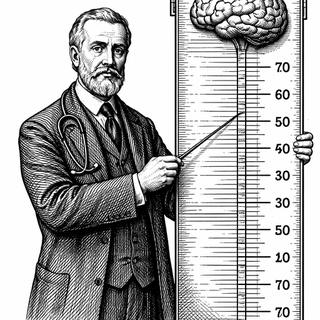
The Brain Has Been a Bit of a Data Diva
If you want to understand how mental health conditions show up during childhood and adolescence, you need a lot of brain scans, a lot of symptom data, and a lot less methodological nonsense. One study uses one MRI scanner, another uses a different scanner, one team asks about mood in one way, another asks in a different way, and suddenly you are comparing apples, oranges, and one suspicious zucchini.
That is the problem Reproducible Brain Charts, or RBC, is trying to fix.[1] The team combined data from five major youth brain-development studies across three continents, covering 6,346 young people. Then they did the unglamorous but wildly important work: rigorous quality checks, harmonized mental health measures, consistent image processing, and open sharing.
This is not the kind of science that gets a movie montage. Nobody sprints up the Philadelphia Museum steps holding a hard drive. But it is the kind that lets the field stop arguing over whose spreadsheet goblin caused the weird result.
Why This Is More Interesting Than It Sounds
You know how pediatricians can tell whether a child's height is tracking along an expected curve? Brain researchers have wanted something similar for years: reference charts showing what brain development usually looks like and how far one person sits from the typical range. Earlier lifespan brain-chart work showed this idea is possible at a huge scale.[2]
RBC takes that logic and leans hard into mental health. The authors used bifactor models to create shared dimensions of psychopathology across different datasets. In regular-person language, they tried to measure the big patterns underneath many psychiatric symptoms instead of getting trapped in the usual diagnostic family reunion, where every disorder shows up with overlapping luggage.
That matters because anxiety, attention problems, mood symptoms, and social difficulties often travel in packs. RBC is built for that messier reality.
The Glamorous Villains: Tiny Effects and Messy Methods
Neuroimaging has a long history of making exciting claims from samples that, in hindsight, were about as sturdy as a lawn chair in a windstorm. Recent reviews have been blunt: if you want brain-behavior findings that replicate, you usually need samples in the thousands, not dozens.[3] You also need reproducible analysis pipelines and transparent reporting.[4]
That is why RBC's quality control is such a big deal. The paper shows that careful image screening and data harmonization sharpen developmental patterns and change the strength of links to psychopathology.[1] In other words, some old findings may not have been wrong so much as underpowered or noisy.
This fits with broader advice from developmental MRI researchers: if you want useful conclusions in young people, quality control is not clerical busywork. It is the research.[5]
So What Could This Actually Change?
Best case? RBC becomes shared infrastructure, like good plumbing. Not glamorous, absolutely necessary, and everyone notices when it is missing.
Because the dataset is openly available through the International Neuroimaging Data-sharing Initiative, other teams can test ideas on the same resource, check each other's work, and ask better questions. Which brain features track age most reliably? Which patterns link to broad distress versus attention problems?
Over time, resources like this could help researchers build better developmental benchmarks, identify earlier warning signs, and sort out which brain patterns are robust enough to matter in clinics. I am saying "could" on purpose. Your local doctor is not about to pull up a brain chart the way they check blood pressure.
Still, the direction is promising. Reviews in child and adolescent psychiatry argue that large shared datasets are finally making it possible to see network-level patterns that smaller studies kept missing.[6] That does not mean the brain will hand over neat diagnostic labels like a well-organized aunt with color-coded casserole dishes. It means we may get better maps of developmental risk, resilience, and variation.
And that is the real charm of this paper. It is ambitious without pretending the brain is simple. It treats mental health like what it actually is: developmental, messy, deeply human, and easier to understand when scientists stop hoarding data like dragons sitting on an MRI cave.
References
- Shafiei G, Esper NB, Hoffmann MS, et al. Reproducible Brain Charts: An open data resource for mapping brain development and its associations with mental health. Neuron. 2025;113(22):3758-3779.e6. DOI: 10.1016/j.neuron.2025.08.026. PMCID: PMC12950001.
- Bethlehem RAI, Seidlitz J, White SR, et al. Brain charts for the human lifespan. Nature. 2022;604(7906):525-533. DOI: 10.1038/s41586-022-04554-y.
- Marek S, Laumann TO. Replicability and generalizability in population psychiatric neuroimaging. Neuropsychopharmacology. 2024;50(1):52-57. DOI: 10.1038/s41386-024-01960-w. PMCID: PMC11526127.
- Botvinik-Nezer R, Wager TD. Reproducibility in Neuroimaging Analysis: Challenges and Solutions. Biol Psychiatry Cogn Neurosci Neuroimaging. 2023;8(8):780-788. DOI: 10.1016/j.bpsc.2022.12.006.
- Backhausen LL, Herting MM, Tamnes CK, Vetter NC. Best Practices in Structural Neuroimaging of Neurodevelopmental Disorders. Neuropsychol Rev. 2022;32(2):400-418. DOI: 10.1007/s11065-021-09496-2. PMCID: PMC9090677.
- Uddin LQ, Castellanos FX, Menon V. Resting state functional brain connectivity in child and adolescent psychiatry: where are we now? Neuropsychopharmacology. 2024;50(1):196-200. DOI: 10.1038/s41386-024-01888-1. PMCID: PMC11525794.
Disclaimer: The image accompanying this article is for illustrative purposes only and does not depict actual experimental results, data, or biological mechanisms.