
Here's a party trick: some newborn brain cells are already acting like they have tenure while their neighbors are still basically interns. That is the setup for a new Nature Communications paper on the developing cortex, where scientists found a subset of inhibitory neurons that mature early and start using adult-style brake signals right around birth.[1]
Most of the time, GABA gets billed as the brain's main inhibitory neurotransmitter. In the adult brain, GABA usually tells neurons to calm down and stop acting like they just discovered espresso. But in early development, that same signal often does the opposite. It can be depolarizing, which is neuroscience for "this brake pedal is temporarily wired to a leaf blower."[2]
That switch depends a lot on KCC2, a protein that moves chloride out of neurons. Low chloride inside the cell lets GABA act more like a true brake. High chloride means GABA can stay oddly excitatory.[2,3] The textbook version has been that this developmental shift happens later, especially in principal neurons, the cortex's big output cells. Clean story. Nice story. Also, as this paper argues, incomplete story.[1]
Mission: Find Out Whether Interneurons Grow Up on a Different Schedule
The authors asked a very specific question: do cortical interneurons, the local circuit operators that keep neural traffic from turning into freeway karaoke, mature on the same timetable as principal neurons?
Answer: not all of them.
Using mouse tissue, electrophysiology, imaging, and single-cell RNA data, the team found a population of cortical interneurons expressing KCC2 as early as embryonic day 18. By birth, many of these cells, especially in layer 5, already showed hyperpolarizing GABA responses.[1] That matters because principal neurons in cortex usually do not make that shift until several days later.[1,2]
So the cortex is not waiting for every unit to finish basic training before operations begin. Some interneurons are early deployment assets.
The paper did not stop at "look, the marker is there." These KCC2-positive interneurons also looked more mature in other ways. They fired more readily, had more developed dendrites, showed heavier synaptic integration, and were enriched for genes linked to synaptic signaling.[1] In plainer English: they were not just wearing the uniform early. They were already doing the job.
Execution: Who Are These Early Birds?
The likely identity of many of these cells is somatostatin-expressing interneurons, particularly layer 5 populations with Martinotti-like features.[1] Short version: one inhibitory subpopulation seems to reach functional maturity ahead of schedule.
The team also looked at human prenatal single-nucleus RNA-seq atlases and found a similar KCC2-expressing interneuron population, suggesting this is not just a mouse oddity cooked up by evolution on a slow afternoon.[1,4] That evolutionary conservation hints that early-maturing inhibitory cells may be part of standard cortical construction, not lab trivia.
This fits with a broader shift in the field. Interneurons are not one blob called "inhibition." They are a wildly diverse force with different origins, wiring rules, and maturation timelines.[4-6] Recent reviews keep making the same point in more polite language: if you treat all interneurons like interchangeable circuit furniture, the brain will make you regret it.[5,6]
Assessment: Why You Should Care Even If You Do Not Spend Weekends Thinking About Chloride
First, this helps explain how newborn cortical circuits can function before the whole system is fully mature. If some interneurons acquire inhibitory control early, they may stabilize local activity and shape sensory processing before the rest of the network catches up.[1,2]
Second, timing matters in brain development. A lot. The developmental GABA shift has been linked to neurodevelopmental conditions when it occurs too early, too late, or in the wrong cells.[2,3] KCC2 is also of major interest in epilepsy and related hyperexcitability disorders, because weak chloride control can make inhibition fail at exactly the moment you need it most.[3,7]
That does not mean this paper hands us a treatment next Tuesday. This is basic developmental neuroscience, not a pharmacy menu. My broader web scan turned up plenty of expert discussion about KCC2 as a therapeutic target, especially for epilepsy, but very little mainstream news and basically no tidy patient-impact story yet. Translation: the field sees real clinical potential, but the convoy is still several miles from the objective.[3,7]
Still, the conceptual payoff is sharp. The developing cortex is not maturing in one smooth wave. It is more like staggered deployment. Some cells arrive early, establish order, and possibly teach the rest of the network how not to lose the plot. In the newborn brain, tiny assets can decide the whole operation.
That is the charm of this study. It takes a classic neuroscience story, the GABA switch, and reminds us that the brain hates uniformity almost as much as it hates simple explanations.
References
- Szrinivasan R, Trontti K, Mathieu R, et al. Functional KCC2 expression marks an evolutionarily conserved population of early-maturing interneurons in the perinatal cortex. Nat Commun. 2025. DOI: https://doi.org/10.1038/s41467-025-67270-x
- Peerboom C, Wierenga CJ. The postnatal GABA shift: A developmental perspective. Neurosci Biobehav Rev. 2021;124:179-192. DOI: https://doi.org/10.1016/j.neubiorev.2021.01.024
- Virtanen MA, Uvarov P, Mavrovic M, Poncer JC, Kaila K. The Multifaceted Roles of KCC2 in Cortical Development. Trends Neurosci. 2021;44(5):378-392. DOI: https://doi.org/10.1016/j.tins.2021.01.004
- Yu Y, Zeng Z, Xie D, et al. Interneuron origin and molecular diversity in the human fetal brain. Nat Neurosci. 2021;24(12):1745-1756. DOI: https://doi.org/10.1038/s41593-021-00940-3
- McFarlan AR, Chou CYC, Watanabe A, et al. The plasticitome of cortical interneurons. Nat Rev Neurosci. 2023;24(2):80-97. DOI: https://doi.org/10.1038/s41583-022-00663-9
- Rosés-Novella C, Bernard C. Dynamic regulation of cortical interneuron wiring. Curr Opin Neurobiol. 2025;92:102980. DOI: https://doi.org/10.1016/j.conb.2025.102980
- Wu L, Li Y, Hu Y, et al. Neuronal K+-Cl- cotransporter KCC2 as a promising drug target for epilepsy treatment. Acta Pharmacol Sin. 2024;45(2):231-245. DOI: https://doi.org/10.1038/s41401-023-01149-9
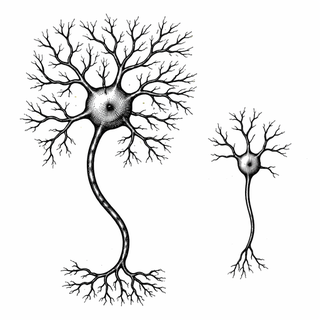
Disclaimer: The image accompanying this article is for illustrative purposes only and does not depict actual experimental results, data, or biological mechanisms.