
Microns are rude. A myelin sheath is built at a scale so small it makes your phone's "low battery" panic look emotionally stable, yet the brain still has to fund this construction project on schedule. Myelin is high-cost, high-yield infrastructure, and this paper argues that one humble choline transporter, SLC44A1, may sit uncomfortably close to the budget office.
Myelin is the fatty wrapping oligodendrocytes lay around axons in the central nervous system. It makes electrical signals faster and more reliable, and it helps keep axons healthy over time. In other words: speed plus maintenance, a combo every transit authority promises and very few deliver.
The new Cell Reports study asked a sharp question: what happens if cells cannot move enough choline through SLC44A1 while they are trying to build myelin? Choline is one of the raw materials used to make phosphatidylcholine, a major membrane lipid. No choline pipeline, no membrane boom. No membrane boom, no proper myelin. Markets hate a supply shock, and so do oligodendrocytes [1,2].
The authors found that SLC44A1 is enriched in oligodendrocytes and required for normal myelin development in zebrafish and rodents. When they knocked down the zebrafish version, oligodendrocytes matured poorly and produced less myelin. In rodents, loss of the transporter also disrupted developmental myelination. That fits a broader theme in myelin biology: oligodendrocytes are not just wrapping machines, they are metabolically intense cells trying to manufacture a huge amount of specialized membrane [3,4].
When the Supply Chain Fails
What makes this paper interesting is that it does not stop at "gene bad, phenotype bad." The authors push into mechanism. SLC44A1 deficiency altered expression of genes in the phosphatidylcholine pathway, reduced phospholipid biosynthesis, and changed myelin lipid composition. The cells are short on the molecular equivalents of drywall, copper wiring, and insulation foam.
This matters because myelin is mostly lipid. Not kind of lipid. Mostly lipid. Asking oligodendrocytes to build myelin without enough choline-derived membrane material is like asking a contractor to finish a subdivision after you misplaced the trucks and the lumber. Recent reviews land on the same point: myelin development depends on tightly managed lipid metabolism [2-5].
There is also a disease angle here that gives the work some real bite. Human SLC44A1 deficiency has been linked to childhood-onset neurodegeneration with cerebellar atrophy and leukoencephalopathy. That is white matter disease, and the paper offers a plausible reason why it happens here: the system may be under-insulated because the membrane supply chain is broken.
The Citicoline Plot Twist
Then comes the part that will get people's attention: citicoline supplementation restored developmental myelination in the SLC44A1-deficient animals.
Citicoline is a natural choline metabolite, also called CDP-choline, and it sits in the same broad metabolic neighborhood as phosphatidylcholine synthesis. So this rescue is not magic. It is more like handing a jammed factory a missing intermediate and seeing whether production restarts. In these animal models, it did [1,2].
That said, nobody should sprint from this paper to the supplement aisle like they are front-running a hot stock tip. As of May 16, 2026, I could not find evidence of a human clinical trial showing citicoline treats SLC44A1 deficiency specifically. This is preclinical work, and neuroscience has buried plenty of "worked in animals" stories before.
Why This Paper Earns Its Tab
The bigger payoff is conceptual. This study turns an obscure transporter into a plausible control point for developmental myelination. It also reinforces a shift in neuroscience: white matter disorders are not just wiring problems, they are metabolism problems.
That perspective matters beyond this rare condition. Recent work has tied choline transporters, oligodendrocyte lipid programs, and myelin composition more tightly together [2-5]. If that trend holds, papers like this one help narrow the gap between "a gene was mutated" and "here is the biochemical bottleneck we might actually do something about."
For now, the cleanest takeaway is simple: myelin development is an expensive build, SLC44A1 helps move critical material into the system, and citicoline may offer a way to bypass part of the shortage. Not a cure, not a victory lap, but a credible lead. In brain economics, that counts as a very decent quarter.
References
-
Chen Q, Chen X, Li Z, et al. SLC44A1 deficiency impedes myelin development in the central nervous system. Cell Reports. 2025;44:116617. DOI: 10.1016/j.celrep.2025.116617. PubMed: 41317319
-
Liu MC, Yu B, Xia Y, et al. Choline transporters are required for oligodendrocyte differentiation and myelin sheath formation in mouse postnatal brain. Cell Reports. 2025;44(7):115852. DOI: 10.1016/j.celrep.2025.115852. PubMed: 40540401
-
Kenny TC, Scharenberg S, Abu-Remaileh M, Birsoy K. Cellular and organismal function of choline metabolism. Nature Metabolism. 2025;7(1):35-52. DOI: 10.1038/s42255-024-01203-8. PMCID: PMC11990872
-
Nave KA, Werner HB. Ensheathment and myelination of axons: evolution of glial functions. Annual Review of Neuroscience. 2021;44:197-219. DOI: 10.1146/annurev-neuro-100120-122621. PubMed: 33722070
-
Vanherle S, Loix M, Miron VE, Hendriks JJA, Bogie JFJ. Lipid metabolism, remodelling and intercellular transfer in the CNS. Nature Reviews Neuroscience. 2025;26:214-231. DOI: 10.1038/s41583-025-00908-3
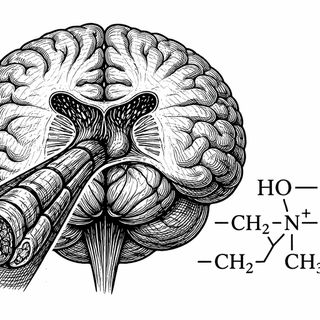
Disclaimer: The image accompanying this article is for illustrative purposes only and does not depict actual experimental results, data, or biological mechanisms.