
Tiny rebellions matter.
When a kid sneaks one more cookie after being told "absolutely not," you are watching impulse control lose a small battle. Alcohol use disorder works on a much bigger, sadder scale, but part of that story lives in the brain's control systems - especially the dorsolateral prefrontal cortex, a region that helps with planning, restraint, and stopping tonight's bad ideas from dressing up as tomorrow's plan.
In a new study, researchers looked at postmortem brain tissue from people with alcohol use disorder, zoomed in to the level of individual nuclei, and found something interesting: the loudest molecular disruptions were not mainly in neurons, the usual brain celebrities. They were in glia - especially microglia and astrocytes, the support staff that keep the neural nightclub from catching fire. Plot twist: the janitors may also be part of the drama. (Warden et al., 2026)
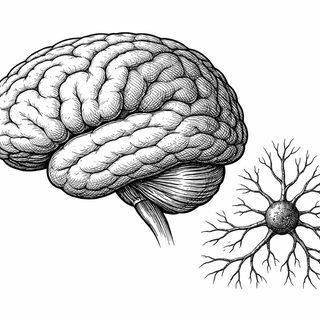
If neurons are the kids yelling across the playground, glia are the adults who keep the swings attached to the ground and occasionally break up fights. Astrocytes help manage fuel, chemical balance, and synapses. Microglia are the brain's resident immune crew, scanning for damage and trouble. They are not passive wallpaper.
That matters because alcohol use disorder is common and costly in human terms. According to SAMHSA's 2024 National Survey on Drug Use and Health, 27.9 million people age 12 or older in the United States had past-year alcohol use disorder in 2024, which is 9.7% of that population. Among adults, NIAAA reports 16.4 million men and 10.7 million women had past-year AUD. (SAMHSA, 2025, NIAAA)
So when a study says, "we found cell-type-specific changes in the control-heavy part of the cortex," that is not trivia for people who enjoy RNA sequencing a little too much. It is a clue about why self-control, stress, and relapse can become such a brutal mix.
What This Study Actually Did
The team used single-nucleus RNA sequencing on 73 postmortem dorsolateral prefrontal cortex samples - 36 from people with AUD and 37 from controls. That let them sort almost 460,000 nuclei into 32 cell clusters and ask a better question than older bulk studies could manage: which cells are changing, exactly?
Answer: quite a few, but glial subtypes stood out. The biggest transcriptomic dysregulation showed up in novel microglial and astrocytic subpopulations. The authors also layered in network analysis, proteomic validation, and aggregate genetic risk analysis. That last bit matters because it suggests some glial subtypes may not just be reacting to years of alcohol exposure. They may also sit closer to the biology of risk itself. (Warden et al., 2026)
That fits a broader pattern. A 2025 molecular psychiatry meta-analysis of 36 cross-species transcriptomic datasets found recurring pathways tied to immune signaling, extracellular matrix biology, and MAPK/ERK signaling in AUD. (Friske et al., 2025) Another 2024 study of human nucleus accumbens and dorsolateral prefrontal cortex samples found hundreds of differentially expressed genes in AUD, with especially strong signal in the prefrontal cortex after meta-analysis. (Willis et al., 2024)
Why Glia Make This More Interesting
For years, addiction research often treated glia like the stage crew. Important, sure, but not the stars.
A 2024 Science Advances paper showed that human microglial cells carrying higher polygenic risk for AUD responded differently to ethanol exposure, including altered gene-expression programs and phagocytic behavior. In plain English: genetic risk may shape how the brain's immune cells react to alcohol. (Li et al., 2024) A 2024 Journal of Clinical Investigation review makes the same broader point from the genetics side: the field is moving toward multiomic, cell-specific, and single-cell approaches because the older one-size-fits-all view misses too much of the machinery. (Zhou and Gelernter, 2024)
Think of it this way: if the brain is a household, neurons are not the only ones making noise. The people handling repairs and security also change what kind of household you end up living in.
What Could Come From This
No, this does not mean doctors are about to prescribe "one microglia reset, please" next Tuesday. Postmortem transcriptomics cannot prove exactly when these changes started, and gene-expression differences are not the same thing as a finished treatment plan. The study also focuses on one cortical region.
Still, it gives researchers a sharper map. If certain astrocyte or microglial states are repeatedly linked to AUD risk, progression, or relapse, they become better targets for follow-up work - and maybe eventually for therapies that aim at neuroimmune or glial pathways instead of only the classic neurotransmitter suspects.
That is the real charm here. This paper does not claim to solve alcohol use disorder. It does something better: it stops treating the cortex like a smoothie and starts asking which ingredients are actually causing the weird taste.
References
Warden AS, Salem NA, Brenner E, et al. Integrative Genomics Approach Identifies Glial Transcriptomic Dysregulation and Risk in the Cortex of Individuals With Alcohol Use Disorder. Biological Psychiatry. 2026;99(1):34-48. https://doi.org/10.1016/j.biopsych.2025.02.895
Friske MM, Torrico E, Haas MJW, et al. A systematic review and meta-analysis on the transcriptomic signatures in alcohol use disorder. Molecular Psychiatry. 2025;30(1):310-326. https://doi.org/10.1038/s41380-024-02719-x
Willis C, White JD, Minto MS, et al. Gene expression differences associated with alcohol use disorder in human brain. Molecular Psychiatry. 2024. https://doi.org/10.1038/s41380-024-02777-1
Li X, Liu J, Boreland AJ, et al. Polygenic risk for alcohol use disorder affects cellular responses to ethanol exposure in a human microglial cell model. Science Advances. 2024;10(45):eado5820. https://doi.org/10.1126/sciadv.ado5820
Zhou H, Gelernter J. Human genetics and epigenetics of alcohol use disorder. Journal of Clinical Investigation. 2024;134(16):e172885. https://doi.org/10.1172/JCI172885 ; PMCID: https://pmc.ncbi.nlm.nih.gov/articles/PMC11324314/
Substance Abuse and Mental Health Services Administration. Key Substance Use and Mental Health Indicators in the United States: Results from the 2024 National Survey on Drug Use and Health. Published July 14, 2025. https://www.samhsa.gov/data/sites/default/files/reports/rpt56287/2024-nsduh-annual-national/2024-nsduh-annual-national.htm
National Institute on Alcohol Abuse and Alcoholism. Alcohol Use Disorder (AUD) in the United States: Age Groups and Demographic Characteristics. Accessed May 16, 2026. https://www.niaaa.nih.gov/alcohols-effects-health/alcohol-topics/alcohol-facts-and-statistics/alcohol-use-disorder-aud-united-states-age-groups-and-demographic-characteristics
Disclaimer: The image accompanying this article is for illustrative purposes only and does not depict actual experimental results, data, or biological mechanisms.