
Consider this: one researcher squints at the results and says, "We are reconstructing 3D objects from brain activity." The other says, "Easy there - you're reconstructing what people looked at while trapped in a giant magnetic drum, not extracting their inner monologue like Professor X after three espressos." Both are a little right.
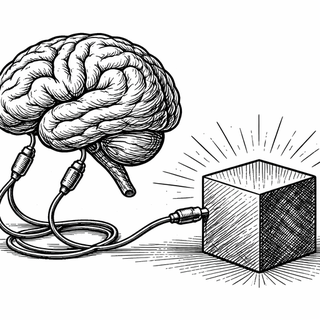
The new paper on MinD-3D++ asks a weirdly compelling question: if your visual system turns the outside world into brain activity, can a model reverse the trade and turn those signals back into a 3D object? Not just a fuzzy image. A textured 3D mesh. Your brain, apparently, has been keeping invoices.
The setup is much narrower than "mind reading," which is good because that phrase already has enough sci-fi baggage. The authors built on earlier MinD-3D work and expanded their paired fMRI-3D dataset to 15 participants and 4,768 objects. In the new fMRI-Objaverse portion, five subjects viewed 3,142 objects across 117 categories, each with text captions [1]. The model then tries to recover geometry and texture, not just category.
That matters because your brain does not experience the world as a stack of flat JPEGs. It builds a workable 3D guess from depth cues, motion, memory, and context. Visual cortex is less a camera and more a committee - the kind where everyone talks at once, but the budget somehow still passes.
Why This Is More Than a Party Trick
A lot of brain-decoding work has focused on reconstructing 2D images or classifying broad categories. That already moved the field. Recent papers have shown sharper reconstruction of viewed and imagined images, while reviews keep asking the more annoying and useful question: how much of this is real neural signal, and how much is the model being a very confident improv comedian? [2-4] MinD-3D++ pushes that fight into 3D.
Why? Because 3D reconstruction asks a harsher question of the model. It is not enough to say, "This brain pattern smells vaguely like chair." The system has to infer geometry, spatial relations, and now texture too. That is a tougher test of what visual brain signals actually carry.
There is also a neuroscience payoff. If some visual regions contribute more to semantic identity while others help with structure or texture, that gives researchers a better map of the brain's internal labor market. This paper wants to know who is handling shape futures versus texture futures.
Before We Start Selling Brain-To-Blender Plugins
Now the counterargument, because science gets sloppy when nobody plays defense.
This is not a universal thought decoder. It does not read random private memories. It does not work from a quick smartwatch scan while you buy toothpaste. fMRI is expensive, slow, and indirect - it measures blood-oxygen changes, not neurons firing in real time. The datasets are also tiny by machine-learning standards, so models can look smarter than they are if they lean too hard on priors learned elsewhere. Reviews and perspective pieces in this area keep stressing exactly that tension [2-4].
There is also the familiar "nice demo, now what?" problem. Even strong reconstructions usually come from tightly controlled lab conditions and lots of subject-specific training data. That is not failure. It is just the less cinematic truth. Your cortex is not a USB port. It is more like a legacy enterprise system held together by miracle, redundancy, and vibes.
So Why Bother?
Because even partial success here opens useful doors.
If these methods keep improving and replicate across larger, messier datasets, they could help scientists test how the brain builds object representations across space, category, and viewpoint. Down the line, related decoding tools might support communication aids for people who cannot easily speak or move, or help probe visual imagery in dreams, hallucinations, and disorders of perception. Not tomorrow. Not next Tuesday. But the direction is real.
The deeper appeal of MinD-3D++ is that it treats the brain less like a mystical blob and more like a system whose outputs can be audited. Messily and imperfectly, sometimes with the computational elegance of a raccoon opening a trash can. It does not prove we can read minds in the sci-fi sense. It makes a narrower, tougher claim: under controlled conditions, the brain leaves enough structured evidence behind that a model can begin rebuilding the 3D world a person just saw.
That is not telepathy. But it is one more reminder that perception is not magic. It is an economy. Signals come in, features get traded, meaning gets assembled, and somewhere in that noisy market your brain decides, yes, that lumpy textured thing is a backpack and not a very judgmental turtle.
References
- Gao J, Fu Y, Fu Y, Wang Y, Qian X, Feng J. MinD-3D++: Advancing fMRI-Based 3D Reconstruction With High-Quality Textured Mesh Generation and a Comprehensive Dataset. IEEE Transactions on Pattern Analysis and Machine Intelligence. 2025. DOI: 10.1109/TPAMI.2025.3599860. PubMed: 40828699.
- Jabakhanji R, Vigotsky AD, Bielefeld J, Huang L, Baliki MN, Iannetti GD, Apkarian AV. Limits of decoding mental states with fMRI. Neuroscience and Biobehavioral Reviews. 2022;149:101-122. DOI: 10.1016/j.neubiorev.2022.105153. PMCID: PMC9238276.
- Erichsen CT, Li D, Fan L. Decoding human brain functions: Multi-modal, multi-scale insights. The Innovation. 2024;5(1):100554. DOI: 10.1016/j.xinn.2023.100554. PMCID: PMC10794116.
- Mathis MW, Perez Rotondo A, Chang EF, Tolias AS, Mathis A. Decoding the brain: From neural representations to mechanistic models. Cell. 2024;187(21):5814-5832. DOI: 10.1016/j.cell.2024.08.051. PubMed: 39423801.
Disclaimer: The image accompanying this article is for illustrative purposes only and does not depict actual experimental results, data, or biological mechanisms.