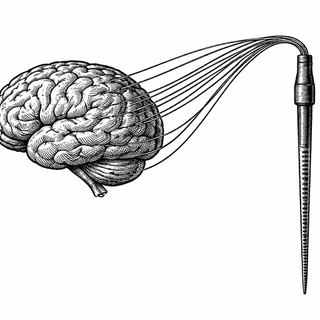
Wi-Fi dead zones are a nice reminder that location matters; if your router samples the room from one sad corner, it misses half the party. Neurons create the same problem for neuroscientists, except the "party" is millions of electrical blips moving through cell bodies, dendrites, and axons, and the router is a silicon probe. In a new Neuron paper, researchers built an ultra-dense Neuropixels probe - NP Ultra - and showed that listening from many more nearby points changes what you can hear and who you can identify (Ye et al., 2025).
More Ears, Less Guessing
Classic extracellular electrophysiology works a bit like trying to identify bar patrons by hearing muffled snippets through a wall. You catch spikes - brief voltage blips - but you do not directly see the neuron, and you definitely do not get a little nametag saying "hello, I am a parvalbumin interneuron." That limitation matters because different cell types do different jobs, and if your tool preferentially detects some while missing others, your theory of the circuit starts leaning.
The authors attacked that problem by shrinking and packing the recording sites much more densely than earlier Neuropixels designs. The tradeoff is simple: less spatial span, much more local detail. That bargain paid off. In mouse visual cortex, NP Ultra more than doubled the number of neurons detected compared with earlier probes (Ye et al., 2025).
The Plot Twist Was Not More Neurons - It Was Better Identity
The clever part is not merely that NP Ultra heard more spikes. It heard them with enough spatial detail to say something about where on the neuron those signals likely came from. The paper highlights a feature called the waveform "footprint" - basically how broadly a spike spreads across nearby recording sites. Small footprints tended to mark axonal recordings, while larger ones fit somatic recordings better. That matters because extracellular recordings usually flatten the neuron into a single event. Here, the spatial pattern helped recover whether the signal likely came from the main cell body or a passing axon (Ye et al., 2025).
That same extra detail also improved cell-type classification. Using genetically identified mouse cortical neurons, the team showed that three inhibitory cell types could be distinguished from one another with around 80% accuracy, and from other neurons with around 85% accuracy. Not perfect, obviously; the brain remains committed to being the Ship of Theseus built from saltwater and excuses. But for extracellular recording, this is real progress.
Why This Matters Outside Mouse Cortex
This paper lands in the middle of a larger Neuropixels era. In humans, researchers have already used Neuropixels during neurosurgery to record up to roughly 100 single units across the depth of neocortex (Chung et al., 2022). A 2024 Nature perspective argued that pairing large-scale recordings with single-cell profiling could finally link human neural activity to actual cell types (Lee et al., 2024). Method papers have also made multi-probe recordings in awake mice more practical (Durand et al., 2023), and a 2025 Nature Neuroscience study extended high-density Neuropixels recording deep into nonhuman primate brains (Trautmann et al., 2025).
So NP Ultra is not an isolated gadget flex. It fits a broader shift in neuroscience: less asking "which region lit up?" and more asking "which exact cells, in which compartments, with which timing, are doing the work?"
The Real-World Angle, Minus the Hype Hangover
If results like this hold up and scale, the practical payoff is not just prettier figures. Better detection means more neurons per experiment. Better compartment resolution means cleaner separation of local computation from passing signals. Better cell-type identification means stronger links between physiology, anatomy, genetics, and behavior. Put those together and you get a more realistic chance of mapping circuits in a way that might someday help with disease models, brain-computer interfaces, or epilepsy surgery.
There are still catches. NP Ultra gains detail partly by sacrificing recording span, so it is not simply "old probe, but more." Classification accuracy is good, not magical. And mouse visual cortex is a friendly proving ground compared with real human disease. Still, the philosophical point is hard to ignore: when the brain seems inscrutable, sometimes the problem is not that nature is hiding the answer - it is that our microphone has been too coarse.
For decades, neuroscientists have listened to the brain like astronomers using a blurry telescope and then argued about constellations. NP Ultra does not solve the mind, cure confusion, or stop neurons from acting like caffeinated rumor merchants. It does something more useful. It improves the sampling. And in science, as in maps, gossip, and GPS, better sampling is often the difference between "I have a theory" and "I can finally tell where I am."
References
Ye Z, Shelton AM, Shaker JR, et al. Ultra-high-density Neuropixels probes improve detection and identification in neuronal recordings. Neuron. 2025;113(23):3966-3982.e12. doi:10.1016/j.neuron.2025.08.030. PubMed: 41033305
Chung JE, Sellers KK, Leonard MK, et al. High-density single-unit human cortical recordings using the Neuropixels probe. Neuron. 2022;110(15):2409-2421.e3. doi:10.1016/j.neuron.2022.05.007. PubMed: 35679860
Durand S, Heller GR, Ramirez TK, et al. Acute head-fixed recordings in awake mice with multiple Neuropixels probes. Nature Protocols. 2023;18(2):424-457. doi:10.1038/s41596-022-00768-6. PubMed: 36477710
Lee AT, Chang EF, Paredes MF, Nowakowski TJ. Large-scale neurophysiology and single-cell profiling in human neuroscience. Nature. 2024;630(8017):587-595. doi:10.1038/s41586-024-07405-0. PMCID: PMC12049086
Trautmann EM, Hesse JK, Stine GM, et al. Large-scale high-density brain-wide neural recording in nonhuman primates. Nature Neuroscience. 2025;28(7):1562-1575. doi:10.1038/s41593-025-01976-5. PMCID: PMC12229894
Wei Y, Nandi A, Jia X, et al. Associations between in vitro, in vivo and in silico cell classes in mouse primary visual cortex. Nature Communications. 2023;14(1):2344. doi:10.1038/s41467-023-37844-8. PMCID: PMC10126114
Disclaimer: The image accompanying this article is for illustrative purposes only and does not depict actual experimental results, data, or biological mechanisms.