
So here's what nobody tells you about memory breakdowns: sometimes the problem is not that the brain's filing cabinet caught fire. Sometimes the parts list is still there, but the timing chain is slipping and the whole engine starts coughing when you ask it to replay Tuesday afternoon. That is more or less what a new Cell Reports paper found in people with amnesia. A small part of the hippocampus called CA2/3 seems to help keep memory patterns steady in other brain regions. When that part is damaged, recall gets shaky in a very literal, measurable way (Miller et al., 2025).
If you were taught that the hippocampus is "the memory center," that is serviceable shorthand, the same way calling a car "an engine" is serviceable shorthand. It gets you through dinner. It does not get you through repairs.
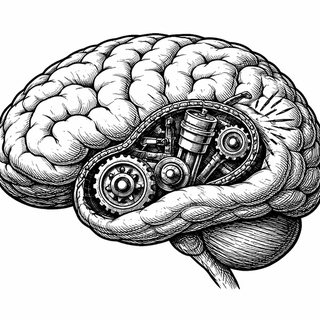
Episodic memory - your ability to mentally revisit a specific event from your own life - runs on a network. The hippocampus helps rebuild the scene, but frontal and parietal regions help hold the right details in place and keep the whole story from wandering off into the weeds. Recent work has kept hammering this point from different angles, including reviews of hippocampal representation, hippocampal-neocortical coordination, and autobiographical memory networks (Fenton, 2024; Gattas et al., 2023; Daviddi et al., 2023).
The new study zooms in on a part of the system usually hidden under the hood: hippocampal subfields. CA2/3 is a tiny region, but tiny parts fail expensively.
What the researchers actually did
The team studied 18 people with amnesia caused by bilateral focal hippocampal damage and compared them with healthy controls. Participants recalled autobiographical memories while undergoing fMRI. Then the researchers used representational similarity analysis, which is a fancy way of asking whether the brain produces stable, distinguishable activity patterns when a person tries to remember one life event versus another.
In plain English: if one memory is your wedding and another is the time you locked yourself out in slippers, the brain should not handle those as the same smudged blob.
That is where things got interesting. People with hippocampal damage showed weaker episodic-memory representations in the left angular gyrus and less distinct memory representations in the right inferior frontal gyrus. They also showed reduced trial-by-trial stability in the right angular gyrus, right inferior frontal gyrus, and right orbitofrontal cortex. The size of total CA2/3 volume predicted those representational problems. Better stability in right frontal regions also predicted better episodic recall performance (Miller et al., 2025).
That matters because it ties a structural problem in the hippocampus to a functional problem in the wider memory network. Not just "memory is worse." More like: this subfield is worn, these downstream readouts wobble, and performance drops accordingly.
Why CA2/3 is a weird little diva
CA3 has long been treated as one of the hippocampus's pattern-handling specialists - the part often invoked when neuroscientists talk about separating similar experiences and reconstructing them later from partial cues. If memory were an ignition system, CA3 would be the component that helps the engine catch from a rough turn instead of flooding itself.
That broader idea fits recent literature. Reviews and human imaging work suggest the hippocampus does not just store event fragments like a passive attic. It helps generate structured representations and coordinate with cortex during recall and discrimination (Fenton, 2024; Gattas et al., 2023). A recent autobiographical-memory study also showed that hippocampal subfields interact with a wider neocortical network during recall (Leelaarporn et al., 2024).
So this paper adds a useful piece: CA2/3 volume predicted how stable those cortical memory patterns were.
Why you should care, even if your hippocampus seems to be clocking in
This does not hand us a treatment tomorrow morning. It does something more basic and more useful. It shows one path by which amnesia may happen in humans: not only by losing access to memories, but by making the brain's replay of those memories less stable across a broader network.
That could matter for conditions where episodic memory falls apart early, including inflammatory and degenerative disorders. It also matters for diagnosis. As imaging of hippocampal subfields improves, researchers may get better at linking very specific tissue damage to very specific memory failures, instead of treating the hippocampus like one big anonymous lump.
There is still plenty of unfinished work under the hood. The study is small. The patient group is clinically unusual. And fMRI pattern stability is not the same thing as reading memory content off the brain like a sci-fi receipt printer. But it is a solid mechanical clue. Damage a narrow hippocampal subfield, and the frontal memory machinery starts running unevenly.
For a field that often ends up waving at "network dysfunction" like a mechanic shrugging at a blinking dashboard light, that is real progress.
References
- Miller TD, Hickling AL, Wu YI, Zhou JH, Handel AE, Coutinho E, Pollak TA, Zandi MS, Maguire EA, Rosenthal CR. CA2/3-dependent stability of frontal mnemonic representations predict episodic deficits in human amnesia. Cell Reports. 2025;44(11):116527. DOI: https://doi.org/10.1016/j.celrep.2025.116527
- Fenton AA. Remapping revisited: how the hippocampus represents different spaces. Nature Reviews Neuroscience. 2024;25(6):428-448. DOI: https://doi.org/10.1038/s41583-024-00817-x
- Gattas S, et al. Theta mediated dynamics of human hippocampal-neocortical learning systems in memory formation and retrieval. Nature Communications. 2023;14:8424. DOI: https://doi.org/10.1038/s41467-023-44011-6
- Daviddi S, Pedale T, St Jacques PL, Schacter DL, Santangelo V. Common and distinct correlates of construction and elaboration of episodic-autobiographical memory: An ALE meta-analysis. Cortex. 2023;163:123-138. DOI: https://doi.org/10.1016/j.cortex.2023.03.005 PMCID: https://pmc.ncbi.nlm.nih.gov/articles/PMC10192150/
- Leelaarporn P, Dalton MA, Stirnberg R, Stöcker T, Spottke A, Schneider A, McCormick C. Hippocampal subfields and their neocortical interactions during autobiographical memory. Imaging Neuroscience. 2024;2. DOI: https://doi.org/10.1162/imag_a_00105 PMCID: https://pmc.ncbi.nlm.nih.gov/articles/PMC12247578/
- Gilmore AW, Nelson SM, McDermott KB. Evidence supporting a time-limited hippocampal role in retrieving autobiographical memories. Proceedings of the National Academy of Sciences of the United States of America. 2021;118(12):e2023069118. DOI: https://doi.org/10.1073/pnas.2023069118 PMCID: https://pmc.ncbi.nlm.nih.gov/articles/PMC8000197/
Disclaimer: The image accompanying this article is for illustrative purposes only and does not depict actual experimental results, data, or biological mechanisms.