
Take the left lane just behind your forehead, drift into the caudal middle frontal gyrus - a patch of prefrontal cortex that sounds like an overpriced subway stop - and what if I told you this is one of the places researchers saw signs of change in Japanese teens whose mental health looked less stable during COVID? That is the weird part, because the usual pandemic script goes: lockdowns happened, everyone felt awful, end scene. This Tokyo study found something messier.
Researchers followed 84 Japanese high school students, ages 16 to 18, with monthly K6 psychological distress surveys from July 2019 to September 2021. That matters because it captures life before and during the pandemic instead of relying on memory, which is a lovely storyteller and a terrible accountant.
Then the team did something unusual. Instead of flattening six survey answers into one total score, they used energy landscape analysis, a method borrowed from statistical physics. In plain English: mental health becomes less like one scoreboard number and more like a map of possible states, with some easier to fall into and some harder to escape.
And the big surprise? In this cohort, the students were less likely to occupy a depressive state during the pandemic than before it. Before COVID-19, the "healthy" state appeared 11 times as often as the depressive state. During the pandemic, that ratio rose to 18.2, 18.5, and 15.0 across successive periods. Not exactly the ending most people expected.
So Did the Pandemic Help Teen Mental Health?
Easy there. Put the confetti cannon down.
This paper does not say the pandemic was good for teenagers in general. It says that in this small Tokyo cohort, distress patterns looked better on average during the pandemic period, and that one-number summaries can miss how symptoms cluster together.
That finding is less bonkers than it sounds. For some adolescents, school can be a pressure cooker with uniforms. Commutes, cram culture, social stress, performance anxiety, relentless comparison - all of that can grind away in the background. When routines changed, some teens may have felt temporary relief from exactly those pressures.
Other studies hint at the same split-screen reality. A 2022 JAMA Network Open study in China found adolescents reported fewer anxiety and depression symptoms during school closures than before them. A 2024 JAMA Network Open cohort in the US also found mixed patterns, with some measures changing only modestly and some groups showing resilience. Meanwhile, broader meta-analyses still show that, across many settings, depression and anxiety in young people generally rose during the pandemic. So no, there is no single pandemic teen experience wrapped up with a neat bow.
Why the Method Is the Real Headliner
Teen mental health is rarely a clean up-or-down graph. One month you are restless and exhausted. Next month you are mostly fine except sleep has packed its bags. A total score can blur those patterns into mush. Energy landscape analysis tries to preserve the combinations and transitions between symptoms, which matters if what you care about is not just how much distress exists, but how it moves.
That matters for the next public health crisis. If schools or clinicians can spot when a teen is drifting toward a less stable pattern before the total score explodes, support could become earlier and more precise. Not Minority Report for psychiatry - just less guesswork.
The Brain Makes a Cameo
The researchers also found two subgroups. One was relatively low-distress and stable. The other had higher, wobblier distress. That less stable group showed greater cortical-thickness changes in the caudal middle frontal gyrus and temporal pole, in a direction the authors describe as accelerated adolescent brain development.
Important translation: this is descriptive, not proof that pandemic stress remodeled those brain regions. The MRI piece is a clue, not a courtroom confession.
The Catch, Because There Is Always a Catch
This study involved 84 students from Tokyo. The cohort may not represent rural Japan, other countries, or teens with very different home lives. The paper also cannot tell us whether lower distress reflected relief, adaptation, family context, school structure, or something else.
It lands at a moment when the wider conversation is shifting. WHO continues to frame adolescent mental health as a global priority, and 2024 CDC reporting suggested some US youth mental health indicators improved from their worst pandemic-era levels while remaining a serious concern.
What this study adds is a sharper question. Not "did teens get worse or better?" That question is too blunt. The better one is: which teens, under which conditions, moved toward stability - and which ones did not? The brain refuses to hand over a simple answer. It is less a tidy spreadsheet and more a detective novel written by electricity.
References
- Tatematsu D, Nakamura N, Abe MS, Ishikawa T, Ezaki T, Cai L, et al. Psychological distress among Japanese high school students during the COVID-19 pandemic: An energy landscape analysis. PLoS Med. 2025;22(2):e1004884. DOI: https://doi.org/10.1371/journal.pmed.1004884
- Madigan S, Racine N, Vaillancourt T, Korczak DJ, Hewitt JMA, Pador P, et al. Changes in Depression and Anxiety Among Children and Adolescents From Before to During the COVID-19 Pandemic: A Systematic Review and Meta-analysis. JAMA Pediatr. 2023;177(6):567-581. DOI: https://doi.org/10.1001/jamapediatrics.2023.0846 - PubMed: https://pubmed.ncbi.nlm.nih.gov/37126337/
- Blackwell CK, Wu G, Chandran A, Arizaga J, Bosquet Enlow M, Brennan PA, et al. Longitudinal Changes in Youth Mental Health From Before to During the COVID-19 Pandemic. JAMA Netw Open. 2024;7(8):e2430198. DOI: https://doi.org/10.1001/jamanetworkopen.2024.30198 - PubMed: https://pubmed.ncbi.nlm.nih.gov/39186267/
- Qu M, Yang K, Cao Y, Wang X, Tan S, Xiu M, Zhang X. Symptoms of Anxiety and Depression Among Adolescents Before vs During COVID-19-Related School Closures in China. JAMA Netw Open. 2022;5(11):e2241752. DOI: https://doi.org/10.1001/jamanetworkopen.2022.41752 - PMCID: https://pmc.ncbi.nlm.nih.gov/articles/PMC9664261/
- Racine N, McArthur BA, Cooke JE, Eirich R, Zhu J, Madigan S. Global Prevalence of Depressive and Anxiety Symptoms in Children and Adolescents During COVID-19: A Meta-analysis. JAMA Pediatr. 2021;175(11):1142-1150. DOI: https://doi.org/10.1001/jamapediatrics.2021.2482 - PubMed: https://pubmed.ncbi.nlm.nih.gov/34369987/
- CLoCk Consortium, Ford T, Shafran R, et al. Mental health in the COVID-19 pandemic: A longitudinal analysis of the CLoCk cohort study. PLoS Med. 2024;21(1):e1004315. DOI: https://doi.org/10.1371/journal.pmed.1004315
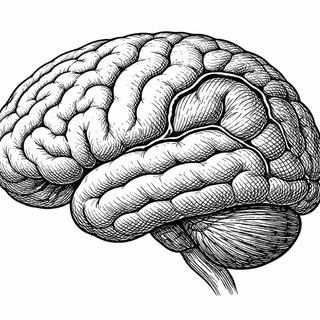
Disclaimer: The image accompanying this article is for illustrative purposes only and does not depict actual experimental results, data, or biological mechanisms.