
We still don't know why some cravings grab the brain by the collar and refuse to let go. But this paper gets us closer. Addiction can look a lot like a broken game loop - cue appears, reward pings, player repeats. The Nature feature by Elie Dolgin asks a weirdly plausible question: could the same blockbuster drugs people use for obesity also help interrupt that loop for alcohol, nicotine, opioids, and other addictive substances? (Dolgin, 2025)
GLP-1 drugs such as semaglutide and liraglutide were built for blood sugar and then became famous for weight loss. The more interesting plot twist is that GLP-1 receptors are not just hanging out in the gut like polite little digestive bureaucrats. They also show up in brain circuits involved in reward, motivation, and craving - the same general neighborhood that helps make food, alcohol, nicotine, and other rewards feel like very good ideas late at night. (Wikipedia background)
That overlap is the whole reason scientists got curious. If these drugs can turn down "food noise," maybe they can also turn down "please text your dealer," "just one cigarette," or "one drink won't hurt" noise. The brain, in its usual chaotic fashion, may be recycling some of the same motivational wiring across very different habits.
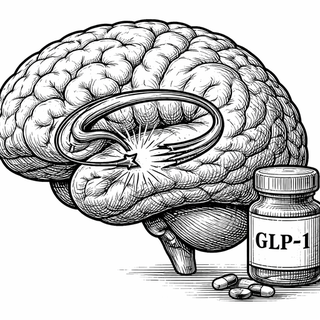
Boss Fight: Craving
The strongest human evidence so far is for alcohol. In a 2025 randomized clinical trial in JAMA Psychiatry, adults with alcohol use disorder who received once-weekly semaglutide showed reductions in alcohol craving and some drinking outcomes compared with placebo. That does not mean addiction medicine has found its final boss weapon. It does mean this idea has moved beyond vibes, internet anecdotes, and that one guy online saying Ozempic made beer taste like regret. (Farokhnia et al., 2025; PMCID: PMC11822619)
Other data point in the same direction, but with more caution tape. A Swedish registry study found that semaglutide and liraglutide use was associated with lower risk of hospitalization related to alcohol use disorder. A 2025 Journal of Clinical Investigation paper added a nice cross-species flex: humans, mice, and rats all pointed toward GLP-1 receptor agonists reducing alcohol intake, while DPP-4 inhibitors did not show the same signal. (Lahteenvuo et al., 2025; Leggio et al., 2025)
How Might This Actually Work?
Think of addiction as a skill tree that got hacked. The reward system keeps putting points into "wanting" even when "liking" is falling apart. GLP-1 drugs seem to interfere with that upgrade path. Preclinical and imaging work suggest they may dampen activity in reward-related circuits and reduce the motivational punch of drug cues.
That matters because addiction is not just pleasure-seeking. A lot of it is cue-reactivity, habit, stress, withdrawal, and compulsive repetition. Reviews published over the past two years describe the evidence as promising but early, with alcohol getting the best support so far and other substances lagging behind. Nicotine, opioids, cocaine, and binge-type eating behaviors are all in the conversation, but none of this is ready for victory laps. (Shen et al., 2024; Yammine et al., 2025; Patel et al., 2025)
Why This Could Matter in Real Life
Addiction treatment has needed new mechanics for a long time. For several substance use disorders, medication options are limited, underused, or both. If GLP-1 drugs hold up in larger trials, they could become a genuinely new tool - especially for people who also live with obesity, diabetes, or metabolic disease.
But there are obvious headaches. These drugs are expensive. They can cause nausea and other gastrointestinal side effects. We still do not know which dose works best for addiction, whether benefits persist, whether effects differ by substance, or whether weight loss itself explains part of the improvement.
So no, this is not a clean miracle story. It is more like a very promising beta build. The Nature feature is compelling because it captures that exact moment in science when a side quest starts looking like it might secretly be the main plot. Maybe GLP-1 drugs will become part of addiction care. Maybe they will help a subset of people, especially those with alcohol-related problems. Maybe the brain's reward machinery is less modular than we like to pretend and more like one deeply overengineered controller with sticky buttons.
Either way, this research matters because it treats addiction less like a moral failure and more like a set of circuits, signals, and learning loops that can sometimes be nudged. Not solved. Not magically erased. Nudged. In neuroscience, that often counts as real progress - and honestly, the brain rarely gives out better patch notes than that.
References
- Dolgin E. Will blockbuster obesity drugs revolutionize addiction treatment? Nature. 2025;648(8092):20-22. DOI
- Farokhnia M, Hendershot CS, Leggio L, et al. Once-Weekly Semaglutide in Adults With Alcohol Use Disorder: A Randomized Clinical Trial. JAMA Psychiatry. 2025. DOI PMCID
- Lähteenvuo M, Tiihonen J, Solismaa A, et al. Repurposing Semaglutide and Liraglutide for Alcohol Use Disorder. JAMA Psychiatry. 2025;82(1):94-98. DOI
- Leggio L, Farokhnia M, Lee MR, et al. Glucagon-like peptide-1 receptor agonists, but not dipeptidyl peptidase-4 inhibitors, reduce alcohol intake. Journal of Clinical Investigation. 2025. DOI
- Shen MR, O'Brien KN, Hayden LM, Suzuki J. The Efficacy of GLP-1 Agonists in Treating Substance Use Disorder in Patients: A Scoping Review. Journal of Addiction Medicine. 2024;18(5):488-498. DOI
- Yammine L, Grigson PS, Schmitz JM, Evans BB, Hendershot CS. The Potential Utility of GLP-1 Receptor Agonist Medications for Addiction Treatment: A Narrative Review of Clinical and Epidemiological Evidence. Current Addiction Reports. 2025. PubMed
- Patel S, Blaney H, Nassar S, Singal AK. GLP-1 receptor agonists and alcohol use disorder: a systematic review. Alcohol and Alcoholism. 2025;61(1):agaf069. DOI
Disclaimer: The image accompanying this article is for illustrative purposes only and does not depict actual experimental results, data, or biological mechanisms.