
A leaky blood-brain barrier sounds like good news if you're trying to get a cancer drug into the brain. It can also be exactly why the drug misses the part you care about and drifts into swollen tissue nearby. Helpful and unhelpful at the same time - very on-brand for glioblastoma, a disease that treats straightforward solutions like side quests it never accepted in the first place.[1]
The new paper by Scheck and colleagues asks a sharp question: instead of only asking whether an immunotherapy exists, what if we map where it actually goes? In this study, the team built an MRI plus lightsheet microscopy platform to track immunotherapy distribution from whole-brain imaging down to individual cells. Then they connected those maps to treatment response in mouse glioma models and to progression-free survival in people with glioblastoma treated with checkpoint immunotherapy.[1]
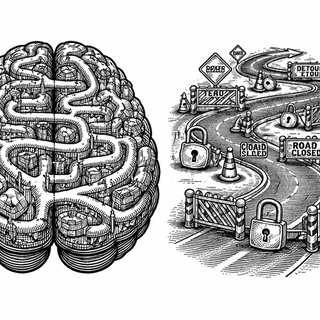
The Problem Is Not Just the Drug - It's the Delivery Route
Glioblastoma is not merely a fast-growing brain tumor. It is also very good at building an immune-suppressing neighborhood. T cells often struggle to get in, tumor-associated macrophages help keep the place hostile, and the blood-brain barrier plus abnormal tumor vessels make drug delivery messy.[2][3][4]
That last part matters more than it gets credit for. We like to imagine a drug as a hero entering the map, spotting the boss, and starting the fight. In reality, the brain is full of choke points and detours. Antibodies such as atezolizumab are large molecules, and a disrupted barrier does not guarantee smart delivery. It may just mean the drug leaks into the wrong terrain.
Glioma Edema: The World's Rudest Redirect
That is basically what this paper found. In one mouse model, called SB28, resistance to immunotherapy was linked to microvascular damage, vasogenic edema, and drug off-targeting into peritumoral edema and white matter tracts rather than useful tumor regions.[1] In plainer English: the therapy showed up to the battlefield and wandered into the parking lot.
This is a big deal because edema is not just swelling that looks ugly on a scan. It reflects a broken local environment - altered vessels, fluid shifts, stressed tissue, and a tumor ecosystem that can sabotage therapy. Reviews over the last few years have argued that peritumoral edema in glioma is tightly tied to vascular dysfunction and may worsen both symptoms and treatment problems.[5]
The paper also helps explain why checkpoint immunotherapy in glioblastoma has been so frustrating. Broad reviews of recent clinical trials show that immune checkpoint blockade has not reliably improved overall survival in glioblastoma, despite plenty of effort and many combinations.[2][3] This is where the current study gets interesting: maybe one reason is not simply that the immune idea is wrong, but that the drug distribution map is bad.
Fix the Roads, Then Send the Troops
The interesting part was how resistance changed when the researchers combined VEGF inhibition, irradiation, and dual immunotherapy aimed at both innate and adaptive immunity. That combination increased survival in mice, reduced off-targeting, normalized vessels, boosted CD8-positive T-cell influx, and pushed myeloid cells toward a more inflammatory state.[1]
This fits a broader idea in cancer biology: abnormal blood vessels do not just starve tissue or leak fluid. They can also create immune dysfunction. Normalize the vessels a bit, and suddenly oxygen delivery, immune-cell trafficking, and drug access can all improve. In other words, before you send the party in for the boss fight, maybe repair the bridge.[4][6]
Why This Could Matter in Actual Humans
The translational piece is what gives the paper teeth. In patients from the N2M2/NOA20 trial subgroup treated with atezolizumab, edema and microvascular pathology were associated with poorer prognosis, while patients without edema had longer progression-free survival.[1]
That does not mean a scan can predict everything. Glioblastoma remains heterogeneous, slippery, and a bit of a menace.[4] But it does suggest a practical future: imaging-based biomarkers might help identify which tumors are set up to waste an immunotherapy before the drug gets a fair shot. That could matter for trial design, patient selection, and smarter combination therapy.
The broader glioblastoma immunotherapy literature keeps coming back to the same villains - immune suppression, cellular heterogeneity, steroid use, poor trafficking, and a hostile microenvironment.[2][3][4][6] This paper adds another useful twist: location is biology. Not just what drug you give, but where it lands. In brain cancer, geography is not background scenery. Geography is the plot.
If these findings hold up, future glioma treatment may rely less on the fantasy of one miracle immune drug and more on matchmaking: which tumor has the right vessel state, the right immune context, and the right delivery pattern for a given therapy. Less "throw the potion and hope." More "check the minimap first."
References
- Scheck JG, Boztepe B, Kernbach JM, et al. Multimodality mapping of immunotherapy distribution as a predictive marker in glioma. Neuro-Oncology. 2026;28(4):1038-1054. DOI: 10.1093/neuonc/noaf295. PubMed: 41476211.
- Ng AT, Steve T, Jamouss KT, et al. The challenges and clinical landscape of glioblastoma immunotherapy. Immunotherapy Advances. 2024;13(1):2415878. DOI: 10.1080/20450907.2024.2415878. PMCID: PMC11524205.
- Schonfeld E, Choi J, Tran A, et al. The landscape of immune checkpoint inhibitor clinical trials in glioblastoma: A systematic review. Neuro-Oncology Advances. 2024;6(1):vdae174. DOI: 10.1093/noajnl/vdae174. PMCID: PMC11555435.
- Genoud V, Kinnersley B, Brown NF, et al. Therapeutic targeting of glioblastoma and the interactions with its microenvironment. Cancers (Basel). 2023;15(24):5790. DOI: 10.3390/cancers15245790. PMCID: PMC10741850.
- Ohmura K, Tomita H, Hara A. Peritumoral edema in gliomas: A review of mechanisms and management. Biomedicines. 2023;11(10):2731. DOI: 10.3390/biomedicines11102731. PMCID: PMC10604286.
- Yu Y, Liu Z, Chen Y, et al. Immunotherapy for glioblastoma: current state, challenges, and future perspectives. Cellular & Molecular Immunology. 2024;21(12):1354-1375. DOI: 10.1038/s41423-024-01226-x. PubMed: 39406966.
Disclaimer: The image accompanying this article is for illustrative purposes only and does not depict actual experimental results, data, or biological mechanisms.