
"A neurologist walks into a bar and says..." I do not want another map of where the brain lights up. I want to know who texted whom first. For years, neuroscience has been very good at showing us the brain's fireworks and less good at proving which spark caused the next one. Liu and colleagues tackle that awkward problem with a system that can watch neurons in different cortical layers and nudge them with light at the same time. In brain science, that counts as arriving with receipts. [1]
Who's Actually Talking Here?
The paper introduces a setup called cross-layer all-optical physiology, or CLAOP. The idea is audacious: record the activity of neurons in different cortical layers, then stimulate selected neurons with light and see what happens next. Not eventually. Fast enough that the sequence still means something.
That speed matters because "functional activity" and "connectivity" are not the same thing, and the brain loves to blur the distinction like a witness with selective memory. A neuron might fire around the same time as another neuron simply because both heard the same incoming signal. Actual causal connectivity is the stronger claim: this cell pushed that cell. CLAOP tries to close that gap by combining two-photon imaging with optogenetic stimulation across layers, with very little delay between seeing activity and perturbing it. [1]
In mice, the team used this approach in primary visual cortex, or V1, and primary somatosensory cortex, or S1. They found evidence that neurons with similar functional preferences tend to connect not just within a layer, but across layers too. Neuroscientists call this "like-to-like" connectivity. It sounds like a dating app for pyramidal cells, but the idea is simple: neurons responding to similar features may preferentially wire together, giving the cortex a way to build orderly computation instead of total parliamentary chaos. [1,2,3]
The Brain's Layer Cake, Now With Surveillance
Why is this technically interesting? Because cortex is layered for a reason. Different layers receive, process, and send information in different ways. If you only watch one layer at a time, you risk mistaking a group chat for a monologue.
That plugs into a much bigger trend in neuroscience. Recent large-scale functional connectomics work in mouse visual cortex has started linking detailed wiring maps to what neurons actually do during sensory processing. The MICrONS studies, for example, showed broad wiring rules across visual areas and cortical layers, not merely a pile of spaghetti with delusions of grandeur. [2,3] Liu and colleagues approach the same general problem from the live, intervention-heavy side: less "freeze the wiring and inspect it later," more "watch the circuit in action."
If you can record and perturb across layers during behavior, you can ask harder questions about perception, learning, and decision-making. Not just which neurons are active, but which ones matter enough to redirect the rest.
Why Anyone Outside a Mouse Facility Should Care
No, this does not mean your next eye exam will involve a laser-powered cortical truth machine. The work is basic neuroscience in mice. Still, tools like this tend to age well. Optogenetics began as a gloriously niche way to control neurons with light, and it is now part of the standard toolkit for dissecting circuits. [4,5]
If methods like CLAOP keep improving, they could help researchers sort out which circuit motifs matter in disorders where activity and connectivity drift apart - epilepsy, sensory processing problems, some psychiatric conditions, perhaps even recovery after injury. The useful future here is not mind reading, despite the marketing department's fondest wishes. It is sharper causal maps: better ways to test which cells, pathways, and timing relationships are worth targeting.
There is also a quieter payoff. Brain research often swings between two bad habits: worshipping activity maps because they are pretty, or worshipping wiring diagrams because they look definitive. But the brain is neither a Christmas tree nor a London Tube map. It is a moving system whose structure and function keep leaning on each other like unreliable witnesses. Papers like this matter because they interrogate both at once.
The Sensible Bit Before Last Orders
There are limits. All-optical methods are technically fussy, usually restricted to accessible tissue, and still far from giving us a whole-brain causal ledger in natural behavior. Mouse cortex is not human thought. And "like-to-like" rules are useful summaries, not eternal laws.
Still, this study is a neat step forward. It gives neuroscience a faster way to test how activity patterns and causal connections line up across cortical layers, rather than pretending correlation will eventually confess on its own. For a field that has spent decades asking who is connected to whom, it is rather nice to see someone finally checking who interrupts whom in real time.
References
- Liu C, Hao Y, Tang H, Zhong Y, Kong L, Lei B. Linking functional activity and connectivity of neuronal circuits via fast cross-layer all-optical physiology. Cell Reports. 2025;44(12):116646. DOI: 10.1016/j.celrep.2025.116646. PubMed: PMID 41370124.
- MICrONS Consortium. Functional connectomics spanning multiple areas of mouse visual cortex. Nature. 2025;640(8058):435-447. DOI: 10.1038/s41586-025-08790-w. PMCID: PMC11981939.
- Dorkenwald S, Brittain D, Collman F, et al. Functional connectomics reveals general wiring rule in mouse visual cortex. Nature. 2025;640(8058):459-469. DOI: 10.1038/s41586-025-08840-3. PMCID: PMC11981947.
- Fan LZ, Kim DK, Jennings JH, et al. All-optical physiology resolves a synaptic basis for behavioral timescale plasticity. Cell. 2023;186(3):543-559.e19. DOI: 10.1016/j.cell.2022.12.035. PMCID: PMC10327443.
- Lüscher C, Borton D, Boyden ES, et al. Roadmap for direct and indirect translation of optogenetics into discoveries and therapies for humans. Nature Neuroscience. 2025;28:2415-2431. DOI: 10.1038/s41593-025-02097-9.
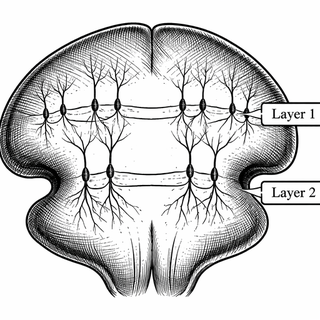
Disclaimer: The image accompanying this article is for illustrative purposes only and does not depict actual experimental results, data, or biological mechanisms.