
What if the smartest move your AI could make was to stop listening after the useful part and ignore the rest like a cook tuning out bad advice once the onions are already caramelizing? That, in a slightly less buttery form, is the idea behind a new paper on spiking neural networks, or SNNs - brain-inspired systems that process information as timed bursts rather than smooth, always-on numerical mush [1].
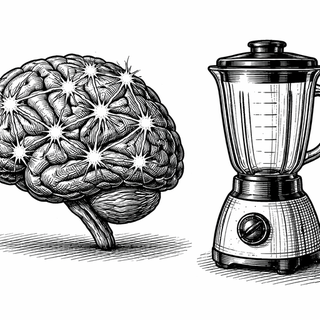
Most modern AI works like a blender with no lid. It takes in input, churns constantly, and if you toss in one tiny malicious pebble, the whole smoothie can become nonsense. Those malicious pebbles are called adversarial attacks: tiny changes to an image or signal that can fool a model while looking harmless to you and me. So the authors asked a fair question: can AI borrow some of that spiky, timing-based brain logic and become harder to trick? [1]
Spikes, Not Soup
In ordinary artificial neural networks, information usually travels as continuous values. In spiking networks, neurons fire discrete events over time. Think of it as the difference between pouring sauce in one big glop versus adding drops at exactly the right moments.
That timing matters. According to the new Nature Communications paper, SNNs became more robust when they put task-critical information early in the spike sequence and then used early-exit decoding to make a decision before later perturbations could do much damage [1]. In plain English: if the useful signal arrives first and the model decides early, the attack has less time to sneak fake garnish onto the plate.
The team also improved robustness by training the network to better capture temporal dependencies and by combining multiple encoding schemes so the model did not become a one-trick neuron pony [1]. On CIFAR-10, the best SNN setups reached about twice the adversarial robustness of comparable conventional artificial neural networks while keeping the usual neuromorphic selling point of lower energy use [1].
Why Timing Can Beat Trickery
This paper lands in a field that has been circling the same hunch for a while: spike timing may be doing more than saving power. Earlier work showed that attacking SNNs is possible, but also different from attacking standard deep nets because spikes are sparse, discrete, and stretched across time [2]. Another recent study found that adding biological-style heterogeneity and randomness can further toughen SNNs against adversarial attacks without wrecking clean-data accuracy [3].
That makes intuitive sense. If a conventional network is like a chef who tastes the whole pot at once, an SNN is more like a cook sampling the broth in pulses, updating judgment moment by moment. Harder to fool? Potentially yes. Easier to train? Absolutely not.
Training SNNs has historically been one of the big headaches in neuromorphic computing. Review and perspective papers over the past few years argue that the promise is real, but the field still needs better algorithms, standard benchmarks, and cleaner integration with real hardware [4,5]. So this result matters because it suggests the timing-rich structure of these models may offer a genuine design advantage rather than just a quirky bio-inspired aesthetic.
Where This Could Actually Matter
If these results hold up across larger datasets and messier real-world settings, the payoff is obvious. Safety-critical AI systems do not just need to be accurate on sunny-day demo data. They need to stay sane when the input is noisy, manipulated, or actively hostile.
That matters for edge devices, robotics, autonomous systems, smart sensors, and maybe one day medical wearables or implants that cannot afford to be both power-hungry and easy to fool [4,5]. Neuromorphic hardware is already getting more serious about real-time sensing and low-power deployment, including systems that tightly link sensing and spike-based computation instead of shuttling data back and forth like an office worker trapped in reply-all hell [5,6].
Of course, nobody should read one paper and start handing the car keys to a spiking chip. This study used image benchmarks and adversarial test setups, not the full chaos buffet of the physical world. Attackers adapt. Benchmarks flatter. And biology itself is robust, not magical. Your brain still loses arguments to bad sleep and one passive-aggressive text.
Still, the central idea is deliciously sharp: maybe resilience does not come only from making models bigger, but from making them better timed. In cooking, a reduction works because flavor concentrates in sequence, not all at once. Here, spike timing seems to do something similar for information. The model learns what matters early, ignores some later nonsense, and keeps the dish from being ruined by a last-second dump of digital paprika.
That is a very brain-like trick. Also a very kitchen-like one. And in AI right now, both fields could use more cooks who know when to stop stirring.
References
[1] Ding J, Yu Z, Liu JK, Huang T. Neuromorphic computing paradigms enhance robustness through spiking neural networks. Nature Communications. 2025. DOI: https://doi.org/10.1038/s41467-025-65197-x
[2] Liang L, Hu X, Deng L, Wu Y, Li G, Ding Y, Li P, Xie Y. Exploring Adversarial Attack in Spiking Neural Networks With Spike-Compatible Gradient. IEEE Transactions on Neural Networks and Learning Systems. 2023;34(5):2569-2583. DOI: https://doi.org/10.1109/TNNLS.2021.3106961
[3] Wang J, Zhao D, Du C, He X, Zhang Q, Zeng Y. Random heterogeneous spiking neural network for adversarial defense. iScience. 2025;28(6):112660. DOI: https://doi.org/10.1016/j.isci.2025.112660. PMCID: https://pmc.ncbi.nlm.nih.gov/articles/PMC12159496/
[4] Schuman CD, Kulkarni SR, Parsa M, Mitchell JP, Date P, Kay B. Opportunities for neuromorphic computing algorithms and applications. Nature Computational Science. 2022;2(1):10-19. DOI: https://doi.org/10.1038/s43588-021-00184-y
[5] Kudithipudi D, Schuman C, Vineyard CM, Pandit T, Merkel C, Kubendran R, et al. Neuromorphic computing at scale. Nature. 2025;637:801-812. DOI: https://doi.org/10.1038/s41586-024-08253-8
[6] Yao M, Ole R, Zhao G, Qiao N, Xing Y, Wang D, Hu T, Fang W, Demirci T, De Marchi M, et al. Spike-based dynamic computing with asynchronous sensing-computing neuromorphic chip. Nature Communications. 2024;15:4464. DOI: https://doi.org/10.1038/s41467-024-47811-6
Disclaimer: The image accompanying this article is for illustrative purposes only and does not depict actual experimental results, data, or biological mechanisms.