
Fiber photometry is one of those gloriously nosy tools that lets scientists watch a chosen group of neurons glow as they become active. Pair that with optogenetics, EEG, breathing and heart-rate recordings, and machine-tracked mouse movement, and you get a building inspector for the brainstem - a way to see which control panels flick on first when an unconscious animal starts climbing back toward wakefulness. In this mouse study, that spotlight landed on the locus coeruleus, a tiny blue-gray node long cast as your brain's head of arousal operations. As usual, the brain declined to be simple about it. Li et al., 2025
The little blue hub with an oversized job description
The locus coeruleus, or LC, is a small nucleus in the brainstem and the main central source of norepinephrine, also called noradrenaline. Wikipedia's plain-English version is basically this: it helps regulate arousal, attention, stress responses, and readiness for action. In design terms, the LC is less a giant spotlight and more a building-wide lighting board.
That distinction matters because neuroscience has often treated norepinephrine as a broad "wake up, everybody" signal. Recent reviews push back on that cartoon version. The LC does broadcast widely, but its effects seem modular and state-dependent rather than one giant on-switch for consciousness [Jordan et al., 2024; Hu and Wang, 2024].
What this paper actually found
Li and colleagues asked a clean question: when an animal shifts from stillness to movement, and from anesthesia toward wakefulness, is the LC driving the whole transition or just tuning part of it?
Their answer is more interesting than the old mythology. LC activity tracked anesthetic depth, and during emergence from anesthesia it rose around the return of movement. In awake mice, movement transitions also lined up with distinct LC activity patterns. So yes, the LC is in the room when arousal changes.
But here is the plot twist, and it is a good one. When the researchers directly activated LC noradrenergic neurons, they could boost sympathetic arousal under anesthesia - things like bodily activation signatures - without reliably pushing the animals all the way into behavioral wakefulness. In other words, the system could step on the gas for the body's alertness machinery without fully opening the front doors of conscious behavior. Your brain, apparently, has separate contractors for "heart pounding a bit more" and "get up and move." Bureaucracy lives everywhere.
That matters because it argues against a very tempting story: that norepinephrine from the LC is a master key for waking up. This paper suggests something narrower. LC norepinephrine looks more like a tuning system than a lone hero dragging the whole brain back online.
Why that is a big deal for anesthesia and beyond
Emergence from anesthesia is not just anesthesia running out like a phone battery dying in reverse. Reviews over the past two years argue that recovery is an active biological process with its own circuitry and bottlenecks [Hu and Wang, 2024]. This study fits that view. Wakefulness is not one elevator going up. It is a staggered reopening of systems: cortical, autonomic, subcortical, behavioral. Some lights come on before the lobby doors unlock.
That kind of map could matter clinically if later work shows how to separate helpful arousal from messy arousal. In principle, you would want smoother recovery from anesthesia, less agitation, and fewer cases where physiology revs up before behavior becomes organized. Nobody wants the nervous system equivalent of a smoke alarm and a half-finished software reboot happening at once.
The implications also reach beyond the operating room. LC-norepinephrine signaling has been tied to sleep-wake regulation, attention, stress, sensory plasticity, and whole-brain state changes [Van Egroo et al., 2022; Collins et al., 2023; Tong et al., 2025]. If movement and arousal are coupled through distinct LC patterns, that could help explain why so many states that feel mental are also strangely physical. Alertness is not just a thought. It is a building-systems event.
The fine print, because the brain enjoys fine print
This was a mouse study. That is useful, not magical. Mice under controlled anesthesia are not humans waking up after surgery. Also, the paper narrows the LC's role in one context. It does not declare the LC unimportant everywhere else.
Still, the study lands a useful punch against lazy storytelling. The LC is not just a giant arousal trumpet blaring reveille across the cortex. It looks more like a careful systems engineer, nudging the relationship between movement, bodily readiness, and state transitions. Which, frankly, feels more believable. The brain rarely chooses one dramatic lever when an overdesigned control room will do.
References
Li L, Rana AN, Li EM, Wells BA, Kenmochi SJ, Travis MO, Bruchas MR. Noradrenergic tuning of arousal is coupled to movement transitions. Cell Reports. 2025;44(12):116601. DOI: https://doi.org/10.1016/j.celrep.2025.116601. PubMed: https://pubmed.ncbi.nlm.nih.gov/41296565/
Jordan R, Arandia-Romero I, Jafarpour A, et al. Toward a computational role for locus coeruleus/norepinephrine arousal systems. Current Opinion in Behavioral Sciences. 2024;59:101407. DOI: https://doi.org/10.1016/j.cobeha.2024.101407
Hu S, Wang M. Neurobiological basis of emergence from anesthesia. Trends in Neurosciences. 2024;47(5):355-366. DOI: https://doi.org/10.1016/j.tins.2024.02.006
Van Egroo M, Koshmanova E, Vandewalle G, Jacobs HIL. Importance of the locus coeruleus-norepinephrine system in sleep-wake regulation: Implications for aging and Alzheimer's disease. Sleep Medicine Reviews. 2022;62:101581. DOI: https://doi.org/10.1016/j.smrv.2022.101581
Collins L, Francis J, Emanuel B, McCormick DA. Cholinergic and noradrenergic axonal activity contains a behavioral-state signal that is coordinated across the dorsal cortex. eLife. 2023;12:e81826. DOI: https://doi.org/10.7554/eLife.81826
Tong C, Li W, Zou Y, et al. Norepinephrine-mediated arousal fluctuations drive inverted U-shaped functional connectivity dynamics. Nature Communications. 2025;16:1146. DOI: https://doi.org/10.1038/s41467-025-66436-x
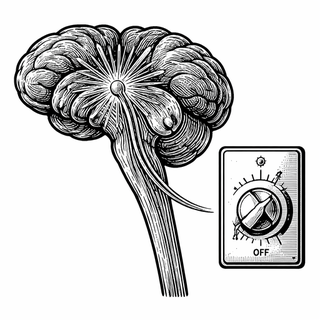
Disclaimer: The image accompanying this article is for illustrative purposes only and does not depict actual experimental results, data, or biological mechanisms.