
Like a restaurant kitchen after one spectacular grease fire, the brain's cleanup crew does not always reset to factory settings. Sometimes the immune cells remember the chaos and treat every later spark like a five-alarm disaster. That, in very non-chef language, is trained immunity - a kind of memory in the innate immune system, the body's fast, blunt first-response team.[1][2]
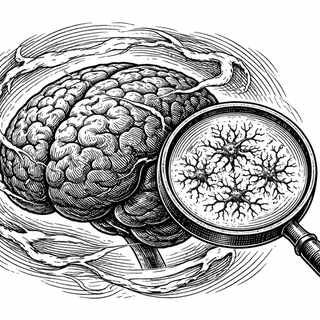
The paper by Sijia Zhang and Arthur Liesz is a review, not a new mouse-drama extravaganza, but it makes a sharp point: this immune memory may matter in both sudden brain injuries like stroke and slower disorders like Alzheimer's and Parkinson's.[1] If that idea holds up, the brain is not just getting damaged and inflamed. It may also be getting preloaded for more inflammation later.
Immune memory, but make it weird
Most of us were taught that immune memory belongs to the adaptive immune system - the branch with antibodies and T cells. Trained immunity is different. It happens in innate immune cells such as monocytes, macrophages, and in the brain, microglia.[1][2]
After an infection, injury, or exposure to danger signals, these cells can get metabolically and epigenetically reprogrammed. Translation: their internal software gets tweaked. Later, they may respond harder or differently than before.[2] Helpful for microbes. Less charming when the thing being remembered is tissue damage, protein junk, or chronic stress signals in the brain.
That matters because microglia are not background extras. They patrol brain tissue, clear debris, and help decide whether an injured area gets support or collateral damage. They're the janitors, security staff, and occasionally the coworker who hits "reply all" with too much enthusiasm.
Stroke: the brain injury that keeps the receipts
One of the clearest examples comes from stroke. A 2024 Cell study from the same research orbit found that brain injury can leave a long-lasting inflammatory imprint on myeloid cells, including changes linked to IL-1beta signaling and epigenetic remodeling.[3] In mice, that immune memory spilled beyond the brain and helped drive later heart dysfunction. Because apparently stroke was not content with being terrible in only one organ.
That result fits the review's bigger argument: acute brain injury may train immune cells in the brain and bone marrow, shaping recovery and later disease risk.[1][3] In plain English, the body may keep acting like the emergency is still half-happening. Post-stroke recovery is not only about blood flow and dead tissue. It's also about calming an immune system that may have learned the wrong lesson.
Alzheimer's and Parkinson's: slow chaos, same bad habit
In chronic neurodegenerative disease, the triggers look different but the theme rhymes. Alzheimer's brains are full of protein aggregates, damaged cells, and inflammatory signals that can keep microglia activated for years. A 2024 Immunity paper identified an "exhausted-like" microglial state in aging and APOE4-linked Alzheimer's brains, suggesting that these cells can become both inflamed and bad at cleanup - the biological equivalent of a furious janitor with a broken mop.[4]
Parkinson's disease shows a related tangle of chronic neuroinflammation, microglial activation, and changes in peripheral immune cells. A 2024 review in Brain argues that immune changes are not just decorative side effects. They are woven into the process itself.[5] Another 2024 Immunity review makes a broader case that innate immune activation is a common thread across neurodegenerative disorders.[6]
This is where trained immunity becomes especially interesting. It offers a mechanism for how repeated exposure to danger signals - misfolded proteins, cell debris, inflammatory cytokines - might push innate immune cells into a lasting hair-trigger state. Not every immune response here is trained immunity, and the field is still sorting out which signals count and when they matter.[1][6] Biology loves ambiguity the way prestige TV loves morally compromised antiheroes.
Why this could matter in real life
If researchers can map when trained immunity helps and when it hurts, they may get new ways to treat neurological disease. Not by broadly smashing inflammation with a hammer, but by targeting the memory-like programs that keep innate immune cells stuck in attack mode.[1][3] That could mean better recovery after stroke, fewer secondary complications, or slowing parts of neurodegeneration driven by chronic immune overreaction.
There are real caveats. Most of the strongest mechanistic evidence still comes from animal models and cell studies. Human brains are harder to sample and generally less cooperative than lab mice, who continue to make neuroscience look almost suspiciously tidy. The concept also risks becoming a buzzword if every persistent immune change gets labeled "training" without rigorous proof.[2]
Still, the big idea is worth keeping. Brain disease may not only injure tissue in the moment. It may tutor the immune system to misbehave later. And if that is true, then part of neurology's future may involve teaching those cells to forget.
References
- Zhang S, Liesz A. Trained immunity in acute and chronic neurological diseases. eLife. 2025;14:e106037. DOI: 10.7554/eLife.106037. PubMed: 41537429. PMCID: PMC12807454.
- Ochando J, Mulder WJM, Madsen JC, Netea MG. Trained immunity - basic concepts and contributions to immunopathology. Nat Rev Nephrol. 2023;19(1):23-37. DOI: 10.1038/s41581-022-00633-5. PubMed: 36253509.
- Simats A, Zhang S, Messerer D, et al. Innate immune memory after brain injury drives inflammatory cardiac dysfunction. Cell. 2024;187(17):4637-4655.e26. DOI: 10.1016/j.cell.2024.06.028. PubMed: 39043180.
- Millet A, Ledo JH, Tavazoie SF, et al. An exhausted-like microglial population accumulates in aged and APOE4 genotype Alzheimer's brains. Immunity. 2024;57(1):153-170.e6. DOI: 10.1016/j.immuni.2023.12.001. PubMed: 38159571. PMCID: PMC10805152.
- Roodveldt C, Bernardino L, Oztop-Cakmak O, et al. The immune system in Parkinson's disease: what we know so far. Brain. 2024;147(10):3306-3324. DOI: 10.1093/brain/awae177. PubMed: 38833182.
- Castro-Gomez S, Heneka MT. Innate immune activation in neurodegenerative diseases. Immunity. 2024;57(4):790-814. DOI: 10.1016/j.immuni.2024.03.010. PubMed: 38599171.
Disclaimer: The image accompanying this article is for illustrative purposes only and does not depict actual experimental results, data, or biological mechanisms.