
When you were a kid, there was always that weird recess moment when you tried to join a game already in progress and had to do the split-second math: are they inviting me in, or am I about to get socially clotheslined? Most of us survived with only grass stains and a character-building amount of awkwardness. But that same self-other math - what do I get, what do you get, what does this situation mean - runs a lot of adult life too. A new review argues that in schizophrenia, that math can break down through several brain pathways at once, which helps explain why social life can become so unreliable.1
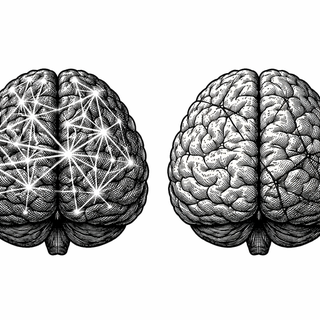
Four Ways The Social Tab Gets Screwed Up
The paper by Huang and colleagues is a mechanistic review, meaning the authors stitched together evidence from reinforcement learning, effort-based choice, self-other attribution, neuroimaging, and neuromodulators like dopamine and oxytocin.1
Their basic claim is sharp: schizophrenia does not just blunt "reward" in some generic, everything-is-meh way. The bigger problem may be integration - combining what happens to you, what happens to other people, what you expected, what effort something will cost, and who gets credit or blame.
They lay out four interacting trouble spots:
- Predictions about other people get fuzzy.
- Reward and salience signals misfire in circuits involving the midbrain, ventral striatum, anterior cingulate cortex, and insula.
- Social actions can feel too effortful for too little payoff.
- The boundary between self and other gets shaky, so outcomes are not assigned cleanly.
Real talk - that is a brutal combo. If your brain is bad at forecasting people, overreacts to the wrong cues, under-values social effort, and keeps misfiling whose emotional receipt is whose, friendship stops being easy.
The Brain Is Not "Asocial" - It Is Mispricing The Deal
That distinction matters. A lot.
Schizophrenia is often talked about as if people simply stop caring about others. But newer work suggests the problem is more specific. In a 2024 Psychological Medicine study, researchers found social cognition and social motivation impairments in schizophrenia were not explained away by social isolation alone.2 In other words, this is not just what happens when someone has had a rough few years and ghosts the group chat.
There is also growing evidence that reward circuits tied to social motivation are involved. An NIMH research highlight from March 25, 2024 summarized work linking higher social anhedonia in psychotic disorders to lower activity in the ventral striatum and orbitofrontal cortex during a team-based social reward task.3 Translation: the brain regions that usually go, "Yep, that social effort was worth it," may be turning down the volume.
That fits the new review nicely. If the ventral striatum is one of the bartenders serving up motivational cocktails, schizophrenia may leave it pouring weak drinks.
Effort, Dopamine, And Why "Just Put Yourself Out There" Is Bad Advice
One of the most useful parts of this framework is the effort piece. Social life costs energy. You text first. You risk rejection. You remember birthdays. Healthy social behavior is basically a series of tiny wagers that future connection will be worth present effort.
But effort-based decision-making can be altered in psychotic disorders. A 2023 study in Schizophrenia Research linked motivational deficits in effort-based choice to supported employment outcomes, suggesting these reward-effort computations matter in the real world, not just on lab tasks.4
Dopamine likely helps shape part of this picture, but not in the cartoon version where schizophrenia equals "too much dopamine." A 2020 meta-analysis in Biological Psychiatry found substantial heterogeneity in striatal dopamine function in schizophrenia, reinforcing the idea that there is no single neat dopamine story for every person.5
Why This Review Is Actually Useful
The value of this paper is that it stops treating social dysfunction as one vague blob. Instead, it offers a map. If future studies support it, researchers could ask sharper questions: is one patient mainly struggling with predictive inference, another with effort-cost bias, another with self-other attribution?
That matters for treatment. The field is already moving toward more tailored biology rather than one-size-fits-all dopamine blocking. If social impairment in schizophrenia comes from multiple broken routes converging on the same bad outcome, then the smartest interventions may also need multiple routes - medication, cognitive training, social skills work, and maybe better neuromodulatory targeting.
Honestly, this paper makes the brain look less like a broken light switch and more like a dive bar sound system where several cables are loose at once. That is not the whole story of schizophrenia. But it may be a better way to understand why social connection - one of the most basic human rewards on the menu - can become so unreliable.
References
-
Huang CZ, Sang HB, Zhao X, Xie P, Zhou AB. Multi-path neural mechanisms of self-other reward integration impairment in schizophrenia. Neurosci Biobehav Rev. 2026; DOI: 10.1016/j.neubiorev.2026.106715. PubMed: 42055240. ↩
-
Green MF, Wynn JK, Eisenberger NI, et al. Social cognition and social motivation in schizophrenia and bipolar disorder: are impairments linked to the disorder or to being socially isolated? Psychol Med. 2024;54(9):2015-2023. DOI: 10.1017/S0033291724000102. PubMed: 38314526. ↩
-
Jimenez AM, Clayson PE, Hasratian AS, et al. Neuroimaging of social motivation during winning and losing: Associations with social anhedonia across the psychosis spectrum. Neuropsychologia. 2023;188:108621. DOI: 10.1016/j.neuropsychologia.2023.108621. NIMH summary: Study Reveals Potential Neural Marker for Social Impairment in Psychotic Disorders. ↩
-
Le TP, Green MF, Wynn JK, et al. Effort-based decision-making as a determinant of supported employment outcomes in psychotic disorders. Schizophr Res. 2023;262:149-155. DOI: 10.1016/j.schres.2023.11.003. PMCID: PMC10923523. ↩
-
Brugger SP, Howes OD. Heterogeneity of striatal dopamine function in schizophrenia: meta-analysis of variance. Biol Psychiatry. 2020;87(3):215-224. DOI: 10.1016/j.biopsych.2019.09.022. PubMed: 31561858. ↩
Disclaimer: The image accompanying this article is for illustrative purposes only and does not depict actual experimental results, data, or biological mechanisms.