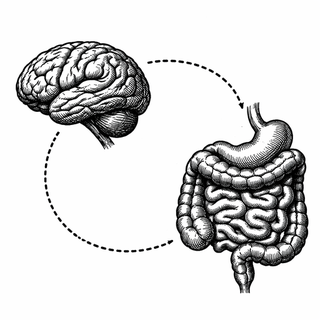
Evolution usually does not build extras. If a newborn brain is wiring up its defense, memory circuits, and playbook for learning all at once, it makes sense to recruit help from the first busy ecosystem that shows up on the roster: the gut microbiome. A baby that can coordinate growth, immunity, and brain protection efficiently has a better shot at surviving the ancient schedule of infections, stress, and nutritional chaos. This paper suggests the microbes arriving early in life may not just be along for the ride - they may help coach the blood-brain barrier while the brain is still learning the game.
The Gut Is Not Just the Snack Department
In the new study, researchers colonized germ-free pregnant mice with gut microbes taken from either full-term infants or preterm infants, then looked at the offspring. The mice that inherited the full-term-associated microbiome performed better on learning and memory tests. They also had a tighter blood-brain barrier, the security line that decides what gets into the brain and what gets bounced like a fan trying to sneak onto the field (Zemmel et al., 2025; PMCID: PMC12416178).
That blood-brain barrier matters because your brain is an expensive franchise. It cannot afford random inflammation, toxins, or molecular weirdos wandering into the locker room. The study used dynamic contrast MRI and found that mice with the preterm-associated microbiome had leakier barriers early in life across many brain regions. On top of that, single-cell RNA sequencing showed changes in blood-brain-barrier-related cell types, especially lower expression of genes tied to synaptic signaling in the preterm-microbiome group. Translation: the defensive line looked shakier, and the communication between players looked messier.
A Preterm Microbiome Is Not a Tiny Plot Twist
This idea did not appear out of nowhere like a fourth-quarter trick play. The same research orbit has already linked early microbiome patterns to neurodevelopment. In 2021, investigators reported that specific early-life gut community trajectories in infants were associated with head growth, a rough early marker tied to later neurodevelopment (Oliphant et al., 2021). In 2022, the group also showed that transplanting microbiomes reflecting earlier preterm developmental stages into germ-free mice altered later learning behavior (Lu et al., 2022; PMCID: PMC8885646).
This new paper adds a cleaner mechanism to the scouting report: maybe the microbiome is not just nudging neurons directly. Maybe it is also tuning the barrier around the brain during a critical window, which is a little like adjusting both the quarterback and the offensive line at the same time. Biology loves a two-for-one.
The Metabolite Bench Might Matter Too
The authors also found differences in circulating metabolites, including lower long-chain acylcarnitines and lysophosphatidylcholines in the mice with the full-term-associated microbiome. Those molecules may be part of the relay system connecting gut microbes to barrier function and brain development. It is another reminder that microbes do not just sit there like fans eating nachos. They produce chemicals and reshape immune and barrier biology in ways researchers are still trying to diagram without setting the whiteboard on fire.
That broader idea fits with recent reviews arguing that gut and brain barriers are active communication hubs, not passive walls (Aburto and Cryan, 2024). More general reviews of the microbiome-brain literature also keep landing on the same point: the gut can influence neural function through immune, metabolic, and barrier pathways, but pinning down which pathway matters most in which disease is still the hard part (Sorboni et al., 2022; PMCID: PMC8729913).
Before We Start Drafting Probiotic Superteams
This is a mouse study, even if the mice were carrying human infant-derived microbes. Mice are useful. They are also not tiny hairy babies with NICU discharge paperwork. So this paper does not prove that changing a premature infant's microbiome will strengthen that infant's blood-brain barrier or boost cognition years later.
Still, the real-world appeal is easy to see. Preterm infants face a higher risk of long-term neurodevelopmental challenges, and clinicians do not have many elegant tools for changing that trajectory early. If future studies confirm which microbes, metabolites, or microbial functions help the developing brain, then targeted nutrition, probiotics, or microbiome-based therapies could become part of the early-life playbook. That is a big if. But it is a serious if, not a late-night wellness-influencer if.
The challenge now is reproducibility and translation. Researchers need human longitudinal studies, sharper biomarker work, and proof that any intervention helps without causing collateral chaos in a developing infant microbiome. The gut-brain axis has a tendency to attract grand claims the way a hot rookie attracts bad sports radio takes. This paper earns attention because it gives the field something sturdier than vibes: a testable link between microbiome maturity, blood-brain barrier development, and cognitive outcomes.
References
Zemmel ZM, Fan X, Yu Y, et al. Early-life gut microbiome maturity regulates blood-brain barrier and cognitive development. Gut Microbes. 2025;17(1):2551879. https://doi.org/10.1080/19490976.2025.2551879. PMCID: PMC12416178
Aburto MR, Cryan JF. Gastrointestinal and brain barriers: unlocking gates of communication across the microbiota-gut-brain axis. Nature Reviews Gastroenterology & Hepatology. 2024;21(4):222-247. https://doi.org/10.1038/s41575-023-00890-0
Oliphant K, Ali M, D'Souza M, et al. Bacteroidota and Lachnospiraceae integration into the gut microbiome at key time points in early life are linked to infant neurodevelopment. Gut Microbes. 2021;13(1):1997560. https://doi.org/10.1080/19490976.2021.1997560
Lu J, Lu L, Yu Y, et al. Early preterm infant microbiome impacts adult learning. Scientific Reports. 2022;12:3351. https://doi.org/10.1038/s41598-022-07245-w. PMCID: PMC8885646
Sorboni SG, Moghaddam HS, Jafarzadeh-Esfehani R, Soleimanpour S. A comprehensive review on the role of the gut microbiome in human neurological disorders. Clinical Microbiology Reviews. 2022;35(1):e00338-20. https://doi.org/10.1128/CMR.00338-20. PMCID: PMC8729913
Disclaimer: The image accompanying this article is for illustrative purposes only and does not depict actual experimental results, data, or biological mechanisms.