
A neurologist walks into a bar and says, "I know this face, but why do I only remember him as the guy from the wedding where I stepped in spilled IPA?" That is basically the problem your memory system solves all day. It has to store the thing itself - a face, a place, a biscuit - and also the context around it. Why does one song instantly teleport you back to one very specific bad haircut? A new human single-neuron study suggests your brain handles those jobs with separate groups of cells that briefly work together when memory lands cleanly.[1]
One Cell To Rule Them All? Apparently Not
The study, led by Marcel Bausch and colleagues, recorded 3,109 neurons from 16 neurosurgical patients who were already undergoing invasive monitoring for epilepsy.[1] The researchers showed people picture pairs and asked comparison questions like "Bigger?" or "More expensive?" In other words, they gave the same items different mental settings. Same pictures, different context. Tiny change. Big memory consequences.
What showed up was a neat division of labor. Some neurons mainly cared about the item itself. Other neurons mainly cared about the context set by the question. Only a small minority seemed to encode a very specific item-plus-context combo.[1] So if you were hoping for one diva neuron screaming "BISCUIT UNDER THE BIGGER QUESTION," no.
That matters because it pushes back on the cartoon version of memory where each event gets boxed into one tidy neural package. Human memory looks more modular than that. Less one-file-per-memory. More organized chaos with suspiciously good search tools.
The Hippocampus Loves A Team Project
This fits with a growing idea in memory research: the hippocampus and nearby medial temporal lobe structures do not just hoard facts like a dusty attic. They build links and decide which details should travel together when you remember an event.[2][3]
A related 2024 paper from some of the same researchers found separate human neurons for the "what" and the "where" of memory formation.[2] A 2024 review in Nature Reviews Neuroscience argued that memories can stay distinct while still linking through overlapping engrams - basically neural ensembles that share enough overlap to know each other, but not enough to become one big mushy blob.[3] Which is good, because nobody wants a brain that behaves like a group chat with 900 unread notifications.
The especially cool part here is timing. In the new study, firing in entorhinal stimulus neurons predicted firing in hippocampal context neurons tens of milliseconds later after repeated pairing.[1] That hints these cells are not just hanging out near each other. They are learning to talk in sequence.
Why This Is More Than A Fancy Brain Filing System
You do not remember your life as a list of floating objects. You remember your keys in the kitchen, your friend at the concert, your terrible joke at the exact meeting where nobody deserved it. Episodic memory depends on binding content to context, and when that process goes sideways, real life gets messy fast.
That is why this matters beyond curiosity. If separate neural groups carry content and context, then memory disorders might come from several different failures: bad item coding, bad context coding, or a broken handshake between the two. That could matter for Alzheimer's disease, temporal lobe epilepsy, and some forms of amnesia, where a person may recognize a thing but lose the surrounding situation that makes it useful.
There is also a nice upside to the brain using separate "libraries." It may help explain how humans generalize so well. You do not need a brand-new neuron for every possible combination of person, place, object, and mood. You can reuse content representations across many situations and then plug in the relevant context when needed.[1][4] Efficient. Flexible. Slightly less absurd than requiring one neuron for "my cousin holding nachos at a wedding in 2017 while ABBA played."
The Catch, Because There Is Always A Catch
This was not everyday remembering. The "context" here was an interactive task question on a laptop, not the smell of a room, the weather, or the emotional chaos of actual life.[1] The participants also had epilepsy, and the recordings came from a clinical setting. So no, scientists have not solved memory and cannot yet retrieve your middle-school locker combination from the ether.
Still, it is a sharp result. It says human memory may work less like a single scrapbook page and more like Velcro - one strip for the thing, one strip for the setting, and recall happens when the right pieces catch.
If that holds up, the broader lesson is simple: memory is not just about storing information. It is about storing information in the right company.
References
- Bausch M, Niediek J, Reber TP, Mackay S, Boström J, Elger CE, Mormann F. Distinct neuronal populations in the human brain combine content and context. Nature. 2026;650:690-697. DOI: 10.1038/s41586-025-09910-2
- Mackay S, Reber TP, Bausch M, Boström J, Elger CE, Mormann F. Concept and location neurons in the human brain provide the 'what' and 'where' in memory formation. Nature Communications. 2024;15:7926. DOI: 10.1038/s41467-024-52295-5. PMCID: PMC11387663
- Choucry A, Nomoto M, Inokuchi K. Engram mechanisms of memory linking and identity. Nature Reviews Neuroscience. 2024;25:375-392. DOI: 10.1038/s41583-024-00814-0
- Kolibius LD, Josselyn SA, Hanslmayr S. On the origin of memory neurons in the human hippocampus. Trends in Cognitive Sciences. 2025;29(5):421-433. DOI: 10.1016/j.tics.2025.01.013. PMID: 40037964
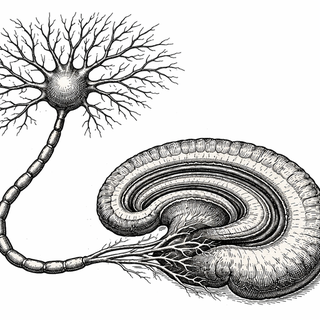
Disclaimer: The image accompanying this article is for illustrative purposes only and does not depict actual experimental results, data, or biological mechanisms.