
Food goes in, your belly does the sorting, and somehow your stress level still barges into the room like an uninvited cousin at Thanksgiving. That sounds silly until you learn the gut has its own network of nerves, support cells, immune signals, and chemical messengers. In other words, your intestines are not a dumb tube. They are more like a neighborhood with traffic, gossip, complaints, and one person who keeps texting the mayor.
A new review in Gastroenterology pulls together the basic science of neurogastroenterology, which is the study of how the gut and nervous system communicate in health and disease [1]. The paper is basically a field guide to the messy, very real relationship between the brain, the enteric nervous system, the immune system, the gut lining, and the microbiome. If that sounds like a lot, it is. The gut-brain axis is less a straight phone line and more a family group chat where everyone is replying at once, often with opinions nobody requested.
The Gut Is Not Just Plumbing
One of the big ideas in this review is that the enteric nervous system, often nicknamed the "second brain," can run a shocking amount of the digestive show on its own. It helps control movement, secretion, sensation, and coordination across the gastrointestinal tract [2]. Wikipedia is actually useful here for once: the enteric nervous system contains sensory neurons, motor neurons, and interneurons, and it can keep reflexes going even without direct brain input. So yes, your gut is impressively independent. A little too independent, honestly.
That matters because disorders of gut-brain interaction, or DGBI, are not "nothing" and they are not just stress with a fancy haircut. These conditions, which include things like irritable bowel syndrome and functional dyspepsia, seem to grow out of tangled interactions between nerves, immune cells, epithelial cells, microbes, muscle, and life stressors [1]. Recent population-level data suggest these disorders are not rare side quests either. A 2023 meta-analysis found overlap between DGBI diagnoses was common, and a 2025 American Gastroenterological Association summary reported higher post-pandemic rates of IBS and functional dyspepsia in national samples [3].
Serotonin Has a Day Job in the Gut
Most people hear "serotonin" and think mood, antidepressants, and maybe a wellness influencer holding tea. But about 90% of the body's serotonin is made in the gut, mostly by enterochromaffin cells, where it helps regulate motility, secretion, sensation, and immune activity [4]. So serotonin is not just the brain's moody poet. In the digestive tract, it is also part traffic cop, part smoke alarm, part overcaffeinated event planner.
The review uses serotonergic signaling as a kind of organizing theme, and that is smart. Serotonin sits right at the intersection of symptoms and mechanism. Too little or too much signaling, or signaling in the wrong place at the wrong time, can affect pain, bowel habits, nausea, and inflammatory responses [1,4]. This helps explain why gut symptoms can feel wildly different from one person to another even when the same diagnosis gets slapped on the chart like a "best guess" sticky note.
The Cells We Ignored Are Not Sitting Quietly
Another theme running through the field is neuroplasticity. That is the nervous system's ability to change its wiring and behavior over time. We usually talk about that with learning and memory, but the gut gets in on the act too. Enteric neurons and glia appear capable of changing with inflammation, diet, stress, injury, and disease [1,2].
One especially interesting line of work focuses on enteric glia, the support cells that used to get treated like background extras. Bad idea. Recent studies suggest some enteric glial populations may be poised for neurogenesis, meaning they could help generate new neurons under certain conditions [5]. Plot twist: the "support staff" may be running part of the recovery plan. Biology loves doing this. Every time we think we found the intern, it turns out we found the regional manager.
Why This Actually Matters Outside a Journal Club
The practical payoff is not abstract. If gut disorders emerge from crossed wires between nerves, microbes, immunity, and stress systems, then better treatments should stop acting like there is only one broken part. That is why the field keeps pushing toward broader care models that combine diet, symptom-targeted drugs, behavioral therapies, and better patient education rather than endless testing plus a shrug [1].
That also helps explain why this research feels so relevant right now. Plenty of people have symptoms that are very real, very disruptive, and annoyingly hard to pin on a single lab value or scan. Neurogastroenterology offers a better map. Not a magic wand, sadly. Science rarely hands those out. But it does give doctors a more honest framework for why pain, bloating, constipation, diarrhea, nausea, and stress can pile into the same messy minivan.
The big takeaway from this review is that the gut-brain axis is not one pathway. It is a negotiation between multiple systems that all think they should be in charge. Understanding that better could lead to more precise therapies, better biomarkers, and maybe fewer patients being told that their misery is somehow both invisible and trivial. The gut has receipts. We are finally learning how to read them.
References
- Greenwood-Van Meerveld B, Mawe GM, Beyder A, Brierley SM, Clarke G, Gulbransen BD, Margolis KG. Fundamentals of Neurogastroenterology: Basic Science. Gastroenterology. 2026. DOI: 10.1053/j.gastro.2026.01.040. PubMed: 42031436.
- Sharkey KA, Mawe GM. The enteric nervous system. Physiol Rev. 2023;103(2):1487-1564. DOI: 10.1152/physrev.00018.2022. PMCID: PMC9970663.
- Fairlie T, Shah A, Talley NJ, Chey WD, Koloski N, Lee YY, Gwee KA, Jones MP, Holtmann G. Overlap of disorders of gut-brain interaction: a systematic review and meta-analysis. Lancet Gastroenterol Hepatol. 2023;8(7):646-659. DOI: 10.1016/S2468-1253(23)00102-4. PubMed: 37211024.
- Banskota S, Khan WI. Gut-derived serotonin and its emerging roles in immune function, inflammation, metabolism and the gut-brain axis. Curr Opin Endocrinol Diabetes Obes. 2022;29(2):177-182. DOI: 10.1097/MED.0000000000000713. PubMed: 35197425.
- Guyer RA, Stavely R, Robertson K, Bhave S, Mueller JL, Picard NM, Hotta R, Kaltschmidt JA, Goldstein AM. Single-cell multiome sequencing clarifies enteric glial diversity and identifies an intraganglionic population poised for neurogenesis. Cell Rep. 2023;42(3):112194. DOI: 10.1016/j.celrep.2023.112194. PubMed: 36857184.
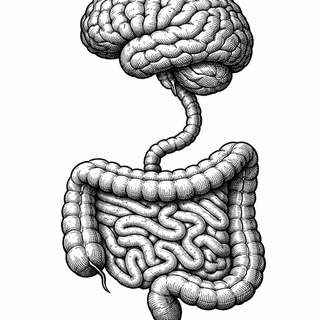
Disclaimer: The image accompanying this article is for illustrative purposes only and does not depict actual experimental results, data, or biological mechanisms.