
The popular fantasy goes like this: tap the right molecular button, and a humble support cell in the brain will dramatically reinvent itself as a neuron, like a middle manager quitting to become a jazz pianist. Clean. Elegant. Very cinema. This study pours a cool glass of reality on that story and shows that when researchers removed PTBP1 from mature astrocytes, those cells changed their RNA splicing patterns - but they did not pick up convincing neuronal features.[^1]
That matters because PTBP1 has become one of the more controversial characters in modern neurobiology. For a few years, it was cast as a kind of molecular bouncer keeping astrocytes from entering the neuron nightclub. Knock it down, some studies suggested, and astrocytes might convert into neurons - a potentially huge deal for conditions like Parkinson's disease or retinal degeneration.[^2] But then other groups came in with lineage-tracing receipts and said, in essence, "Absolutely not, these cells are still astrocytes, please stop romanticizing them."[^3][^4]
The molecular plot twist
PTBP1 is an RNA-binding protein. Its job is not to "make" a cell in the simplistic Lego-brick sense. It helps control alternative splicing, the process by which cells cut and paste RNA transcripts into different versions before making proteins. If genes are recipes, splicing is the part where the cook decides whether the dish gets garlic, extra garlic, or enough garlic to end a friendship.
Neurons and astrocytes use different splicing programs. Since PTBP1 helps repress neuronal-style splicing, the idea was straightforward: remove PTBP1 from astrocytes, and maybe those cells will slide toward a neuronal identity. Nice theory. Slight problem. Biology loves making simple theories look like they were written on a cocktail napkin.
In this eLife paper, Zhang and colleagues depleted PTBP1 in mature astrocytes and carefully looked at what happened.[^1] They found clear splicing changes. So the intervention definitely did something. This was not a molecular shrug. But those altered astrocytes still failed to show the hallmarks you'd want if they were truly becoming neurons. No convincing neuronal fate switch. No glorious metamorphosis. More "wardrobe change" than "new identity."
Why people have been arguing about this for so long
The PTBP1 debate has been unusually spicy for a technical cell-biology question, which is impressive for a field where excitement often looks like someone muttering at a heat map. Part of the problem is that cell conversion claims are easy to oversell if you don't do strict lineage tracing - methods that let you prove where a cell came from, not just what genes it happens to be expressing on a weird day.[^3][^4]
Earlier reports argued that PTBP1 knockdown could generate dopaminergic neurons and even reverse Parkinson-like symptoms in mice.[^2] That lit up the imagination for obvious reasons. If astrocytes - abundant, local, already in the brain - could be turned into replacement neurons, regenerative medicine would get a very attractive shortcut.
But follow-up work from several groups threw cold, bracing seawater on that excitement. Studies using more rigorous tracing generally found that PTBP1 loss in astrocytes did not produce new neurons in vivo.[^3][^4][^5] The new paper fits neatly into that cooler-headed camp. It suggests that the story is not "PTBP1 does nothing." The story is subtler and more interesting: PTBP1 loss reshapes astrocyte RNA processing, but that alone is not enough to push mature astrocytes across the identity border.
So what did the paper actually add?
The key contribution here is mechanistic clarity. This study helps separate two ideas that often get mashed together:
- Changing splicing
- Changing cell fate
Those are not the same thing. You can alter the internal molecular flavor of a cell without fully rewriting what the cell is. That's a useful reminder in a field that sometimes treats a few neuronal markers like a forged passport.
This also helps explain why earlier disagreements got so tangled. If PTBP1 depletion causes some neuron-like splicing events, people may be tempted to read that as the beginning of true conversion. But this paper argues that mature astrocytes can adopt distinct splicing alterations without acquiring neuronal features.[^1] In plain English: the cells may sound a little different at the RNA level without joining the neuronal choir.
Why this matters outside the lab
If you're hoping for brain repair after injury or neurodegeneration, this is not the headline you frame above the fireplace. But it is exactly the kind of result the field needs.
Therapies built on cell reprogramming need to rest on something sturdier than vibes and a dramatic immunostaining image. If PTBP1 depletion alone can't reliably make astrocytes become neurons, then researchers need to know that early - before anyone starts promising elegant cures for diseases that have spent decades humiliating elegant cures.
And there is still value here. Understanding how astrocytes respond to PTBP1 loss could reveal how splicing programs stabilize cell identity, why mature cells resist reprogramming, and what extra factors might be required to actually move them into a neuronal state. In other words, the locked door is still locked, but now we know more about the hinges.
The bigger taste of the story
This finding has notes of restraint, with a finish of "the brain is annoyingly hard to hack." Mature astrocytes are not blank slates waiting for one protein to disappear so they can become neurons in a burst of cinematic self-actualization. They are deeply committed cells with layered regulatory systems, and PTBP1 is just one part of that recipe.
Which, honestly, is less flashy than the original hype - but much more useful. In neuroscience, the most valuable result is often the one that stops us from falling in love with a shortcut that never existed.
References
[^1]: Zhang M, Kubota N, Nikom D, Arient A, Zheng S. PTBP1 depletion in mature astrocytes reveals distinct splicing alterations without neuronal features. eLife. 2025;14:RP107683. doi:10.7554/eLife.107683
[^2]: Qian H, Kang X, Hu J, et al. Reversing a model of Parkinson's disease with in situ converted nigral neurons. Nature. 2020;582(7813):550-556. doi:10.1038/s41586-020-2388-4
[^3]: Wang LL, Serrano C, Zhong X, et al. Revisiting astrocyte to neuron conversion with lineage tracing in response to NeuroD1 overexpression. Cell. 2021;184(21):5465-5481.e16. doi:10.1016/j.cell.2021.09.005
[^4]: Blackshaw S, et al. Ptbp1 deletion does not induce glia-to-neuron conversion in adult mouse retina and brain. bioRxiv/later peer-reviewed reporting from multiple groups challenged in vivo conversion claims; see discussion summarized in recent reviews.[PMCID links vary by version]
[^5]: Wang SW, Herrlinger S, et al. No evidence for PTBP1-mediated astrocyte-to-neuron conversion in adult mouse brain. related recent in vivo lineage-tracing work discussed in review literature on glia-to-neuron reprogramming.
Additional recent background reading:
- Vasan L, et al. Cellular reprogramming for brain repair: progress, pitfalls, and promise. Trends in Neurosciences. 2024.
- Falkner S, Grade S, Götz M. Reprogramming glia into neurons in the mammalian brain: challenges and opportunities. Annual Review of Cell and Developmental Biology. 2023.
- Reviews on alternative splicing in neural cell identity and PTBP family regulation in high-impact journals over the past 5 years provide broader mechanistic context.
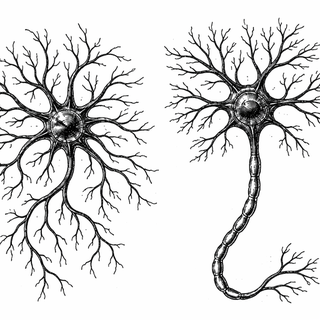
Disclaimer: The image accompanying this article is for illustrative purposes only and does not depict actual experimental results, data, or biological mechanisms.