
"Scientists Delete One Molecule, Trigger Full-Blown Blindness Disease in Mice." That is the headline you would slap on the side of a bus. The truth is a little more interesting, and a lot more useful. Researchers did not just break the eye. They built a clean, repeatable blueprint for how a blinding disease actually goes up - and they did it by yanking one wire out of the wall.
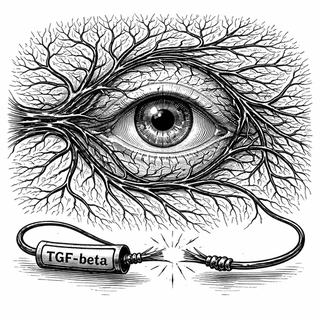
Here is what you need to know. The wire is called TGF-beta. The wall is the inside lining of your blood vessels.
The Crew That Keeps the Pipes Quiet
Let me break this down. Your blood vessels are not just pipes. They are lined with endothelial cells, and those cells are the foreman of the whole operation. They decide where to lay new vessel, where to stop, and - critically - whether to call in the wrecking crew or keep the site calm.
In the eye and brain, that lining is built to spec. It is the blood-retinal barrier, the tightest plumbing in the body. Nothing leaks. No riff-raff gets in. To stay that disciplined, the endothelial cells need their orders, and one of the loudest order-givers is TGF-beta signaling - the molecular memo that tells the crew "stay calm, hold the line, do not start a fire."
A team at Johns Hopkins led by Jeremy Nathans decided to find out what happens when that memo never arrives.
Cut the Order, Watch the Site Collapse
The crew used a genetic switch to knock out the TGF-beta receptors - TGFBR1 and TGFBR2 - in the blood vessel lining of newborn mice, and only there. No memo. Then they watched the construction site fall apart in slow motion.
First, the inside of the retina got under-built. The capillary network that should weave through the retina came in thin and patchy, like a contractor who ran out of rebar halfway through the pour.
Then the real mess. Vessels from the choroid - the dense blood supply sitting behind the retina - started punching upward into territory they have no business entering. That is choroidal neovascularization, and occasionally these rogue vessels even fused with the retinal plumbing, splicing two separate systems into one leaky tangle.
And once the structure cracked, the building rioted. Immune cells flooded in - macrophages, T-cells, B-cells, NK cells, dendritic cells, basically the entire angry tenant association - and they parked themselves right up against the blood vessels. The endothelial cells flipped into full pro-inflammatory mode, flying an ICAM1 flag that screams "everybody come fight here." Even the pericytes, the cells that normally wrap and brace the vessels, started bulking up with smooth muscle actin like they were prepping for demolition.
One missing memo. Total structural and social collapse.
Why This Blueprint Matters
Here is the part that makes this more than a horror show. The team ran a comparison job. They lined up this TGF-beta knockout against two other ways of starving the retina of blood vessels - cutting Norrin/Fzd4 signaling, and cutting VEGF signaling - and measured how big the immune riot got in each.
The result was clean. Lose TGF-beta, you get the biggest immune brawl. Lose Norrin/Fzd4, you get a modest one. Lose VEGF, the inflammation does not even show up. Same under-built retina, wildly different fallout. That tells you the inflammation is not just "vessels are sparse, so trouble follows." TGF-beta is doing a specific, dedicated job keeping the peace, and nobody else covers that shift.
That matters because this mouse recreates the cardinal features of real human disease - the leaky abnormal vessels of wet macular degeneration, the vascular inflammation seen in neurologic conditions. And right now, the frontline tool for wet macular degeneration is anti-VEGF injections in the eyeball, repeatedly, for years. They work for a lot of people, but up to half of patients respond poorly, and the fluid and bleeding can keep coming back (Frontiers in Medicine, 2024). VEGF was never the whole story.
This study points a flashlight at a different switch. If you could boost TGF-beta's calm-down signal in the vessel lining instead of only blocking VEGF's build-more signal, you might shut down the inflammation that the current drugs leave standing. Different wire, different fuse box, possibly a better repair.
It is early. This is a mouse with a deliberately broken gene, not a treatment. But you do not fix a building until you understand which beam fails first - and now there is a clean model showing exactly that.
Disclaimer: The image accompanying this article is for illustrative purposes only and does not depict actual experimental results, data, or biological mechanisms.
References
-
Wang Y, Rattner A, Li Z, Smallwood PM, Nathans J. Vascular endothelial-specific loss of TGF-beta signaling as a model for choroidal neovascularization and central nervous system vascular inflammation. eLife. 2025. DOI: 10.7554/eLife.107018. PMID: 41432545. PMC12726833
-
Wang Y, Rattner A, Nathans J. Norrin/Frizzled4 signaling in retinal vascular development and blood brain barrier plasticity. Cell. 2012;151(6):1332-1344. DOI: 10.1016/j.cell.2012.10.042. PMC3535266
-
Walshe TE, et al. TGF-beta is required for vascular barrier function, endothelial survival and homeostasis of the adult microvasculature. PLOS One. 2009;4(4):e5149. DOI: 10.1371/journal.pone.0005149
-
Frontiers in Medicine. Treatment of neovascular age-related macular degeneration with anti-vascular endothelial growth factor drugs: progress from mechanisms to clinical applications. Front Med. 2024. PMC11294244