
Situation Report
A mathematical technique called transport-based morphometry, or TBM, can read a standard head CT the way a recon analyst reads terrain: not as a flat picture, but as a map of where mass wants to move next. It treats every pixel of brightness as cargo that has to be hauled from one image to another, then measures the effort. That effort is the signal. And in a new study published in eLife, a team pointed this tool at one of the nastiest threats in emergency neurology - and found warning signs no human eye had been reliably catching.
The threat in question is hematoma expansion. When a blood vessel ruptures inside the brain - a spontaneous intracerebral hemorrhage, or ICH - the first scan tells you a clot has formed. What it does not tell you is whether that clot is going to sit still or keep growing over the next 24 hours. Roughly one in five patients gets the bad version. The hematoma expands, the pressure climbs, and the outcomes go south fast. For decades, predicting which clots would grow has been closer to a coin flip than a forecast.
The Intelligence Problem
Here is the operational frustration. Clinicians already know some hematomas look suspicious. They have catalogued ominous signs with appropriately dramatic names - the "blend sign," the "black hole sign," irregular shape, the "satellite sign." These are real, and they help. But they rely on a radiologist eyeballing the scan and making a judgment call. Two experienced doctors can look at the same clot and disagree. The features that matter most are subtle, spatially scattered, and frankly not built for human pattern recognition under time pressure at 3 a.m.
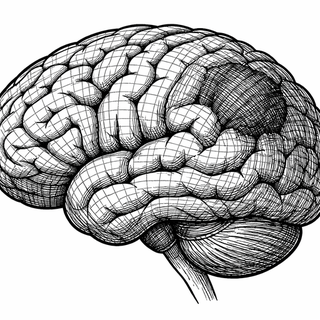
That is the gap TBM was sent in to close. Instead of asking a person to spot known signs, it converts each clot into a mathematical representation where the differences between "stable" and "about-to-grow" become measurable quantities. Subtle shifts in shape and density that hide beneath the threshold of visual inspection get pulled into the open. No contrast dye required. No fancier scanner. Just the plain non-contrast CT every ICH patient already receives on arrival.
Execution
The team trained their model on 170 patients from an international stroke archive, then tested it - and this is the part that matters - on a completely separate group of 170 patients from a different study population entirely. Training on one dataset and proving yourself on another is the difference between a soldier who aces the drill and one who performs under live fire. Plenty of prediction models look brilliant until they meet data they have never seen. This one held.
What did TBM flag as the tells of a clot planning to grow? Four features: larger size, density that varies wildly across the clot (heterogeneity), an irregular shape, and blood concentrated toward the edges rather than the center. The reassuring part is that these line up with what seasoned clinicians had already suspected. TBM did not overturn the textbook. It confirmed it, then sharpened it - quantifying by math what doctors had been approximating by instinct.
Folded into a combined model with clinical and spatial information, the system hit an AUROC of 0.71 for predicting 24-hour expansion. In plain terms, that means it beats a coin flip by a comfortable margin, and more to the point, it outperformed existing clinician protocols and competing machine-learning methods. A single synapse may be a strategic asset, but a single percentage point of predictive accuracy in stroke triage is a battlefield advantage.
Assessment
The real prize here is not just the score. It is interpretability. Most machine-learning models are black boxes - they hand you an answer and refuse to show their work, which makes doctors understandably nervous about betting a patient on them. Because TBM carries direct physical meaning, it can actually visualize why a clot looks dangerous. That turns a prediction into a hypothesis about the underlying biophysics of why hematomas grow, which is territory we still barely understand.
This is a pre-clinical study, so the standard caution applies: it needs broader validation before it earns a place in the ER workflow. But the mission objective is clear. If you can flag the high-risk clots early - using a scan that costs nothing extra and is already in hand - you can aim aggressive treatment at the patients who actually need it, and spare everyone else. In a condition where the clock is the enemy, a quiet math trick that reads the future inside an ordinary CT is exactly the kind of asset worth deploying.
End of report.
Disclaimer: The image accompanying this article is for illustrative purposes only and does not depict actual experimental results, data, or biological mechanisms.
References
Primary study:
Ironside N, El Naamani K, Rizvi T, et al. Predictive modeling of hematoma expansion from non-contrast computed tomography in spontaneous intracerebral hemorrhage patients. eLife. 2026. DOI: 10.7554/eLife.105782. PMID: 41432373.
Related research:
-
Kundu S, Kolouri S, Erickson KI, Kramer AF, McAuley E, Rohde GK. Discovery and visualization of structural biomarkers from MRI using transport-based morphometry. NeuroImage. 2018;167:256-275. DOI: 10.1016/j.neuroimage.2017.11.006. PMCID: PMC5912801.
-
Pszczolkowski S, Law ZK, Gallagher RG, et al. Radiomic markers of intracerebral hemorrhage expansion on non-contrast CT: independent validation and comparison with visual markers. Frontiers in Neuroscience. 2023;17:1225342. DOI: 10.3389/fnins.2023.1225342. PMCID: PMC10467422.
-
Basu S, Kolouri S, Rohde GK. Detecting and visualizing cell phenotype differences from microscopy images using transport-based morphometry. PNAS. 2014;111(9):3448-3453. DOI: 10.1073/pnas.1319779111.