
The last time you washed a coffee mug, your brain was secretly solving a ridiculous number of electrical problems without asking for applause. Your hand moved, your eyes checked the sink, your fingers adjusted grip, and somewhere deep in the cellular chaos, neurons were doing tiny voltage dramas worthy of an overfunded prestige series. Now scientists are trying to reverse-engineer that drama - not just by watching neurons fire, but by figuring out which hidden settings inside the cell produced the performance in the first place.
That is the idea behind a new eLife paper on generating biophysical neuron model parameters from recorded electrophysiological responses by Kim, Peng, Chen, Liu, and Shlizerman. In plain English: the researchers built a way to look at a neuron's electrical behavior and infer the internal parameters that could explain it, especially in detailed models inspired by the classic Hodgkin-Huxley framework. If that phrase makes your eyelids lower, stay with me - it is basically the neuroscience version of asking, "Given the weird noises your washing machine makes, can we guess what is going on inside without taking it apart?"
The brain's secret recipe book
Neurons communicate with electrical signals shaped by ion channels - protein gates that let charged particles move in and out of the cell. Those channels help determine whether a neuron stays quiet, fires once, fires in bursts, or generally behaves like that relative at Thanksgiving who absolutely cannot read the room.
Biophysical models try to capture this behavior using parameters like membrane conductances, time constants, and channel kinetics. The problem is that many different parameter combinations can produce similar electrical outputs. So if you record a neuron's voltage response, inferring the exact internal settings becomes a bit like hearing one verse of karaoke and trying to identify the singer, microphone, room acoustics, and emotional baggage.
This paper tackles that problem with deep generative modeling. Rather than hand-tuning parameters one by one - an activity somewhere between engineering and spiritual trial - the authors trained a model to generate plausible neuron parameters from recorded electrophysiological traces. They focus on C. elegans, the tiny worm that neuroscience loves because it has a mapped connectome and a nervous system simple enough to study without immediately losing the will to live.
Why this is a big deal for tiny worms
C. elegans has long been a darling of systems neuroscience because researchers know a great deal about its wiring diagram. But a wiring diagram is not the same as a working machine. If you know where all the roads in a city go, that still does not tell you who is speeding, who is double-parked, and who is somehow driving a shopping cart on the interstate.
That is where this work becomes interesting. The paper fits into a growing push toward building whole-nervous-system simulations that combine connectomics with electrophysiology - what the authors call an ElectroPhysiome. The goal is not just to know which neuron talks to which, but how each neuron behaves as a physical electrical object.
If that works reliably, it could make in silico nervous systems far more realistic. Instead of generic cartoon neurons, you get models with individual cellular personalities. Some neurons become excitable little gossips. Others act like stoic neighbors who only speak when absolutely necessary.
The trick: guessing hidden causes from visible behavior
The core challenge here is called parameter inference. You can record what a neuron does when stimulated, but many internal settings can mimic each other. This is a classic headache in computational neuroscience and one reason detailed neuron modeling can feel like trying to assemble IKEA furniture using only vibes.
Recent work has leaned on simulation-based inference and machine learning to help. Reviews and methods papers over the last few years have argued that these tools can recover biologically meaningful parameters more efficiently than old-school brute-force fitting, though they still struggle with uncertainty, non-uniqueness, and generalizing across datasets.
That matters because if your model confidently gives you the wrong answer, you have not solved neuroscience - you have just built a very expensive hallucination engine.
So what could this change?
If methods like this hold up, they could speed up how scientists build realistic neuron models from experimental recordings. That would help in at least three ways.
First, it could improve whole-brain or whole-circuit simulations, especially in organisms like C. elegans where the wiring is known. Second, it could help researchers compare cell types based on inferred electrical properties, not just anatomy or gene expression. Third, in the long run, this general approach might support disease modeling, drug testing, or personalized neural simulations - though we are very much not at the "download your brain settings to an app" stage, so everybody relax.
The larger point is this: modern neuroscience has mountains of data, but data alone do not explain mechanism. Methods that bridge recorded activity and interpretable biophysical models are trying to turn those mountains into something you can actually walk around in.
The catch, because of course there is one
There are still real limitations. Biophysical models simplify biology. Recorded responses can be noisy. Different parameter sets may still fit the same neuron. And what works for worm neurons in a controlled setup may not transfer neatly to larger, messier brains - yours included, with its tabs open, passwords forgotten, and emotional support snacks.
Still, this study points toward a future where we do not just observe neural activity - we infer the machinery underneath it with increasing precision. That is a powerful shift. Neuroscience has spent a long time watching the orchestra. Now it wants the sheet music, the instrument specs, and ideally the reason the percussion section keeps doing something odd in the back.
References
Kim J, Peng M, Chen S, Liu Q, Shlizerman E. Generation of biophysical neuron model parameters from recorded electrophysiological responses. eLife. 2024;13:RP95607. doi: 10.7554/eLife.95607
Gonçalves PJ, Lueckmann JM, Deistler M, et al. Training deep neural density estimators to identify mechanistic models of neural dynamics. eLife. 2020;9:e56261. doi: 10.7554/eLife.56261 PMCID: PMC7720103
Bittner SR, Palmigiano A, Piet AT, et al. Interrogating theoretical models of neural computation with deep inference. Current Opinion in Neurobiology. 2022;76:102609. doi: 10.1016/j.conb.2022.102609
Alderson T, Lin Y, Munch D, et al. Flexible and robust simulation-based inference for models of decision-making. eLife. 2023;12:e77232. doi: 10.7554/eLife.77232
Uzelac M, Fenix AM, Zhou D, et al. Connecting neural circuit structure, biophysics, and activity with detailed whole-brain models. Current Opinion in Neurobiology. 2025;90:103002. doi: 10.1016/j.conb.2024.103002
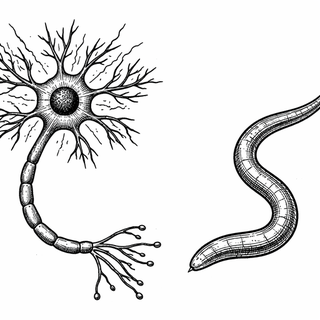
Disclaimer: The image accompanying this article is for illustrative purposes only and does not depict actual experimental results, data, or biological mechanisms.