
What if you could rewind to the exact moment a memory was being born, freeze it mid-assembly, and watch the individual brain cells decide, "Yeah, okay, I'm in on this one"? Not the polished memory you replay years later, but the raw, half-finished version, still wet with cellular paint? That is the ride a team of researchers just bought a ticket for, and the view from the front car is wild.
The Problem With Studying Memories: They Don't Hold Still
Here is the thing about memory. When you experience something once, just once, your hippocampus has to grab a fistful of neurons and say "you lucky few are now the official record of Tuesday afternoon." That sparse little squad of cells is called an engram. Think of it as the brain's group chat for a specific event.
The trouble is that catching these cells in the act has always been like trying to photograph a roller coaster from inside the loop. The standard lab tools for tagging engram cells take about 24 hours to light up, which is great if you want the souvenir photo at the exit, but useless if you want to know what happened on the first big drop. By the time scientists could see the cells, the early construction was long over.
Enter FLEN, the Speed-Demon Labeling Tool
So the team built something faster. They call it FLEN, which stands for Fast Labeling of Engram Neurons, and it is exactly the upgrade the field needed. FLEN hooks into c-Fos, a gene that flips on almost instantly when a neuron fires hard during learning, and uses it to slap a glowing, self-destructing green tag (a destabilized version of a fluorescent protein called ZsGreen1) onto only the cells that just did the work. A few hours after a single learning experience, those cells glow. The construction crew, caught on camera, hard hats and all.
Then they ran a clever two-camera trick. FLEN captured the cells just hours after learning. A slower, established tool called RAM captured a different batch a full 24 hours later. Compare the early snapshot to the late one, and you get something neuroscience rarely gets: a time-lapse of a memory wiring itself up.
What the Time-Lapse Revealed
Buckle up, because this is the good part. The researchers were tracking two things about these CA3 pyramidal neurons (the hippocampus has a few neighborhoods, and CA3 is the one obsessed with stitching the pieces of an event together). The two things: how easily the cells fire (excitability) and how many incoming connections they have (synaptic inputs).
At the early stage, the freshly tagged FLEN cells were no more twitchy than their neighbors. Excitability? Totally normal. But by 24 hours, the RAM-tagged engram cells had become noticeably more excitable than the cells around them, more eager to fire, primed to jump back into action. The "I'm easily provoked" trait was not there at the start. It got built over that first day, like a roller coaster slowly cranking up the lift hill.
The synapses, though, told a different story. Even at the early stage, the FLEN cells already had more excitatory inputs feeding into them. The wiring upgrade showed up fast, while the personality change (the excitability) came later. Two different renovation timelines happening in the same cells. The brain, as always, refusing to do anything in a single tidy step.
Why You Should Care About a Glowing Mouse Neuron
This matters because "how do memories actually consolidate" is one of the great open questions of neuroscience, and most of our answers have come from peeking only at the before and after, never the during. The idea that engram cells gradually crank up their own excitability fits beautifully with a growing pile of work showing that twitchy, easily-excited neurons are the ones recruited into memories in the first place (Mocle et al., 2024). FLEN gives researchers a stopwatch for that process.
Push this far enough and you start asking the big questions. If excitability is the dial that decides which memories stick and which fade, could nudging that dial help repair the broken consolidation we see in Alzheimer's, PTSD, or age-related memory loss (Josselyn & Tonegawa, 2024)? We are nowhere near that yet. But you cannot fix the machine until you can watch it run, and FLEN just turned the lights on inside the factory.
For now, the takeaway is gloriously simple. The next time you remember something, picture a tiny crew of brain cells, hours into the job, slowly wiring themselves brighter and louder so that "Tuesday" survives the trip into next year. They are working overtime. Be nice to them.
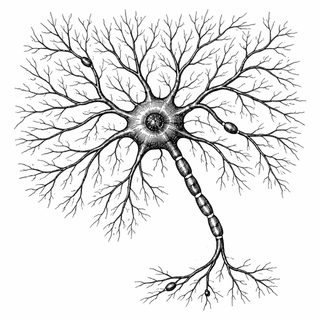
Disclaimer: The image accompanying this article is for illustrative purposes only and does not depict actual experimental results, data, or biological mechanisms.
References
Cupolillo, D., Grosjean, N., Marneffe, C., Viotti, J., Reynaud, C., Deforges, S., Carta, M., & Mulle, C. (2025). Early changes in the properties of CA3 engram cells explored with a novel viral tool in mice. eLife. https://doi.org/10.7554/eLife.105452 (PMID: 41396684)
Mocle, A. J., et al. (2024). Intrinsic Neural Excitability Biases Allocation and Overlap of Memory Engrams. Journal of Neuroscience, 44(21), e0846232024. https://doi.org/10.1523/JNEUROSCI.0846-23.2024 (PMCID: PMC11112642)
Josselyn, S. A., & Tonegawa, S., et al. (2025). Long-Term Memory Engrams From Development to Adulthood. Hippocampus. https://doi.org/10.1002/hipo.70032 (PMCID: PMC12326896)
Pignatelli, M., et al. (2019). Engram Cell Excitability State Determines the Efficacy of Memory Retrieval. Neuron, 101(2), 274-284. https://doi.org/10.1016/j.neuron.2018.11.029