
Sorry to be the one to tell you this, but your mitochondria have been running a deeply broken business model. You know the pitch: mitochondria are the powerhouse of the cell, the lean energy startup that turns oxygen into ATP, the molecular currency that funds literally everything you do. Beautiful product. Great margins. Until something goes wrong, and the whole thing pivots from "energy company" to "oxygen-burning bonfire that produces nothing but smoke."
That something, in newborns, is called hypoxia-ischemia (HI), and a new study in eLife just caught the failure happening in real time.
The Founder Story: A Promising Startup Loses the Oxygen Supply
Here is the setup. During birth, some babies briefly lose blood and oxygen flow to the brain. It is one of the leading causes of newborn brain injury, and the standard intervention has been around for years: cool the baby down. Therapeutic hypothermia. Drop the body temperature a few degrees and outcomes improve. It works. The annoying part is that nobody fully understood why it works, which is a bit like having a wildly profitable product and no idea what your customers are actually buying.
So a team led by Naidi Sun and Song Hu built a better dashboard. They used photoacoustic microscopy, a technique that measures how fast brain tissue is actually consuming oxygen (the cerebral metabolic rate of oxygen, or CMRO2) in awake newborn mice. Then they pulled real mitochondria out of the cortex and ran the bioenergetic numbers. Two data streams, one question: what is the brain's energy economy doing after the injury?
The Plot Twist: It's Not the Crash, It's the Comeback
Everyone assumed the problem was the shutdown. Oxygen drops, the brain goes quiet, lights out. And yes, CMRO2 initially craters on the injured side.
But here is the key insight, and it is the kind of thing that should make any operator nervous: the real damage came from the recovery. After the injury, oxygen consumption did not just bounce back to normal. It overshot. Hard. The researchers found a prolonged "CMRO2 surge," a manic period where the brain burns through oxygen like a company that just raised a Series B and immediately leased four floors it does not need.
And it was burning that oxygen for nothing. The mitochondria had become uncoupled. In a healthy cell, oxygen consumption is tightly linked to ATP production: you spend resources, you get energy. Uncoupling breaks that link. The mitochondria kept inhaling oxygen but stopped making meaningful ATP, leaked their membrane potential, and spewed out superoxide, the reactive oxygen species equivalent of toxic workplace exhaust. Maximum burn rate, zero output, and the office is now on fire. This is the cellular version of "we have great engagement metrics but no revenue."
This uncoupled, oxygen-guzzling, ATP-starved state is what drives "secondary energy failure," the delayed collapse that follows the initial injury and signals tissue death is coming.
How Cooling Saves the Company
Now the cold part. When the team applied hypothermia (a cool 32 degrees C) after the injury, the disastrous CMRO2 surge simply did not happen. Cooling reined in oxygen extraction, calmed the mitochondrial freakout, cut the oxidative stress, and crucially preserved ATP and N-acetylaspartate, a marker of healthy neurons. By 24 hours, the brain damage was meaningfully smaller.
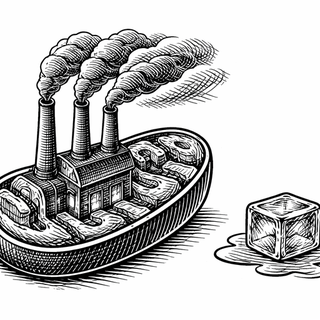
In startup terms: hypothermia is the disciplined CFO who walks in during the spending frenzy, freezes the budget, and says no, we are not burning oxygen we cannot convert into ATP. Cooling does not fix the mitochondria so much as stop them from setting the building ablaze long enough to recover. Blocking the surge, the authors argue, is a core mechanism of why hypothermia protects the brain at all.
Why This Actually Scales
The clinical promise here is not "discover cooling," because we already cool babies. The promise is measurement. Right now, doctors apply hypothermia on a fairly blunt protocol: same temperature, same timing, fingers crossed. If you could optically measure CMRO2 at the bedside, you could see the surge coming and personalize the dose and timing of cooling for each baby. That is the difference between spray-and-pray marketing and actually knowing your conversion funnel.
It is early, and these are mice, and a newborn human brain is not a 10-day-old mouse brain (a sentence I hope never appears on a pitch deck). But catching a failure mode in the act, and showing exactly which lever reverses it, is the kind of foundational insight the whole field can build on.
Your brain's power plant can burn out. The good news is that the off switch might be as simple as turning down the thermostat.
References
-
Sun N, Sun YY, Cao R, Chen HR, Wang Y, Fugate E, Smucker MR, Kuo YM, Grant EP, Lindquist DM, Kuan CY, Hu S. Dual-modal metabolic analysis reveals hypothermia-reversible uncoupling of oxidative phosphorylation in neonatal brain hypoxia-ischemia. eLife. 2025. DOI: 10.7554/eLife.100129 | PMCID: PMC12747520
-
Mathew JL, et al. Therapeutic hypothermia in neonatal hypoxic encephalopathy: A systematic review and meta-analysis. PMCID: PMC8994481
-
Wassink G, et al. Therapeutic Hypothermia for Neonatal Encephalopathy. PMCID: PMC3519960
-
Thayyil S, et al. The effects of therapeutic hypothermia on cerebral metabolism in neonates with hypoxic-ischemic encephalopathy: An in vivo 1H-MR spectroscopy study. PMCID: PMC4908621
Disclaimer: The image accompanying this article is for illustrative purposes only and does not depict actual experimental results, data, or biological mechanisms.