
The lead author could be forgiven for looking at these results and saying: "The brain does not need drama right now. It needs a lower electric bill." That is the idea behind the new report covered in Nature: after a stroke, a two-drug combo pushed mice into a cooler, slower metabolic state and limited brain injury. Very calm. Very spooky. Like putting a tiny emergency blanket over a biochemical dumpster fire.
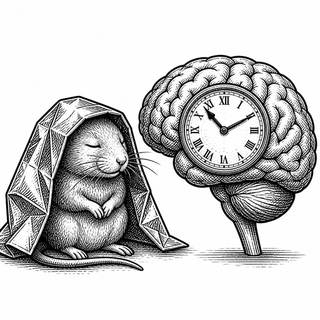
The Stroke Clock Is Rude
Most ischemic strokes start with a blocked blood vessel. Oxygen and glucose stop arriving. Neurons, those needy little aristocrats, run out of ATP. Ion pumps fail. Glutamate floods the scene. Calcium barges in. The local chemistry turns hostile.
Doctors already have ways to reopen vessels: clot-busting drugs and mechanical thrombectomy. They can be excellent. They are also time-sensitive, equipment-sensitive, eligibility-sensitive, and all the other sensitivities medicine stacks like unpaid bills. Even after blood flow returns, some tissue keeps sliding toward injury.
That threatened tissue is the ischemic penumbra. Think brain suburbia near the blast zone: not fine, not dead, still negotiable. It is where "time is brain" stops being a slogan and becomes a grim spreadsheet.
Why Chill the System?
Cooling tissue slows metabolism. A colder neuron burns less fuel, makes fewer toxic byproducts, and may survive longer while doctors reopen the artery. This is not a new fantasy. Targeted temperature management already has a place in some brain-injury settings, and stroke researchers have chased therapeutic hypothermia for years.
The problem is that bodies hate being cooled. They shiver. Blood vessels clamp down. Pneumonia risk can rise. Everyone gets tense, including the thermometer.
That is why drug-induced cooling is attractive. Instead of fighting the body's thermostat with cold blankets and machines, the goal is to persuade the thermostat to stand down. Less "ice bath hostage situation," more "please enter economy mode."
The Drug Combo With Old-Medicine Energy
The Nature news item reports on a Science Translational Medicine study using chlorpromazine and promethazine, two older phenothiazine drugs. Chlorpromazine is an antipsychotic. Promethazine is a sedating antihistamine. Together, they seem to induce a hibernation-like state: lower temperature, lower metabolism, less cellular panic.
In mice, the combination sharply lowered body temperature and reduced stroke-related brain injury. The same research line also included rhesus macaques, which matters because many stroke therapies look heroic in rodents and then trip over their shoelaces in larger animals.
Then came a small phase 1 trial in 32 people with acute ischemic stroke. The drugs appeared safe and tolerated across tested doses. Biomarkers suggested reduced metabolism. Only the highest dose reliably cooled body temperature, and the trial was not designed to prove clinical benefit. Translation: the door is open, but nobody should run through it wearing a cape.
Why This Is More Than a Fancy Ice Pack
A 2025 meta-analysis of hypothermia combined with thrombolysis or thrombectomy found a possible functional signal, but also flagged complications when cooling lasted 24 to 48 hours, including more overall complications and pneumonia in that subgroup. So the field is not asking, "Can cold help?" It is asking, "Can we cool the right tissue, at the right time, for the right duration, without accidentally creating a hospital side quest?"
That is where pharmacological cooling gets interesting. If a drug can quickly reduce metabolic demand without the usual cooling circus, it might extend the window for saving penumbra tissue or pair with thrombectomy to reduce reperfusion injury. The brain becomes less like a burning server room and more like a laptop on low-power mode. Still warm. Still working. Less committed to disaster.
The Big Catch, Because Biology Enjoys Paperwork
Mice are not tiny humans in lab coats. Stroke patients are older, messier, and often arrive with hypertension, diabetes, atrial fibrillation, inflammation, anticoagulants, and the rich chaos of real life. A therapy that works after a controlled mouse artery blockage has to survive ambulance delays, mixed stroke types, drug interactions, and the fact that nobody schedules a stroke for office hours.
The early human safety data matter, though. Many neuroprotective ideas have died between elegant animal biology and clinical reality. This one has at least stepped onto the bridge. Carefully. With a clipboard.
If later trials show benefit, cooling drugs could become an add-on treatment: something given early to slow injury while reperfusion therapy does its work. Not a replacement for getting to the hospital fast. Not a miracle freezer spell. More like buying the brain a few extra minutes before the bill comes due.
A few minutes can be a lot of brain.
References
- Chen E. Freezing brain damage in its tracks: cooling drugs limit stroke injury in mice. Nature. 2026. https://doi.org/10.1038/d41586-026-01923-9
- Wang D, Yan D, Yan M, et al. The efficacy of hypothermia combined with thrombolysis or mechanical thrombectomy on acute ischemic stroke: a systematic review and meta-analysis. Frontiers in Neurology. 2025;15:1481115. https://doi.org/10.3389/fneur.2024.1481115. PMCID: PMC11746097.
- Binda DD, Baker MB, Varghese S, et al. Targeted Temperature Management for Patients with Acute Ischemic Stroke: A Literature Review. Journal of Clinical Medicine. 2024;13(2):586. https://doi.org/10.3390/jcm13020586. PMCID: PMC10816923.
- Vos EM, Geraedts VJ, van der Lugt A, et al. Systematic Review - Combining Neuroprotection With Reperfusion in Acute Ischemic Stroke. Frontiers in Neurology. 2022;13:840892. https://doi.org/10.3389/fneur.2022.840892. PMCID: PMC8969766.
- Feigin VL, Brainin M, Norrving B, et al. World Stroke Organization: Global Stroke Fact Sheet 2025. International Journal of Stroke. 2025;20(2):132-144. https://doi.org/10.1177/17474930241308142. PMCID: PMC11786524.
Disclaimer: The image accompanying this article is for illustrative purposes only and does not depict actual experimental results, data, or biological mechanisms.