
Paradromics just implanted its first human brain-computer interface in a patient who has trouble speaking, and suddenly "brain data privacy" is not some law-school scrimmage. It is game night. Neural signals are leaving the locker room for computers, clinics, databases, companies, and maybe someday the app store, where dignity goes to get a free trial.
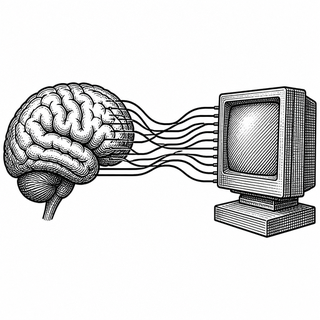
That is the live backdrop for a new Brain review by Saskia Hendriks and colleagues: Risk-calibrated sharing of human brain data.1 The question is simple and annoying in the way only good ethics questions are: how do researchers share brain data widely enough to speed discovery, but carefully enough that nobody gets handed a scouting report on someone else's mind?
Open Science, Full-Court Defense
Neuroscience has a strong case for sharing. Brain disorders carry a brutal burden: Alzheimer's disease, epilepsy, Parkinson's disease, stroke, psychiatric illness, traumatic brain injury. Every useful dataset that sits unused is a star player stuck on the bench.
Shared data can help scientists test old findings, combine small studies into bigger ones, train better models, and spare patients from repeat research. The BRAIN Initiative has been building repositories for imaging, electrophysiology, cell data, and related tools.2 Another BRAIN Initiative paper showed that sharing human neurophysiology data can create wins for both data producers and reusers.3
But brain data is not just another spreadsheet wearing a lab coat. Some datasets can point back to a person. Some can reveal health status, behavior, disability, psychiatric risk, or identity-linked information. Link enough "anonymous" files together and participant 042 starts looking less anonymous and more like Dave from accounting, who did not sign up for neural instant replay.
The Two-Part Risk Score
Hendriks and colleagues argue that the risk of sharing brain data depends on two main things: re-identification risk and inferential sensitivity.1
Re-identification risk asks whether someone could figure out who the data came from. Brain scans can include anatomical patterns that are more personal than people expect. Implanted-device recordings may carry clinical or behavioral context that narrows the field.
Inferential sensitivity asks what someone could realistically infer. A diagnosis? A future health risk? A behavioral pattern? Membership in a vulnerable group? The paper is not claiming every EEG headset can read your PIN and your opinion of airport sandwiches. It asks what current science can actually extract, and how harmful that extraction could be.
That distinction matters. Treat every dataset like nuclear launch codes and science crawls. Treat every dataset like a box score and participants lose trust. The move is defensive coverage: tight where the offense is dangerous, looser where the risk is low.
Low, Medium, High: The Playbook
The authors propose sorting human brain datasets into lower-, medium-, and higher-risk categories. Lower-risk data may need lighter safeguards. Medium-risk data may need stronger consent language, data-use agreements, or controlled access. Higher-risk data may call for restricted repositories, review committees, reduced detail, or limits on who can see what.
This is the paper's best play: it refuses to pretend one policy can guard every player on the court. A public summary of aggregate results is not the same as raw individual brain recordings. A de-identified survey is not the same as high-resolution imaging linked to rare disease status. One is a layup line. The other is playoff defense.
The tradeoff is real. Reducing detail can protect people, but it can also drain scientific value. Restricting access can reduce misuse, but it can slow discovery. Responsible sharing means admitting both sides are on the scoreboard.
Why This Lands Right Now
Neurotechnology is moving fast. Brain-computer interfaces aim to restore speech, movement, and independence. Consumer neurotech companies sell headsets for attention, sleep, meditation, gaming, and mood. In plain terms, neurotechnology includes methods and devices that interface with the nervous system to monitor or modulate neural activity. That is a huge umbrella with a lot of startup decks under it.
Lawmakers and ethicists have noticed. Recent work on mental privacy argues that neurotechnology blurs the line between mental activity and data, raising hard questions about rights, consent, and regulation.4 Colorado and California have moved to protect neural data under privacy laws, and UNESCO adopted global ethical standards in 2025.
The big dream is faster discovery without turning mental privacy into roadkill. Better sharing could help decode seizures, improve brain-machine interfaces, refine biomarkers, and understand psychiatric conditions with more statistical muscle. But the trust contract has to hold. Once people believe brain data can be mishandled, the research enterprise takes a body shot.
Hendriks and colleagues are not trying to stop the game. They are trying to officiate it before someone throws a chair. Their message is practical: brain data can do enormous good, but it carries different levels of risk. Treat it accordingly.
References
Additional sources consulted: Duncan D, Garner R, Brinkerhoff S, Walker HC, Pouratian N, Toga AW. Data Archive for the BRAIN Initiative (DABI). Scientific Data. 2023;10:83. https://doi.org/10.1038/s41597-023-01972-z; Jwa AS, Poldrack RA. The spectrum of data sharing policies in neuroimaging data repositories. Human Brain Mapping. 2022;43:2707-2721. https://doi.org/10.1002/hbm.25803
Disclaimer: The image accompanying this article is for illustrative purposes only and does not depict actual experimental results, data, or biological mechanisms.
-
Hendriks S, Beckel-Mitchener AC, Eberwine J, Farahany N, Hsu N, Ngai J, Grady C. Risk-calibrated sharing of human brain data. Brain. 2026; awag205. https://doi.org/10.1093/brain/awag205 ↩↩
-
Iyer S, Maxson Jones K, Robinson JO, Provenza NR, Duncan D, Lázaro-Muñoz G, McGuire AL, Sheth SA, Majumder MA. The BRAIN Initiative data-sharing ecosystem: Characteristics, challenges, benefits, and opportunities. eLife. 2024;13:e94000. https://doi.org/10.7554/eLife.94000 ↩
-
Rahimzadeh V, Jones KM, Kahana MJ, Rutishauser U, Zheng J, Paulk AC, Cash SS, Williams ZM, Beauchamp MS, Collinger JL, Pouratian N, McGuire AL, Sheth SA. Benefits of sharing neurophysiology data from the BRAIN Initiative Research Opportunities in Humans Consortium. Neuron. 2023;111:3710-3715. https://doi.org/10.1016/j.neuron.2023.09.029 ↩
-
Szoszkiewicz Ł, Yuste R. Mental privacy: navigating risks, rights and regulation. EMBO Reports. 2025;26:3469-3473. https://doi.org/10.1038/s44319-025-00505-6 ↩