Somebody had to gather families, compare rare mutations, build a conditional knockout mouse, record tiny electrical whispers from neurons, count dendritic spines one by one, and then ask the oldest question in biology: is this molecule actually running the show, or just standing near the crime scene looking suspicious? In this case, the suspect was GIGYF2 - a gene with a name that sounds like your Wi-Fi password after a keyboard smash - and the evidence got surprisingly strong.
A new study in Molecular Psychiatry argues that GIGYF2 helps shape synapse development and function, and that damaging variants in this gene can contribute to a recognizable subtype of autism spectrum disorder, often alongside language problems, intellectual disability, and anxiety Yu et al., 2026.
The case against GIGYF2
Here’s the core claim: some autism-related traits may emerge when the brain’s synaptic supply chain gets disrupted early in development.
Synapses are the contact points where neurons trade information. Think of them as a high-speed market where cells buy, sell, and gossip in electrical and chemical signals. For that market to work, the brain needs tight quality control. Too many synapses, too few, or the wrong balance of activity, and the whole system starts pricing chaos into the economy.
The researchers identified 23 affected individuals from 21 families with either likely gene-disrupting or missense variants in GIGYF2. Across the clinically described group, common features included autism, language difficulties, intellectual disability, and anxiety. That does not mean every autistic person has a GIGYF2 issue - not even close. Autism is genetically heterogeneous, which is science-speak for "the same broad diagnosis can come from many different biological routes."
But that heterogeneity is exactly why papers like this matter. If you can define a subtype clearly enough, you can stop treating "autism" like one giant mystery box and start asking sharper questions.
What happened in the mice?
The team didn’t stop at human genetics. They made a Gigyf2 conditional knockout mouse, which is a polite way of saying they removed the gene in a targeted way and watched what happened.
The mice showed autistic-like behaviors, cognitive deficits, and anxiety-like behaviors that mirrored parts of the human clinical picture. That alone wouldn’t seal the deal - mouse behavior is useful, but mice are not tiny furry undergrads with full human social lives. The stronger evidence came from the neurons.
When Gigyf2 was missing, neurons showed disrupted synaptic homeostasis. The researchers saw changes in dendritic spine density - those little protrusions that often mark excitatory synapses - and altered miniature excitatory postsynaptic currents, which are basically the neuron version of checking whether the text messages are still going through. They also found problems in IGF-1R/mTOR signaling and dysregulation of synapse-related genes including Nrp2.
That gives the story a mechanism, not just a correlation. GIGYF2 wasn’t merely hanging around while the synapses misbehaved. It looked more like part of the management structure.
Why the mTOR angle gets people interested
If you follow neuroscience long enough, mTOR shows up like that one actor who somehow appears in every prestige TV series. It helps regulate growth, metabolism, and protein synthesis, and it has been implicated in several neurodevelopmental conditions. In this study, rapamycin or Torin1 - both mTOR inhibitors - rescued synaptic defects in Gigyf2-deficient neurons. Knocking down Nrp2 also helped.
That does not mean a treatment is ready for prime time. Please do not read "rescued synapses in cultured neurons or mouse models" as "we have a pill." Biology loves humbling us. Still, this is the part that makes researchers lean forward in their chairs: if a disrupted pathway can be identified, then in principle it can be tested, tuned, and maybe one day targeted.
The bigger picture: from broad labels to biological subtypes
Autism research is moving, slowly and with much paperwork, toward defining genetically informed subtypes. That matters because broad diagnostic categories are good for describing behavior, but they often blur distinct biology underneath.
Recent work has pushed this same idea from multiple angles. Large-scale genomic studies continue to map autism risk genes and convergent pathways involved in synaptic development and gene regulation Satterstrom et al., 2020. Reviews on syndromic and genetically defined autism have emphasized that subtype-based research may be the best route to mechanism-driven therapies Bourgeron, 2021. Work on mTOR-related neurodevelopmental disorders also supports the idea that synaptic signaling pathways can become clinically meaningful targets, even if translation is hard and usually less glamorous than press releases suggest Costa-Mattioli and Monteggia, 2023.
So the intrigue here isn’t just "we found another autism gene." It’s more precise than that. This paper connects human genetics, animal behavior, cellular neurobiology, and a drug-responsive signaling pathway into one argument. In neuroscience, that is about as close as you get to a prosecutor walking into court with texts, receipts, CCTV footage, and the getaway scooter.
What to watch next
The obvious next questions are whether independent cohorts replicate the findings, whether the human phenotype becomes clearer with more cases, and whether the mTOR connection holds up across different experimental systems. Scientists will also want to know how GIGYF2 normally regulates synapse development in the first place, and whether that role overlaps with other autism-linked genes.
If the results keep holding, GIGYF2 may end up as one of those valuable genes that does double duty - helping families get clearer diagnoses while also teaching the rest of us how developing synapses stay balanced, or fail to.
And that is the strange bargain of brain science: sometimes one rare mutation teaches you something general about how all brains build their wiring. The brain, apparently, keeps its best trade secrets in the smallest accounting errors.
References
Yu B, Zhu S, Xiao L, et al. Evidence supporting the role of GIGYF2 in synapse development and autism. Molecular Psychiatry. 2026. doi: 10.1038/s41380-026-03681-6
Satterstrom FK, Kosmicki JA, Wang J, et al. Large-Scale Exome Sequencing Study Implicates Both Developmental and Functional Changes in the Neurobiology of Autism. Cell. 2020;180(3):568-584.e23. doi: 10.1016/j.cell.2019.12.036
Bourgeron T. From the genetic architecture to synaptic plasticity in autism spectrum disorder. Nature Reviews Neuroscience. 2021. PMCID: PMC8010734
Costa-Mattioli M, Monteggia LM. mTOR complexes in neurodevelopmental and neuropsychiatric disorders. Nature Reviews Neuroscience. 2023. doi: 10.1038/s41583-023-00677-5
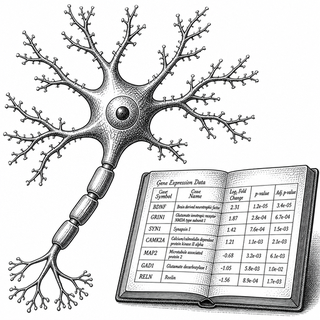
Disclaimer: The image accompanying this article is for illustrative purposes only and does not depict actual experimental results, data, or biological mechanisms.