In The Mandalorian, Grogu sees a shiny lever knob and immediately chooses chaos. Cute on TV. Less cute when a brain circuit does the same thing and cannot stop after the signal says, "Nope, park the forklift." That is the shape of a new Cell Reports study: fragile X model mice saw visual cues, some meant lick, others meant stop, and they kept licking when they should have stood down.
The Job Site: Fragile X
Fragile X syndrome happens when the FMR1 gene fails to make enough FMRP, a protein that helps neurons manage synapses. Without it, the brain still builds, but some wiring can look like renovation after three energy drinks and no permits.
People with fragile X often deal with learning differences, sensory overload, anxiety, impulsivity, and autistic traits. Vision is not just a camera feed. Visual cortex has to sort what matters, ignore what does not, and brief decision-making circuits before behavior goes sideways.
Zimmerman and colleagues asked: what happens to brain rhythms during active behavior, not just while an animal stares at the DMV? They recorded from V1, hippocampus, and prefrontal cortex while Fmr1 knockout mice did a Go/No-Go task: lick when this picture says go, keep your tongue to yourself when it says stop Zimmerman et al., 2026.
The Rhythm Crew Went Missing
The key signal was theta, a slow brain rhythm around 4 to 8 Hz. Think of theta as the site foreman tapping a pencil on the blueprint. When it drops out, someone backs a cement truck through the drywall.
In wild-type mice, V1 theta power tracked correct performance. Stronger theta lined up with better behavioral outcomes. In the fragile X model mice, theta power dropped in V1 and hippocampus. During No-Go trials, it was wiped out. That loss correlated with excessive incorrect licking.
The No-Go part is the real inspection. Going is easy. Stopping is where the inspector finds the missing bolts. The fragile X mice could respond, but their brake system looked underbuilt. Meanwhile, the prefrontal cortex showed weaker cue-related responses. So V1 had a weak rhythm, the hippocampus missed the beat, and the prefrontal cortex was not exactly storming in with a clipboard.
Why Vision Is in This Story
Vision might seem like a weird place to look for impulse control. But V1 is not just a screen on the wall. It builds the first structured version of what the animal sees, then shares that information with memory and decision systems.
Recent work explains why this is not random. A 2025 Nature Communications study found that familiar visual patterns normally drive synchronized theta between visual areas, but Fmr1 knockout mice show weaker, slower theta and altered synaptic connectivity Cheng et al., 2025. Purdue's summary put it plainly: the brain uses these rhythms to mark "I know this," and fragile X disrupts that recognition network.
Another Nature Communications paper connected human fragile X EEG signatures with V1 recordings in Fmr1 mice, pointing to shared low-frequency rhythm problems across species Kornfeld-Sylla et al., 2026. Mouse findings only earn their hard hat if they help us understand humans.
The Real-World Load
This study does not say, "Fix theta and fragile X is solved." Biology rarely hands you a clean punch list. More often it gives you mystery pipes.
But it does suggest a concrete target: circuit timing. If sensory information arrives with poor rhythm, the system may struggle to decide what deserves action and what deserves silence. For families and clinicians, that maps onto a familiar problem: sensory input can snowball into hyperarousal, impulsive behavior, or difficulty shifting gears. The National Fragile X Foundation describes sensory-based hyperarousal as a defining feature, not a side quest.
The treatment angle is early. Other studies show that V1 abnormalities in fragile X mice can be partly rescued by restoring FMRP expression or boosting inhibition in visual circuits Yang et al., 2022. Separate work links GABAergic changes to fragile X oscillation problems and sensory-driven synchrony Gonzalez et al., 2026. The field is moving from "the building is noisy" toward "which beams are vibrating, and can we brace them?"
The Takeaway
The punchline is not that fragile X mice lick too much. The punchline is that a basic visual stop signal depends on a coordinated rhythm across sensory, memory, and control circuits. In this model, that rhythm falters right when inhibition matters most.
That gives researchers a sharper tool. Instead of only measuring behavior, they can track whether therapies restore circuit timing. If future work confirms this in more tasks, more animals, and eventually humans, theta rhythms could become a measurable sign of whether the brain's stop-work system is getting back on code.
Not glamorous. Very useful. The best repairs usually are.
References
Zimmerman MP, Yin M, Cragg KR, et al. Impaired behavioral inhibition in Fmr1 KO mice is linked to disrupted visual cortex theta oscillations. Cell Reports. 2026;45(7):117590. doi: 10.1016/j.celrep.2026.117590
Cheng X, Nareddula S, Gao HC, et al. Disrupted theta synchronization and synaptic connectivity in the visual cortex of Fmr1 KO mice. Nature Communications. 2025;16(1):10583. doi: 10.1038/s41467-025-65665-4. PMCID: PMC12657955
Kornfeld-Sylla SS, Gelegen C, Norris JE, et al. A human electrophysiological signature of Fragile X pathophysiology is shared in V1 of Fmr1(-/y) mice. Nature Communications. 2026;17(1):1497. doi: 10.1038/s41467-026-69243-0. PMCID: PMC12891484
Yang C, Tian Y, Su F, et al. Restoration of FMRP expression in adult V1 neurons rescues visual deficits in a mouse model of fragile X syndrome. Protein & Cell. 2022;13(3):203-219. doi: 10.1007/s13238-021-00878-z. PMCID: PMC8901859
Gonzalez D, Jonak CR, Bernabucci M, et al. Enhanced CB1 receptor function in GABAergic neurons mediates hyperexcitability and impaired sensory-driven synchrony of cortical circuits in Fragile X Syndrome model mice. Molecular Psychiatry. 2026;31(4):2069-2080. doi: 10.1038/s41380-025-03366-6
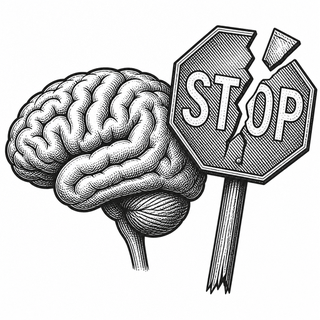
Disclaimer: The image accompanying this article is for illustrative purposes only and does not depict actual experimental results, data, or biological mechanisms.