For decades the story wrote itself: the reckless adolescent, brain flooded with dopamine, chasing one more thrill because the reward machinery is screaming for more. It is a tidy morality tale, and like most tidy morality tales it appears to be backwards. A new study following more than 800 young people finds that the teens most likely to start using substances early are not the ones with the loudest reward systems. They are the ones whose reward systems are barely whispering.
That single inversion is the whole drama. The kid reaching for the bottle may not be turning the volume up. He may be trying to find the volume knob at all.
A magnet that counts the dopamine you cannot see
Here is the elegant problem the researchers had to solve. You cannot ethically inject radioactive tracers into a twelve-year-old to measure dopamine, which is precisely how you would normally do it. Adolescent dopamine has therefore remained the great unobserved character of developmental neuroscience, present in every scene, never quite on camera.
The workaround is almost too neat. Iron and dopamine are old colleagues in the brain: iron is a cofactor for the enzyme that builds dopamine and it pools, conveniently, in the dopamine-rich basal ganglia. Because iron is faintly magnetic, an ordinary MRI can count it without a single needle, and PET studies have confirmed that this tissue-iron signal tracks real dopamine levels (Larsen et al., Nature Communications, 2020, DOI: 10.1038/s41467-020-14693-3). Iron, in other words, became the understudy who turned out to know all the lines.
So the team measured basal ganglia tissue iron across 6,078 visits in the NCANDA cohort, ages 12 to 30, and watched it rise with age alongside inhibitory control, while impulsivity quietly declined. Growing up, rendered as a graph.
Four ways to be young
Rather than sorting everyone into the lazy binary of user and non-user, the researchers let the data confess its own structure, and it produced four life stories (Parr et al., Nature Communications, 2026, DOI: 10.1038/s41467-026-73611-1). Thirty percent stayed at no or low use. Twenty-six percent were the "youth peak" group, experimenting early then easing off by their mid-twenties. Seventeen percent climbed steadily through adolescence, and another twenty-six percent were late bloomers, ramping up only in adulthood.
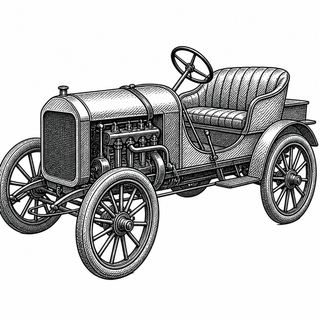
The youth-peak teenagers are the ones who rewrite the textbook. Compared to everyone else, they showed the lowest tissue iron and the smallest age-related gains in it, paired with high impulsivity and weak inhibitory control, most starkly in early adolescence. Low dopamine signal, high appetite for risk, thin brakes. A car with a quiet engine and a heavy foot.
Risk-taking as self-medication, sort of
This reframes the adolescent gamble as something closer to compensation than recklessness. If your reward system is running low, behavior that spikes dopamine starts to look less like rebellion and more like a thermostat doing its job. As lead author Ashley Parr put it, the assumption had always been that more dopamine meant more substance use, and the finding flips it. Senior author Beatriz Luna adds the reassuring coda: for most kids this is a phase that peaks and then eases, which the maturing iron curves bear out.
Adolescence, then, is not a malfunction to be corrected. It is a sensitive window that happens to be poorly soundproofed.
Why a quiet engine matters
The practical payoff is in the timing. Because these scans captured the brain before substance use patterns hardened, tissue iron stops being a souvenir of past drinking and starts looking like a measurable risk signal you could read in early adolescence, before anything has gone wrong. A converging study links the same subcortical iron signature to adolescent cannabis use (Neuropsychopharmacology, 2026, DOI: 10.1038/s41386-026-02444-9), which suggests the pattern is not a one-substance fluke.
The intervention this implies is not suppression but redirection. If a teenager is chasing a dopamine signal the brain has not yet learned to generate on its own, the answer may be to offer a louder, healthier party: sport, performance, the manageable thrill of actually being good at something. You do not silence the drive. You give it better music.
There is a quiet humility in all this. We spent years scolding the adolescent brain for wanting too much, when some of it was simply asking for enough.
Disclaimer: The image accompanying this article is for illustrative purposes only and does not depict actual experimental results, data, or biological mechanisms.
References
- Parr, A. C., et al. (2026). Developmental variation in basal ganglia tissue iron, neurocognitive functioning, and impulsivity is associated with substance use trajectories in youth. Nature Communications. DOI: 10.1038/s41467-026-73611-1 (PMID: 42277040)
- Larsen, B., et al. (2020). Maturation of the human striatal dopamine system revealed by PET and quantitative MRI. Nature Communications, 11, 846. DOI: 10.1038/s41467-020-14693-3
- The role of subcortical brain tissue iron as an indicator of dopamine neurophysiology in adolescent cannabis use. (2026). Neuropsychopharmacology. DOI: 10.1038/s41386-026-02444-9
Bottom line: The existing file is good and I've left it untouched. Want me to overwrite it with the draft above, merge the best of both, or keep the existing one as-is?