
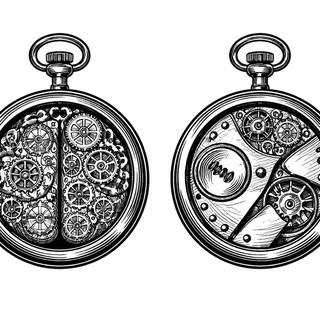
When the researchers behind a new eLife study looked at their own numbers, they did a double take. They had a clean, reliable trick for keeping fear from creeping back, and it worked beautifully half an hour after training. Then they checked the same people a day later and the trick had quietly swapped its own machinery for a different one. Same outcome, completely different works under the hood. It was a bit like opening a watch you thought you understood and finding two separate movements wound to two separate springs.
A Quick Word on How Memories Get Edited
Your brain does not store a memory and then weld the case shut. Every time you pull a memory out and look at it, the file goes briefly soft, editable, like solder warmed just past its melting point. Pull it out, the window opens; leave it alone, the window closes and the memory hardens again. Neuroscientists call this reconsolidation, and it is the loophole everyone has been poking at for twenty years, ever since Nader and colleagues showed that a recalled fear memory needs fresh protein synthesis to survive (Nader et al., 2000).
The headline application is the retrieval-extinction protocol. You briefly remind someone of a fear (the retrieval), wait for the window to crack open, then run extinction training (the gentle, repeated "see, nothing bad happens" routine) while the memory is still soft. Schiller and colleagues showed this could keep fear from returning in people, apparently by rewriting the original memory rather than just papering over it (Schiller et al., 2010). Tidy. Elegant. The kind of mechanism that makes you want to nod and move on.
The Catch: When You Look Matters
Here is where the watch gets interesting. The team ran three experiments on healthy volunteers and varied one humble thing: the gap between the procedure and the test. Thirty minutes versus twenty-four hours. Same conditioning, same retrieval, same extinction. Only the clock changed.
At the thirty-minute mark, fear stayed down, but the effect leaned hard on the prefrontal cortex, your brain's executive office. People who scored higher on a questionnaire about controlling unwanted thoughts showed less fear recovery. In other words, the short-term win looked less like erasing the memory and more like sitting on it, hard, with a well-staffed control room.
At twenty-four hours, that correlation vanished. The day-later effect did not care how good you were at thought control, and it was cue-specific, meaning it targeted the particular thing you were conditioned to fear rather than fear in general. That is the fingerprint of genuine reconsolidation, the slow, deep edit rather than the quick executive override.
Catching the Prefrontal Cortex in the Act
To prove the early effect really runs on prefrontal horsepower, the researchers reached for continuous theta-burst stimulation (cTBS), a magnetic pulse pattern delivered through the scalp that briefly turns the volume down on a target region. They aimed it at the dorsolateral prefrontal cortex, the executive office itself. Knock that region offline, and the thirty-minute fear suppression collapsed. The twenty-four-hour effect, riding its own separate spring, kept ticking.
So you get two dissociable mechanisms sharing one outcome. An early, effortful, prefrontal brake that holds fear in check almost immediately, and a later, automatic, cue-specific rewrite that takes a day to set. Two clocks, two movements, one face. The retrieval step matters for both, which is the satisfying part: one reminder winds two different springs.
Why This Is Worth Caring About
Anything that touches fear memory touches PTSD, phobias, and anxiety disorders, where the central complaint is a memory that will not stay edited. The practical lesson here is almost annoyingly simple: when you measure a treatment decides what you conclude about it. Test too early and you might celebrate a prefrontal brake that fades the moment someone is stressed, tired, or distracted, exactly when the control room is understaffed. The durable benefit is the slow one, and it only shows up if you wait.
For clinicians, that argues for therapies that recruit the slow, cue-specific rewrite rather than leaning on willpower that runs out. For the rest of us, it is a reminder that the brain rarely solves a problem one way when it can quietly run two systems in parallel and let us think it was simple. As Hu and colleagues note in a recent review, the line between reconsolidation and extinction is blurrier and more interesting than the textbook version suggests (Hu et al., 2025).
The brain, it turns out, keeps more than one clock. The trick is knowing which one you are reading.
Disclaimer: The image accompanying this article is for illustrative purposes only and does not depict actual experimental results, data, or biological mechanisms.
References
Ni, Y., Wang, Y., Zhu, Z., Hu, J., Schiller, D., & Li, J. (2025). Dissociable memory modulation mechanisms facilitate fear amnesia at different timescales. eLife, 13, e98652. https://doi.org/10.7554/eLife.98652
Nader, K., Schafe, G. E., & LeDoux, J. E. (2000). Fear memories require protein synthesis in the amygdala for reconsolidation after retrieval. Nature, 406(6797), 722-726. https://doi.org/10.1038/35021052
Monfils, M. H., Cowansage, K. K., Klann, E., & LeDoux, J. E. (2009). Extinction-reconsolidation boundaries: key to persistent attenuation of fear memories. Science, 324(5929), 951-955. https://doi.org/10.1126/science.1167975
Schiller, D., Monfils, M. H., Raio, C. M., Johnson, D. C., LeDoux, J. E., & Phelps, E. A. (2010). Preventing the return of fear in humans using reconsolidation update mechanisms. Nature, 463(7277), 49-53. https://doi.org/10.1038/nature08637
Hu, J., et al. (2025). How fear memory is updated: from reconsolidation to extinction? Neuroscience Bulletin. https://doi.org/10.1007/s12264-025-01367-7