
For someone living with anorexia nervosa, everyday life can turn into a bizarre hostile takeover by numbers, rules, and rituals. Meals stop being meals. They become negotiations, audits, tiny private battles that somehow eat up the whole day. You can know you're exhausted, freezing, distracted, and still feel pulled by the same relentless logic. It is a rough condition, and not just emotionally - it shows up in the body, and, as this new paper argues, in the brain's structure too.
A large international study just asked a big question: when anorexia changes body weight so dramatically, what does that look like in the brain across many different people and clinics? And can brain scans tell apart people with anorexia from healthy controls - or even separate anorexia subtypes from each other?
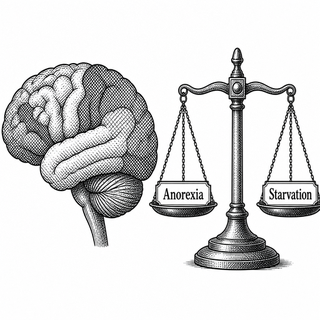
Short version: the researchers found widespread differences in gray matter measures in people with anorexia nervosa, and those patterns were strong enough that machine learning could distinguish patients from controls fairly well. But the two classic anorexia subtypes looked surprisingly similar on structural MRI. The startup pitch version is this: the brain changes are real, broad, and measurable - but the product segmentation strategy for subtypes may be less clean than the field hoped.
The brain's hardware, under pressure
The study, published in PLoS Medicine, pooled MRI data from 11 international sites through the ENIGMA Eating Disorders Working Group. That's 570 females with anorexia nervosa and 739 healthy controls - a serious dataset by psychiatric neuroimaging standards, where sample sizes often look like they were assembled from whoever answered email that week.
The team looked at three main structural features:
- Cortical thickness - basically how thick the brain's outer layer is in different regions
- Cortical surface area - how much real estate that outer layer covers
- Subcortical volumes - the sizes of deeper brain structures
They also used a few different analytic approaches, which is good science and also the statistical equivalent of checking your work with three calculators because brains are messy and love humiliating certainty.
Their main finding: compared with healthy controls, people with anorexia showed widespread gray matter deficits. In plain English, many brain regions looked smaller or thinner on average. Some individuals also showed extreme deviations from what's considered normal for their age based on reference brain models.
That matters because this was not just a "group average moved a little bit" story. In some patients, the differences were large enough to count as clearly outside the expected range.
So... is this the illness, or starvation?
This is the part where science refuses to become clickbait, which I respect.
The authors are careful: this study cannot prove whether these brain differences are caused by anorexia itself, by starvation and low BMI, or by some combination of both. That's a huge distinction. If your phone battery is dead, the screen looks terrible - but that doesn't mean the hardware was originally built that way.
Earlier research suggests at least some brain changes in anorexia may improve with weight restoration and recovery, which supports the idea that malnutrition plays a major role. Reviews in recent years have made this point repeatedly: starvation is not just "feeling weak." It can reshape brain structure in measurable ways (Seitz et al., 2023; King et al., 2024).
And that insight matters clinically. It pushes back against the lazy old myth that anorexia is somehow "just about willpower" or vanity. No. This is a serious brain-body illness. When nutrition collapses, the nervous system is not sitting in the corner untouched, sipping iced coffee and pretending it's above the drama.
Can a brain scan spot anorexia?
Kind of - but let's not let Silicon Valley write the press release.
The machine-learning part of the study could distinguish anorexia patients from healthy controls with an ROC-AUC of 0.75 to 0.81. That's actually pretty solid for psychiatric MRI, where classifiers often promise the moon and deliver a confused spreadsheet.
This does not mean we now have a magical brain scan diagnostic test. MRI is expensive, these patterns are not unique enough to replace clinical assessment, and the findings don't yet tell doctors exactly how to treat one person sitting in front of them. But it does show that anorexia leaves a fairly robust structural signature at the group level.
That could help future research track illness severity, recovery, or treatment response - especially if combined with cognitive testing, symptom measures, and other imaging methods like functional MRI.
The subtype plot twist
Anorexia nervosa is often divided into a restricting subtype and a binge-eating/purging subtype. Clinically, those can look different. So you'd expect the brain scans to maybe show different structural patterns too, right?
Nope. At least not here.
The researchers found no reliable structural MRI differences between the subtypes after accounting for BMI and age. Machine learning also couldn't tell them apart.
That doesn't mean the subtypes are fake. It just suggests that, in terms of brain morphology, they may share more than they differ - or that the differences live in other domains, like brain activity, connectivity, hormone signaling, or behavior. Structural MRI may be giving us the hardware view when the more interesting distinction is in the software, or maybe the weird user settings nobody remembers enabling.
Why this matters in the real world
This study helps do three useful things.
First, it strengthens the case that anorexia has measurable neurobiological correlates across large and diverse samples. That's important in a field where tiny studies can produce dramatic claims that vanish on contact with replication.
Second, it highlights how severe malnutrition may affect the brain broadly, not just one pet region researchers happen to like that year.
Third, it suggests we may need better ways to classify patients than the old subtype boxes alone. Psychiatry loves categories. Brains, meanwhile, tend to behave like chaotic startups - pivoting, overlapping, and refusing to fit neatly into the slide deck.
If future work can track what changes with recovery, which brain alterations predict outcomes, and which are reversible, that could improve treatment planning and reduce the lag between illness and effective care.
References
Bernardoni F, Arold D, Schoppik L, et al. Brain morphology in anorexia nervosa and its subtypes: A multi-cohort study of individual participant data. PLoS Med. 2025;22(4):e1004809. https://doi.org/10.1371/journal.pmed.1004809
Seitz J, King JA, Ehrlich S. Structural brain alterations in anorexia nervosa: state, trait, and starvation-related effects. Neurosci Biobehav Rev. 2023. https://doi.org/10.1016/j.neubiorev.2023.105171
King JA, Bernardoni F, Ehrlich S. Neuroimaging in anorexia nervosa - what structural and functional studies are telling us now. Biol Psychiatry. 2024. https://doi.org/10.1016/j.biopsych.2024.01.012
Westwater ML, Mandy W, Tchanturia K. Clinical and neurobiological models of anorexia nervosa in the modern era. Lancet Psychiatry. 2022. https://doi.org/10.1016/S2215-0366(22)00169-8
Kaufmann T, van der Meer D, Doan NT, et al. Common brain disorders are associated with heritable patterns of apparent aging of the brain. Nat Neurosci. 2019;22(10):1617-1623. https://doi.org/10.1038/s41593-019-0471-7
Disclaimer: The image accompanying this article is for illustrative purposes only and does not depict actual experimental results, data, or biological mechanisms.