Here's a party trick: tell someone that Anna is taller than Beth, and that Beth is taller than Carol. Then ask who's taller, Anna or Carol. They'll answer instantly, even though you never once put Anna and Carol back to back. Your brain just quietly stitched two facts into a conclusion you were never handed. That little stitch-job is called inference, and it's the engine behind everything from "this leftover smells weird, I should not eat it" to solving a murder mystery before the detective does.
Now for the bad news. A new study says stress yanks that engine offline right when you'd most want it running.
The setup: a brain, two days, and a fake job interview
Researchers at the University of Hamburg ran 121 volunteers through a two-day memory gauntlet, and the results landed in Science Advances (with a write-up by Simon Spichak in Nature). On day one, everyone learned a bunch of linked image pairs. Picture a chain: A goes with B, B goes with C. Crucially, nobody ever saw A and C together. The only way to know they're related is to mentally route through B, like realizing two strangers are connected because they both know your cousin.
On day two, half the group got stressed. And not gently. They faced the Trier Social Stress Test, which is the scientific way of saying "a mock job interview followed by surprise mental math in front of stone-faced evaluators." If that sounds like a nightmare, congratulations, that's the point. The other half got a calm, boring version. The whole time, scientists tracked heart rates and sampled cortisol from saliva to confirm who was actually sweating it.
Then everyone took the inference test: can you link A to C?
Plot twist - learning was fine, connecting was not
Here's the genuinely surprising part. Stress did not wreck memory. Stressed participants remembered the individual images just as well as the calm crowd. If you'd quizzed them on plain facts, you'd never know anything was wrong.
The damage was sneakier. When you learn something new that relates to an old memory, your hippocampus - the brain's memory librarian - is supposed to quietly pull the old file and replay it, knitting the two together. The calm brains did exactly that. The stressed brains? That replay went faint. The librarian basically stopped fetching the related books off the shelf.
Worse, the stressed hippocampus did the opposite of linking. It filed related events as separate things, a move neuroscientists call differentiation. So instead of "A, B, and C are all part of one story," the stressed brain shrugged and stored three unrelated snapshots. And this was strongest for emotionally positive memories, which is a cruel little detail.
Why this messes with you in real life
Look, "I couldn't connect two images in a lab" sounds low-stakes. But inference is load-bearing for a lot of high-pressure moments.
Think about a student in a final exam. They studied. The facts are in there. But the question asks them to combine two ideas they learned in different weeks, and under exam-room panic, the bridge between those ideas just won't build. They knew the pieces and still couldn't assemble them. We've all been there, staring at a test like it's written in a language we almost speak.
Or consider an eyewitness. Memory researchers have long worried that stressed witnesses might stitch unrelated details into a false conclusion, or fail to connect details that actually matter. This study hints the courtroom problem might cut both ways, and that the very moment someone is most stressed is the moment their brain is worst at reasoning across what it saw.
Same goes for any high-pressure decision, from the ER to the trading floor. The information might all be sitting in your head. Stress just unplugs the part that turns information into insight.
The bigger picture
This fits a growing pile of research showing stress doesn't simply make memory "worse." It rewires which memory processes get priority. Cortisol can actually sharpen emotionally charged, survival-relevant memories while starving the slow, reflective work of weaving experiences together. From an evolutionary angle that almost makes sense - when a bear is chasing you, your brain wants vivid threat snapshots, not a thoughtful seminar on how this bear relates to last Tuesday's bear.
The catch is that modern stress rarely involves bears. It involves exams, interviews, and inboxes, where connecting the dots is the whole job. Our threat system is running ancient software on a problem it was never designed for.
So next time your mind goes blank under pressure and the obvious connection refuses to show up, give yourself a break. Your hippocampus didn't lose the files. It just stopped picking up the phone.
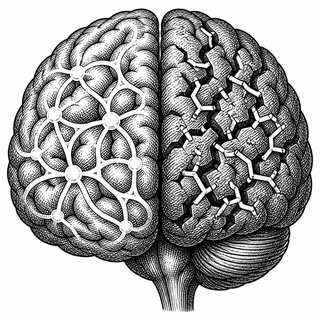
Disclaimer: The image accompanying this article is for illustrative purposes only and does not depict actual experimental results, data, or biological mechanisms.
References
- Spichak, S. (2026). Stress impairs your brain's ability to link memories - dampening insight. Nature. DOI: 10.1038/d41586-026-01644-z
- Schwabe, L., et al. (2026). Stress disrupts hippocampal integration of overlapping events and memory inference in humans. Science Advances. DOI: 10.1126/sciadv.aea5496
- Cai, D. J., et al. (2016). A shared neural ensemble links distinct contextual memories encoded close in time. Nature, 534(7605), 115-118. PMID: 27251287
- de Voogd, L. D., et al. (2022). Mechanisms of memory under stress. Neuron, 110(9), 1450-1467. DOI: 10.1016/j.neuron.2022.02.020
- Dynamic brain mechanisms supporting salient memories under cortisol (2025). Science Advances. PMID: 41370392