
“I knew brains reused old molecular machinery,” you can almost hear the lead author saying, “but I did not expect evolution to keep this many group projects intact for 300 million years.” Fair enough. Because this paper is basically the scientific version of opening five different family recipe boxes - fish, frogs, birds, mice, humans - and realizing everyone has been passing down the same oddly specific casserole dish since the Paleozoic.
The brain is not one thing - it is a neighborhood full of busybody proteins
When people talk about the brain, they usually mean neurons firing, thoughts happening, memories forming, and all that glamorous stuff. But underneath that is a giant mess of proteins grabbing onto other proteins, letting go, reshuffling, and building tiny molecular machines. Neurotransmitter release? Protein team effort. Receptor signaling? Protein team effort. Keeping cells structurally intact while they do their electric drama? Also protein team effort.
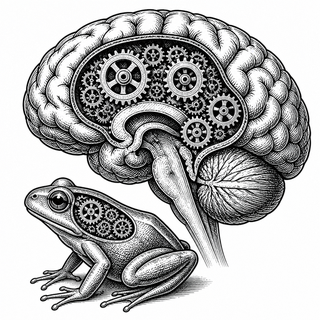
This new study built a huge map of those protein partnerships across five vertebrate species. The researchers analyzed 2,197 biochemical fractions from brains and identified more than 81,000 high-confidence protein-protein interactions involving 6,108 conserved proteins across over 300 million years of evolution (Dang et al., 2026, DOI: https://doi.org/10.1016/j.celrep.2026.117422).
That is the key idea here: if evolution keeps the same protein hangouts around for hundreds of millions of years, they are probably doing something important. Evolution is not sentimental. It is more like a landlord who absolutely will remove any feature nobody uses.
Meet VerteBrain, the molecular seating chart nobody asked for but everybody needed
The resource is called VerteBrain, and it works like a giant seating chart for proteins in vertebrate brains. Who sits together? Who always shows up in the same complex? Who is clearly involved in the neuronal equivalent of logistics, cleanup, messaging, or crisis management?
Some of the conserved complexes were expected - synaptic machinery, signaling assemblies, structural components. But the map also picked up less obvious associations, including synaptonemal proteins linked into broader brain protein networks. These proteins are better known from chromosome pairing during meiosis, so seeing extensive associations in brain tissue is the kind of result that makes scientists squint at the data, refill their coffee, and check the controls twice.
The study also found conserved complexes in both neuronal and glial biology, plus more widely expressed systems shared with non-neural tissues. That matters because the brain does not invent every trick from scratch. Sometimes it borrows from the rest of the body, then adds extra wiring and a flair for overcomplication.
Why should anyone outside a proteomics conference care?
Because disease often starts when one member of a protein team stops showing up for work.
A lot of neurological disorders do not come from a whole cell type disappearing. They come from a specific molecular machine breaking down - vesicle trafficking, receptor recycling, cytoskeletal organization, intracellular transport. If you know which proteins normally work together, you can make better guesses about what goes wrong in epilepsy, developmental disorders, or sensory conditions.
That is exactly where this paper gets especially useful. The map highlights candidate disease mechanisms involving ARHGEF1 in short stature syndromes, synaptic vesicle trafficking complexes in developmental and epileptic encephalopathy, and RELCH in congenital deafness. In other words, this is not just a catalog for protein nerds. It is a clue board for medicine.
Human genetics has gotten very good at telling us which genes are suspicious. The harder part is often figuring out what those genes actually do in a living system. Protein interaction maps help bridge that gap. They can say, “This mysterious protein is always hanging around with the vesicle trafficking crowd, so maybe it is not random at all.” Which is a lot better than shrugging politely at a mutation and hoping a postdoc figures it out.
The bigger picture: evolution loves a reliable appliance
One reason comparative work is so powerful is that it helps separate universal biology from species-specific quirks. If a protein complex shows up across vertebrates, from distant branches of the family tree, that suggests it is a basic piece of brain function rather than some recent customization.
That idea lines up with broader work in systems neuroscience and proteomics. Reviews in recent years have emphasized that brain disorders often involve disrupted protein networks rather than single isolated factors, and that proteome-scale mapping can reveal mechanisms genetics alone misses (Bayés and Grant, 2021, DOI: https://doi.org/10.1016/j.neuron.2021.03.017; Alberts et al., 2021, PMCID: PMC7618324). Related work on synaptic protein organization and neurodevelopmental disease also points the same way - the wiring diagram matters, but the maintenance crew matters too (Corominas et al., 2022, DOI: https://doi.org/10.1038/s41576-022-00471-5; Koopmans et al., 2023, DOI: https://doi.org/10.1016/j.tins.2023.02.004).
And yes, this is technically “basic science.” But basic science is often just future medicine wearing sweatpants.
The catch, because there is always a catch
Protein interaction maps are incredibly useful, but they are not a live movie of the brain in action. They tell us which proteins are likely associated under the tested conditions, not necessarily how those interactions change during learning, disease progression, sleep, stress, or the very specific moment you walk into a room and forget why you are there.
So VerteBrain is best seen as a foundation. A very large, very valuable foundation. The next steps are to test which of these conserved complexes actually drive disease, how they vary across cell types, and whether they can point toward drug targets or better diagnostics.
Still, this is a big deal. The paper gives neuroscientists a much richer map of the molecular social network inside vertebrate brains. And if the brain has taught us anything, it is that the drama is never about one molecule acting alone. It is always an ensemble cast, with at least three proteins causing problems and one glial cell quietly keeping the whole household from falling apart.
References
Dang V, Voigt B, Yang D, Hoogerbrugge G, Lee M, Cox RM, Papoulas O, McWhite CD, Pradeep R, Leggere JC, Neely BA, Gray RS, Marcotte EM. A cross-vertebrate brain protein interaction map identifies conserved neural and non-neural complexes. Cell Reports. 2026. DOI: https://doi.org/10.1016/j.celrep.2026.117422
Bayés A, Grant SGN. Neuroproteomics: understanding the molecular organization and complexity of the brain. Neuron. 2021. DOI: https://doi.org/10.1016/j.neuron.2021.03.017
Alberts AS, et al. Proteomic network approaches in human neurological disease. Frontiers in Molecular Neuroscience. 2021. PMCID: https://www.ncbi.nlm.nih.gov/pmc/articles/PMC7618324/
Corominas R, et al. Decoding the synaptic basis of neurodevelopmental disorders. Nature Reviews Genetics. 2022. DOI: https://doi.org/10.1038/s41576-022-00471-5
Koopmans F, et al. Mapping synapse protein networks in health and disease. Trends in Neurosciences. 2023. DOI: https://doi.org/10.1016/j.tins.2023.02.004
Disclaimer: The image accompanying this article is for illustrative purposes only and does not depict actual experimental results, data, or biological mechanisms.