
A storm moves through the brain differently than it moves through the blood. Blood is weather fronts and remix culture: cells rising, clones expanding, immune crews showing up with fresh badges. The brain is more like an old-growth forest after rain, guarded by microglia, the cleanup crew that trims synapses, eats debris, and still has time to be dramatic about inflammation.
That is why this Cell Reports study is a useful record scratch. Zhou and colleagues asked: after a blood stem cell transplant, do adult blood-derived cells move into the brain and become long-term microglia? And if clonal hematopoiesis enters the chat, does that mutant clone get access to the brain's VIP booth?
Short answer: less than 2% no.
Microglia: Brain Bouncers
Microglia are the brain and spinal cord's resident immune cells. They come mostly from yolk-sac ancestors during early development, which sounds like a fantasy origin story but is just embryology being extra. Inside the brain, they scan the neighborhood, prune unused synapses, and swallow cellular junk. Janitors, security, gardeners, occasional over-caffeinated group chat moderators.
Many brain diseases, from leukodystrophies to Alzheimer's disease, involve microglia failing, overreacting, or getting stuck in the wrong mode. Replace broken microglia with engineered ones, and the brain might gain a built-in delivery system: cells as couriers, medicine with legs.
Hematopoietic stem and progenitor cells, or HSPCs, make blood and immune cells. Edit them, barcode them like tiny concert wristbands, and you can track which lineages show up where. HSPC gene therapy can help inherited CNS disorders by delivering enzymes or therapeutic proteins near the brain.
Macaque Mixtape
The study used rhesus macaques that had received autologous HSPC transplants, meaning the animals got their own modified stem cells back. Some had barcoded HSPCs, letting researchers track cellular families over years. Others carried CRISPR-edited TET2-mutant HSPCs, a clonal hematopoiesis model where one blood stem cell clone expands like it heard there was free pizza.
TET2-mutant clonal hematopoiesis is common with aging and linked to inflammatory disease. It has also been tied to lower Alzheimer's risk: a 2023 Nature Medicine study found reduced odds of Alzheimer's dementia and matching blood mutations in microglia-enriched brain samples in some donors.
That finding was neuroscience conference hallway spicy. Did blood clones sneak into the brain and become protective microglia?
Zhou and colleagues sorted microglia years after transplant and asked where the cells came from. The answer: the brain kept its old crew. Fewer than 2% of microglia came from adult HSPCs. Clonal hematopoiesis did not boost replacement. Rare HSPC-derived cells looked more macrophage-like than microglia-like. In the building, sure, but not wearing the house uniform.
Small Number, Big Noise
At first, "less than 2%" sounds like the kind of result that makes grant reviewers stare into the middle distance. But it sets a boundary.
Mouse studies show that microglia replacement can work under the right conditions. A 2024 Nature Communications study reported broad CNS repopulation by hematopoietic-derived microglia-like cells in mice after conditioning. A 2025 Cell Stem Cell review put the lesson plainly: donor cells need an open niche. If existing microglia are parked in every spot, new cells circle the block forever.
This macaque paper says ordinary adult HSPC transplantation, even with a pushy clonal hematopoiesis clone, does not automatically swap out the brain's resident microglia. The brain is not an open mic. It has a door policy.
That checks two big hopes. First, it tempers the idea that clonal hematopoiesis protects against Alzheimer's mainly by flooding the brain with blood-derived microglia. Maybe CH affects peripheral inflammation. Maybe rare cells matter locally. Maybe human disease creates openings that healthy macaque brains do not.
Second, true microglial replacement may require creating CNS space or delivering cells more directly. The challenge is doing that without turning the brain into a renovation site with the contractor texting "small delay" for six months.
Takeaway Track
The study does not say HSPC gene therapy for CNS disease is doomed. It says the mechanism needs precision. Blood-derived cells can help, but long-term native microglia replacement is not guaranteed just because transplanted stem cells thrive in blood.
For patients, the real-world impact sits in better trial design and clearer expectations. Future therapies may split into categories: some designed to deliver useful factors from macrophage-like cells, others built specifically to replace microglia by opening a niche. Same studio, different tracks.
The brain's immune ecosystem has seasons, storms, and stubborn old trees. You cannot toss new seeds into a mature forest and expect a new canopy by Tuesday. The resident microglia are already there, pruning shears ready, asking every newcomer: "You on the list?"
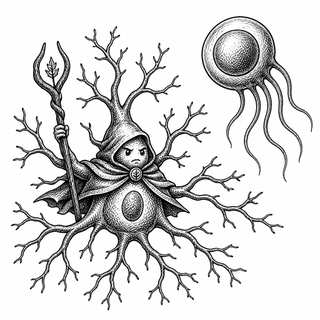
Disclaimer: The image accompanying this article is for illustrative purposes only and does not depict actual experimental results, data, or biological mechanisms.
References
- Zhou Y, Abraham DM, Hosuru RV, et al. Microglial clonal dynamics and the impact of clonal hematopoiesis in autologously transplanted rhesus macaques. Cell Reports. 2026;45:117561. PMID: 42319824. DOI: 10.1016/j.celrep.2026.117561
- Bouzid H, Belk JA, Jan M, et al. Clonal hematopoiesis is associated with protection from Alzheimer's disease. Nature Medicine. 2023;29:1662-1670. DOI: 10.1038/s41591-023-02397-2
- Colella P, Sayana R, Suarez-Nieto MV, et al. CNS-wide repopulation by hematopoietic-derived microglia-like cells corrects progranulin deficiency in mice. Nature Communications. 2024;15:5727. PMID: 38969669. DOI: 10.1038/s41467-024-49908-4
- Biffi A. Hematopoietic stem cell gene therapy to halt neurodegeneration. Neurotherapeutics. 2024;21:e00440. PMID: 39276677. PMCID: PMC11417237. DOI: 10.1016/j.neurot.2024.e00440
- Rao Y, Bai Y, Li X, et al. The evolution of microglia replacement: A new paradigm for CNS disease therapy. Cell Stem Cell. 2025. DOI: 10.1016/j.stem.2025.10.014