
Boomers may read this and think, "I told you sleep mattered." Millennials may read it while calculating whether five hours plus cold brew counts as a lifestyle. Gen Z may ask if the hippocampus has a settings menu. Situation report: in rats, sleep appears to lower the waking theta frequency in the hippocampus, the brain's memory command post, while sleep deprivation keeps that rhythm running hot like a radio operator who has discovered energy drinks and poor judgment.
The Mission: Track the Brain's Metronome
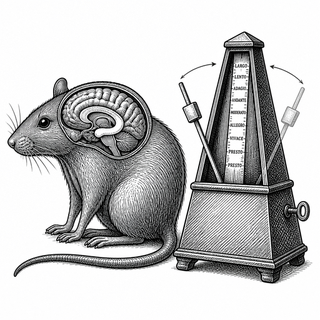
The new study by Kaya and colleagues recorded activity for long stretches in rat CA1, a hippocampal region heavily involved in learning and memory. The target was theta, a rhythmic brain signal often tied to movement, exploration, anxiety, REM sleep, and memory operations. In rodents, hippocampal theta often runs around 6 to 10 Hz when the animal is active or in REM sleep. That is not fast by computer standards. By brain standards, it is a marching cadence for tiny electrical infantry.
The old assumption was sensible: faster movement, higher theta frequency. The hippocampus likes maps, and rats are field scouts with whiskers. But this paper asked a sharper question. What if theta also remembers whether the animal has recently slept?
Execution: Let Them Sleep, Then Listen
The researchers found that waking theta frequency gradually dropped after sleep. During sleep deprivation, theta stayed elevated. This was not just because the rats moved differently. The best predictor was the amount of sleep in the previous 30 minutes. Translation: the hippocampus kept a short operational log. Recent sleep pushed waking theta lower. No sleep kept the system on a higher-frequency alert posture.
REM sleep behaved differently. REM theta stayed relatively stable, which suggests waking theta and REM theta may follow different rules. Same band, different chain of command. The brain loves reusing labels like a supply officer with one stamp pad.
Aging Enters the Briefing Room
The aged rats showed weaker sleep-dependent theta changes. The authors suggest sleep fragmentation may explain part of that. If sleep comes chopped into scraps, the hippocampus may not get a clean enough stand-down period to shift its waking rhythm.
That matters because aging already puts pressure on sleep and memory. The hippocampus is one area we worry about when memory starts losing its keys, then accusing the refrigerator. If sleep normally helps tune hippocampal rhythms, fragmented sleep could degrade the signal. Not absent. Just noisy. Like receiving orders through a walkie-talkie inside a washing machine.
The Rolipram Plot Twist
Then came the pharmacology maneuver. The team gave sleep-deprived rats rolipram, a phosphodiesterase-4 inhibitor. PDE4 breaks down cAMP, a signaling molecule involved in plasticity and memory pathways. Blocking PDE4 can boost cAMP signaling, but rolipram itself is not a friendly consumer product. It has a narrow therapeutic window and a reputation for gastrointestinal side effects. Strategic asset, yes. Casual sleep hack, absolutely not. Stand down, supplement aisle.
In the study, rolipram lowered waking theta frequency during sleep deprivation, mimicking part of the sleep effect. Prior work links sleep loss to hippocampal molecular trouble, including altered plasticity-related signaling. The finding does not mean a pill can replace sleep. It means the theta shift may connect to biochemical machinery researchers can probe.
Why This Is Worth Your Attention
Sleep research often focuses on memory replay during sharp-wave ripples, the brain's after-action reports. Recent work from overlapping groups showed that sleep loss can diminish hippocampal reactivation and replay even when ripple events still occur. In other words, the brain may hold the meeting but forget the agenda. That is poor governance at the synaptic level.
This theta study adds another layer. Sleep may not only help replay memories during offline periods. It may also alter the operating frequency of the hippocampus after the animal wakes up. That could influence how the brain encodes new information, handles navigation, or balances memory processing with arousal. The paper does not prove those behavioral outcomes here, and rats are not tiny humans with grant funding. But it gives researchers a measurable signal to test.
Assessment: Promising, Not a Victory Parade
The real-world stakes are clear. If replicated and extended, this work could help explain why bad sleep harms learning, why aging and fragmented sleep hit memory so hard, and why pharmacological targets like PDE4 remain interesting despite their baggage. Future missions need to connect theta frequency shifts to behavior, test whether similar signals appear in humans, and separate useful mechanisms from lab-only curiosities.
For now, the message is crisp. Sleep does not merely power down the brain. It recalibrates the equipment. The hippocampus wakes up with its rhythm adjusted and perhaps fewer synapses behaving like they outrank everyone.
References
- Kaya U, Alam MJ, Giri B, Havekes R, Abel T, Diba K. Sleep lowers waking theta frequency in the rat hippocampus. Cell Reports. 2026;45(7):117593. doi:10.1016/j.celrep.2026.117593
- Giri B, Kinsky N, Kaya U, Maboudi K, Abel T, Diba K. Sleep loss diminishes hippocampal reactivation and replay. Nature. 2024;630(8018):935-942. doi:10.1038/s41586-024-07538-2, PMCID: PMC11472378
- Lutz ND, Harkotte M, Born J. Sleep's contribution to memory formation. Physiological Reviews. 2026;106(1):363-483. doi:10.1152/physrev.00054.2024
- Girardeau G, Lopes-Dos-Santos V. Brain neural patterns and the memory function of sleep. Science. 2021;374(6567):560-564. doi:10.1126/science.abi8370, PMCID: PMC7611961
- Geva-Sagiv M, Mankin EA, Eliashiv D, et al. Augmenting hippocampal-prefrontal neuronal synchrony during sleep enhances memory consolidation in humans. Nature Neuroscience. 2023;26:1100-1110. doi:10.1038/s41593-023-01324-5
Disclaimer: The image accompanying this article is for illustrative purposes only and does not depict actual experimental results, data, or biological mechanisms.