
Alcohol research had a busy week. On June 24, 2026, Scripps Research reported that blocking an inflammatory molecule reduced excessive drinking in female mice. Two days later, a new Molecular Psychiatry paper pointed to another suspect: the insula, a folded scrap of cortex that may help explain why female mice kept drinking even when scientists made the alcohol bitter. Science, as usual, chose subtlety by adding quinine.
A Bitter Little Trap
Alcohol use disorder is not just "drinking a lot." One of its nastier tricks is drinking despite bad consequences. The bill arrives. The body complains. The plan to stop evaporates. The brain says: noted, ignored.
To study that in mice, Claudia Fornari and colleagues used a common model called "drinking in the dark." Mice get limited access to alcohol during their active period, which sounds like a tiny after-hours bar. The researchers then added quinine, a bitter compound, to the alcohol. If a mouse keeps drinking, the behavior starts to resemble aversion-resistant drinking: continuing even when the experience carries a built-in nope.
Female mice drank more alcohol than male mice during binge-like sessions. They also drank more of the bitter alcohol. The gender gap in harmful drinking has narrowed in people, and women often face greater alcohol-related health risks. A 2022 review in Nature Reviews Disease Primers lays out the clinical mess: AUD is common, serious, and still undertreated.
Meet the Brain's Complaint Desk
The insula sits tucked deep inside the brain. It helps track body signals: taste, nausea, pain, craving, stress, the internal weather report that tells you something is off. If the brain were an office, the insula would be the person forwarding every bodily complaint with "please advise" in the subject line.
The new study split the insula into two neighborhoods. The anterior insula, toward the front, lit up during binge drinking and bitter-alcohol drinking in both sexes. Human work also shows that stress can heighten alcohol-cue responses in the insula, and that this activity predicts craving and later alcohol use.
The posterior insula, farther back, did something more specific. In female mice, glutamatergic neurons there became especially active during bitter-alcohol drinking. Glutamate is one of the brain's main excitatory messengers. Basically, it is the neuron group chat set to loud.
Then They Turned the Knobs
Recording brain activity is useful. But the sharper test is whether changing that activity changes behavior.
So the team used chemogenetics, a method that lets researchers quiet selected neurons with engineered receptors and a drug. When they inhibited anterior insula glutamatergic neurons, both male and female mice reduced intake of bitter liquids, with or without alcohol. That suggests the anterior insula was not only about alcohol. It was more like a bitter-fluid regulator. Glamorous? No. Useful? Yes.
The posterior insula result was more intriguing. Inhibiting posterior insula glutamatergic neurons reduced persistent bitter-alcohol drinking in female mice, but not males. In males, the same manipulation reduced quinine drinking without alcohol. Same brain region. Different behavioral meaning. The brain enjoys making clean diagrams look foolish.
Why the Sex Difference Matters
This does not mean researchers found "the female alcoholism switch." Please do not let that sentence escape into the world wearing a lab coat.
It means one circuit in mice may contribute differently to aversion-resistant alcohol drinking depending on biological sex. Addiction neuroscience has long leaned on male subjects, male animals, and male-shaped assumptions. A 2022 Biological Psychiatry review of alcohol-related brain transcriptomics argued that sex differences show up across brain circuits and molecular pathways. Translation: sex is not a decorative variable you add at the end because the statistics committee is watching.
If this work holds up, it could help researchers design sharper studies of AUD risk and treatment. Future therapies might target stress, inflammation, interoception, or circuit states differently across people. Maybe trials will stop pretending that one neural route explains everyone. The current one-size-fits-all approach has the elegance of a sock drawer after a move.
Mice First, Humans Later
The caveat is simple: these were mice. Their drinking model captures pieces of AUD, not the whole human condition. Mice do not lose jobs, face stigma, or wonder whether ordering sparkling water will make dinner weird.
Still, mouse models let researchers isolate circuit mechanics in a way human studies cannot. The value here is not that female mice are tiny stand-ins for women. It is that the study gives scientists a testable map: anterior insula for bitter intake more broadly, posterior insula for sex-dependent persistence of alcohol drinking.
That is a clean finding. The brain will now spend the next decade making it complicated.
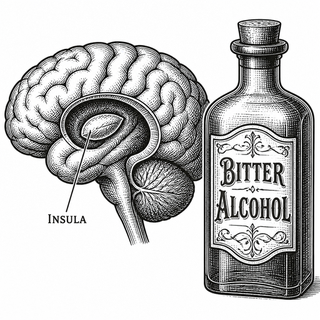
Disclaimer: The image accompanying this article is for illustrative purposes only and does not depict actual experimental results, data, or biological mechanisms.
References
- Fornari C, Ricci D, Couderc Y, et al. Sex differences in insular cortex function in persistent alcohol drinking despite aversion in mice. Molecular Psychiatry. 2026. doi:10.1038/s41380-026-03716-y
- Bach P, Zaiser J, Zimmermann S, et al. Stress-Induced Sensitization of Insula Activation Predicts Alcohol Craving and Alcohol Use in Alcohol Use Disorder. Biological Psychiatry. 2024;95(3):245-255. doi:10.1016/j.biopsych.2023.08.024
- Hitzemann R, Bergeson SE, Berman AE, et al. Sex Differences in the Brain Transcriptome Related to Alcohol Effects and Alcohol Use Disorder. Biological Psychiatry. 2022;91(1):43-52. doi:10.1016/j.biopsych.2021.04.016, PMCID: PMC8558111
- MacKillop J, Agabio R, Feldstein Ewing SW, et al. Hazardous drinking and alcohol use disorders. Nature Reviews Disease Primers. 2022;8:80. doi:10.1038/s41572-022-00406-1, PMCID: PMC10284465