
Neuroscience has spent decades trying to command the battlefield without shelling the whole city. The big dream is to quiet the misfiring circuit, spare the innocent neighborhoods, and stop pretending that bathing the whole brain in medicine is precision warfare. Chemogenetics is one sharp tool in that campaign: selected neurons get an engineered receptor, then a drug delivers the command. Elegant idea. The old problem was that the "drug" part often arrived like a supply truck with questionable paperwork.
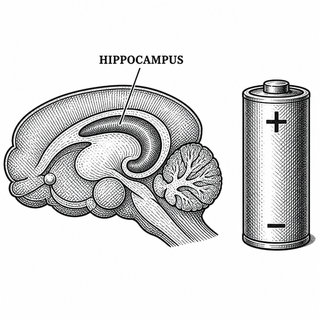
The Old Remote Had Sketchy Batteries
Chemogenetics works like this: researchers deliver a gene with a viral vector that makes chosen cells grow a designer receptor. The inhibitory receptor hM4Di taps the Gαi/o pathway. In plain English, it tells neurons to calm down, stop shouting glutamate into the room, and maybe stop turning the hippocampus into a seizure bonfire.
For epilepsy, this is attractive because seizures are not polite. They do not send calendar invites. They erupt from circuits, spread along neural supply lines, and recruit nearby territory. Standard anti-seizure drugs help many people, but a third of patients remain drug-resistant. Surgery can work, but removing brain tissue is not a casual Tuesday errand.
The catch has been the activating ligand. Early DREADD systems often used clozapine-N-oxide, which can convert back to clozapine and raise off-target concerns. Clozapine and olanzapine can activate hM4Di, but they come with psychiatric-drug baggage. Newer DREADD ligands such as deschloroclozapine look powerful in animals, including nonhuman primates, but translating a new drug into humans is where optimism goes to do paperwork (Miyakawa et al., 2023).
Enter GRANPA, Which Sounds Like a Lab Coat With Reading Glasses
In the new study, Devenish and colleagues redesigned hM4Di so diphenhydramine could switch it on. That is the brain-permeant antihistamine better known as the thing that makes allergy season feel like a nap trap (Devenish et al., 2026).
They named the receptor class GRANPA, for G protein-coupled Receptors Activated by Non-Prescription Agents. Neuroscience finally discovered branding, and it immediately put on slippers.
The key engineering move was adding two mutations, S85V and Y416F, to hM4Di. In cell assays, that changed diphenhydramine from a weak nudge into a potent switch. Cryo-electron microscopy then showed how the drug fit inside the receptor's binding pocket. Without structural proof, receptor engineering can feel like jiggling a lock while muttering, "Trust me, the key is in there somewhere." A 2022 Nature study had already mapped how DREADD structures support selective activation, so this paper builds on molecular reconnaissance, not vibes (Zhang et al., 2022).
The Mouse Hippocampus Takes Orders
The team then moved from cells to neurons. In mouse cortical cultures, diphenhydramine reduced firing only when GRANPA was present. In hippocampal slices, it reduced excitatory synaptic transmission. That is the cellular equivalent of cutting the radio chatter without bombing the tower.
Then came behavior. The researchers expressed GRANPA in the ventral hippocampus, a region involved in anxiety-related behavior and seizure generation. After diphenhydramine, mice entered the center of an open field more often, consistent with reduced anxiety-like behavior. In a seizure test, GRANPA-expressing mice took longer to show myoclonic jerks.
The strongest epilepsy-relevant test used a chronic mouse model of mesial temporal lobe epilepsy. Diphenhydramine reduced seizure burden when GRANPA was expressed in the hippocampus. Saline did not. The signal was receptor plus drug, not magic antihistamine fairy dust. Please do not sprint to the medicine cabinet and declare yourself a clinical trial.
Why This Could Matter
If this approach survives replication, scaling, and the regulatory gauntlet, it could make chemogenetic therapy less exotic. A gene therapy could install the receiver in a seizure focus. A familiar, brain-penetrant drug could provide adjustable control. That is the strategic advantage: gene therapy is often a one-way deployment, but chemogenetics adds a throttle.
Recent work shows the field is already moving toward circuit-specific interventions, from DREADD seizure suppression in macaques to on-demand gene therapy for brain circuit disorders (Qiu et al., 2022; Gao et al., 2026). The dream is fewer seizures with less collateral damage to memory, mood, alertness, and the brain's overworked civilian infrastructure.
Still, this is early. Diphenhydramine is non-prescription, not harmless. It can sedate, impair cognition, interact with other drugs, and at high doses cause serious toxicity. Mouse dosing does not translate neatly to humans, because biology enjoys making simple math look foolish. Researchers still need long-term safety data, human-relevant dosing, immune monitoring, and proof that repeated activation does not blunt the effect.
But the concept is sharp: redesign the receptor around a known brain-permeant drug, instead of waiting for an entirely new ligand to survive the clinical obstacle course. GRANPA looks like a clever field radio. Not victory. Not yet. But a cleaner command line than chemogenetics had yesterday.
References
- Devenish SO, Patel SD, Ussingkær LV, et al. Next-generation chemogenetic inhibition using a brain-permeant non-prescription agent. Signal Transduct Target Ther. 2026;11:259. doi:10.1038/s41392-026-02865-4
- Gao J, Ye T, Chen X, et al. Advances in chemogenetics: a review of DREADDs and its application in psychiatric disorders. Mol Psychiatry. 2026;31:480-497. doi:10.1038/s41380-025-03305-5
- Zhang S, Gumpper RH, Huang XP, et al. Molecular basis for selective activation of DREADD-based chemogenetics. Nature. 2022;612:354-362. doi:10.1038/s41586-022-05489-0
- Miyakawa N, Nagai Y, Hori Y, et al. Chemogenetic attenuation of cortical seizures in nonhuman primates. Nat Commun. 2023;14:971. doi:10.1038/s41467-023-36642-6, PMCID: PMC9975184
- Qiu Y, O'Neill N, Maffei B, et al. On-demand cell-autonomous gene therapy for brain circuit disorders. Science. 2022;378:523-532. doi:10.1126/science.abq6656, PMCID: PMC7613996
Disclaimer: The image accompanying this article is for illustrative purposes only and does not depict actual experimental results, data, or biological mechanisms.